
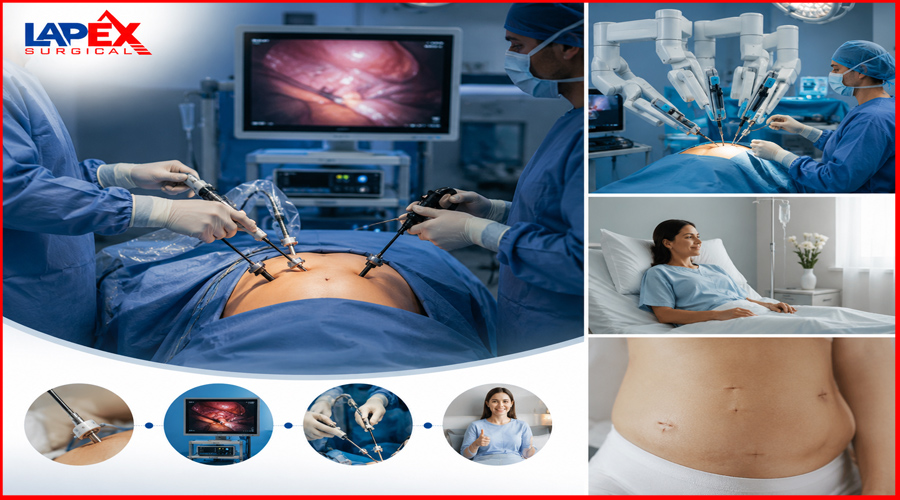
Laparoscopic Surgery Explained: What Every Patient Should Know Before Their Procedure
If you take nothing else from this article, take this: Laparoscopic surgery, often called “keyhole surgery”, replaces one large incision with a few small ones, using a camera and slim instruments to perform the same operation your surgeon would otherwise do through an open cut. For most eligible patients, this means less post-operative pain, a lower risk of surgical site infection, shorter hospital stays, smaller scars, and a faster return to normal life compared to traditional open surgery. Robotic-assisted laparoscopy takes this a step further, giving surgeons enhanced precision and range of motion for complex procedures. It is not the right approach for every patient or every condition, and your surgeon’s judgment about your specific anatomy and diagnosis always comes first, but understanding how it works will help you walk into your pre-op appointment with better questions and less anxiety.
The rest of this guide breaks down exactly how laparoscopic surgery works, what happens before, during, and after your procedure, and what the evidence actually says about its benefits, so the buzzword becomes a plan you understand.
What Is Laparoscopic Surgery, Really?
Laparoscopic surgery is a form of minimally invasive surgery performed through small incisions, typically between 0.5 and 1.5 centimeters, rather than a single long opening. Surgeons insert a laparoscope, a thin tube fitted with a high-definition camera and light source, through one incision to visualize the internal surgical site on a monitor. Specialized long-handled instruments are then passed through the remaining small incisions to carry out the operation: cutting, cauterizing, suturing, or removing tissue as needed.
The abdomen is typically inflated with carbon dioxide gas (a process called pneumoperitoneum) to create working space between the abdominal wall and the internal organs, giving the surgical team a clear, magnified view and room to maneuver instruments safely.
A Quick Comparison: Open vs. Laparoscopic Surgery
| Factor | Open Surgery | Laparoscopic Surgery |
|---|---|---|
| Incision size | One large incision (often 6–12 inches) | Several small incisions (0.5–1.5 cm each) |
| Visualization | Direct line of sight | High-definition camera, magnified view |
| Blood loss | Generally higher | Generally lower |
| Post-op pain | Typically more intense | Typically milder |
| Hospital stay | Often 4–7 days (procedure-dependent) | Often 1–3 days (procedure-dependent) |
| Scarring | Larger, more visible scar | Small, often barely noticeable scars |
| Infection risk | Higher exposure of internal tissue | Reduced exposure, lower reported infection rates |
| Recovery to normal activity | Weeks to months | Days to weeks |
These are general trends drawn from decades of surgical literature, not guarantees; individual outcomes depend on the specific procedure, the patient’s health status, and the surgeon’s experience.
How Laparoscopic Surgery Actually Works: Step by Step
Understanding the mechanics of the procedure demystifies the process considerably. Here is the general sequence for most laparoscopic operations:
- Anesthesia administration. Nearly all laparoscopic procedures are performed under general anesthesia, meaning you are fully asleep and unaware during the operation.
- Creating the pneumoperitoneum. A small needle or port is used to inflate the abdominal cavity with carbon dioxide, lifting the abdominal wall away from the organs beneath.
- Port placement. The surgeon makes several tiny incisions and inserts hollow tubes called trocars, through which the laparoscope and instruments will pass.
- Visualization. The laparoscope transmits real-time video to monitors in the operating room, giving the entire surgical team a magnified, well-lit view of the target anatomy.
- The operative work. Using long, slender instruments, graspers, scissors, dissectors, staplers, or energy devices for cutting and sealing tissue, the surgeon performs the core steps of the procedure.
- Extraction (if needed). For procedures involving organ or tissue removal (such as a gallbladder), the specimen is placed in a retrieval bag and withdrawn through one of the small incisions, sometimes slightly enlarged for this purpose.
- Closure. The carbon dioxide gas is released, instruments are removed, and each small incision is closed with sutures, surgical glue, or adhesive strips.
The entire operation is watched, guided, and executed with the same surgical precision as an open procedure; the difference lies in the access route, not the standard of care.
Robotic-Assisted Laparoscopy: The Next Layer of Precision
Robotic-assisted laparoscopy is not a separate category of surgery so much as an evolution of the laparoscopic technique. The surgeon operates from a console, controlling robotic arms that hold miniaturized instruments and a 3D camera inserted through the same type of small incisions used in standard laparoscopy.
What Robotic Assistance Adds
- Enhanced dexterity: Robotic instruments can rotate and articulate beyond the natural range of the human wrist, which is valuable in tight anatomical spaces like the pelvis.
- Tremor filtration: The system filters out natural hand tremors, translating the surgeon’s movements into smoother, more controlled actions.
- 3D magnified visualization: Surgeons view the operative field in high-definition, three-dimensional detail rather than the 2D image of conventional laparoscopy.
- Ergonomic control: Seated at a console, surgeons can operate with reduced physical fatigue during long or complex procedures.
What It Doesn’t Change
- The incisions remain small, similar in size and number to standard laparoscopic ports.
- Recovery expectations are broadly similar to conventional laparoscopy, though this varies by procedure and institution.
- The robot does not operate autonomously; it is a tool controlled entirely by the surgeon’s hand movements in real time.
Patients sometimes assume “robotic” means “automated.” It doesn’t. Think of it less like a self-driving car and more like a very sophisticated, precision-tuned extension of the surgeon’s own hands.
The Evidence-Based Benefits of Laparoscopy
The appeal of minimally invasive surgery isn’t marketing; it’s built on a substantial body of clinical outcomes data accumulated since laparoscopic techniques became mainstream in the late 1980s and 1990s. Here’s what the benefits typically look like in practice:
1. Reduced Surgical Site Infection Risk
Smaller incisions mean less exposed tissue, shorter operative exposure time in many cases, and a smaller wound surface for bacteria to colonize. Surgical site infections are one of the most common post-operative complications in open surgery, and minimally invasive approaches are widely associated with lower reported infection rates across many procedure types, a meaningful benefit given that infections can prolong hospital stays, delay healing, and in some cases require additional intervention.
2. Less Post-Operative Pain
Smaller incisions generally involve less trauma to muscle and connective tissue, which typically translates to reduced pain scores and lower reliance on opioid pain medication in the days following surgery.
3. Shorter Hospital Stays
Many laparoscopic procedures that once required a week-long inpatient stay under open technique can now be performed with an overnight stay or, in select cases, as same-day outpatient surgery.
4. Faster Return to Daily Activity
Because the abdominal wall is disrupted far less, patients often resume light activities, driving, and even work sooner than they would after an equivalent open procedure, though this always depends on the specific surgery performed.
5. Reduced Blood Loss
The magnified visualization and precise instrumentation used in laparoscopic surgery often allow for more controlled dissection and hemostasis (bleeding control) compared to open techniques.
6. Cosmetic Outcome
Small, well-placed incisions heal into minimal scars, which matters both cosmetically and, in some cases, psychologically for patient recovery and body confidence.
7. Lower Risk of Incisional Hernia
Large open incisions carry a higher long-term risk of incisional hernia, where abdominal contents push through a weakened area of the healed wound. The smaller footprint of laparoscopic ports generally reduces this risk.
Common Procedures Performed Laparoscopically
Laparoscopic and robotic-assisted techniques are now standard-of-care for a wide range of operations, including:
- General surgery: Gallbladder removal (cholecystectomy), appendectomy, hernia repair, bariatric (weight-loss) surgery, colon resection
- Gynecological surgery: Hysterectomy, myomectomy (fibroid removal), ovarian cystectomy, endometriosis treatment
- Urological surgery: Prostatectomy, nephrectomy (kidney removal), pyeloplasty
- Other applications: Certain thoracic (chest) and pediatric procedures, exploratory diagnostic surgery
Not every condition or patient is a candidate for a minimally invasive approach; factors like prior abdominal surgeries, extensive scar tissue, certain emergency presentations, or specific anatomical complexities may lead your surgeon to recommend an open approach instead. This decision is always individualized.
What to Expect: Before, During, and After Your Procedure
Before Surgery
- Pre-operative consultation: Your surgeon will review your medical history, current medications, allergies, and imaging results to confirm laparoscopic eligibility.
- Pre-op instructions: You’ll typically be asked to fast for a set period before surgery, adjust or pause certain medications (particularly blood thinners), and arrange for someone to drive you home.
- Pre-op testing: Bloodwork, an ECG, or imaging may be ordered depending on your age and health background.
- Home preparation: Setting up a comfortable recovery space, stocking easy-to-prepare meals, and arranging help for the first day or two makes a real difference to comfort during recovery.
During Surgery
- You’ll check in, meet your anesthesia team, and be taken to the operating room.
- General anesthesia is administered, and you will be unaware throughout the procedure.
- The operation itself, as outlined earlier, typically takes anywhere from 30 minutes to a few hours, depending on complexity.
Immediately After Surgery
- You’ll wake up in a recovery area, where staff monitors vital signs as anesthesia wears off.
- Mild-to-moderate discomfort at incision sites, shoulder pain (from residual gas), and grogginess are common and expected.
- Depending on the procedure, you may go home the same day or stay one to a few nights.
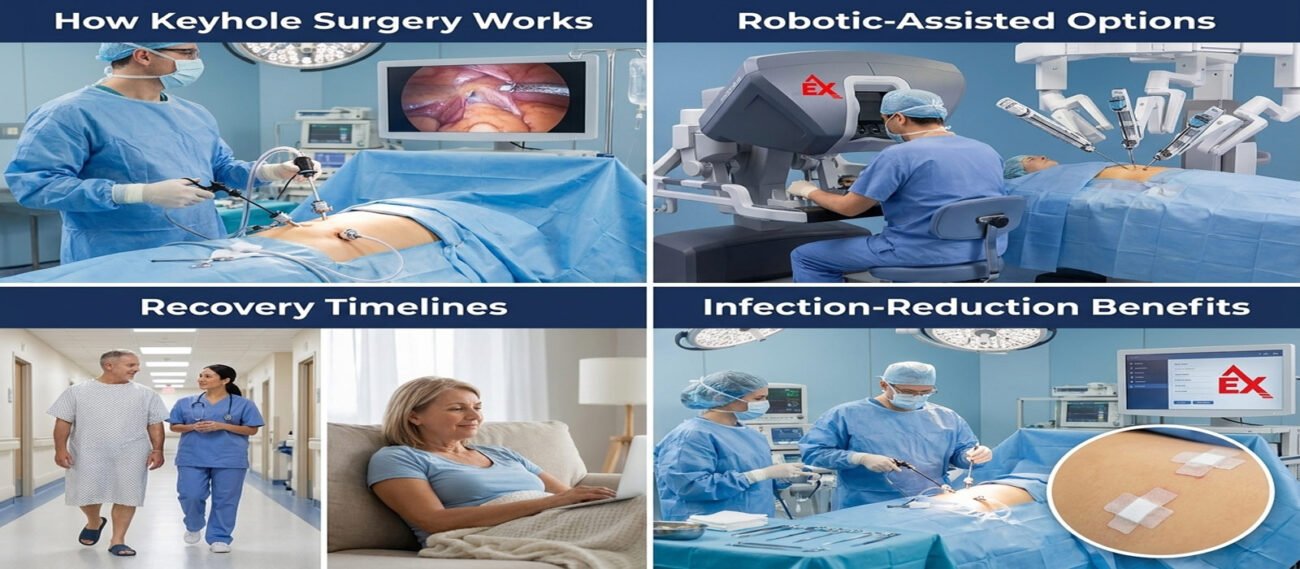
Keyhole Surgery Recovery: What the Timeline Looks Like
Recovery varies significantly by procedure, but here is a general framework many patients can expect:
| Recovery Phase | Typical Timeframe | What’s Happening |
|---|---|---|
| Immediate recovery | 0–24 hours | Waking from anesthesia, initial pain management, and first attempts at walking |
| Early recovery | Days 1–3 | Managing incision discomfort, a gradual increase in mobility, and monitoring for fever or unusual symptoms |
| Short-term recovery | Days 4–14 | Most patients resume light daily activities, reduced pain medication needs, incision healing |
| Return to routine | Weeks 2–4 | Many patients return to desk work and light exercise (with surgeon clearance) |
| Full recovery | Weeks 4–8+ | Complete internal healing, clearance for strenuous activity or heavy lifting, procedure-dependent |
General Recovery Tips
- Walk short distances as soon as your care team encourages it; early mobility reduces complication risk and speeds healing.
- Watch incision sites for redness, warmth, swelling, or discharge, and contact your surgical team promptly if these appear.
- Follow activity restrictions precisely, especially around lifting and driving.
- Stay ahead of pain rather than waiting for it to become severe, using medication as prescribed.
- Attend all follow-up appointments, even if you feel completely well.
Understanding the Risks
No surgical technique is without risk, and honest patient education means acknowledging this clearly. Potential risks associated with laparoscopic surgery include:
- Reaction to anesthesia
- Bleeding or infection (though generally at lower rates than open surgery)
- Injury to surrounding organs, blood vessels, or structures during instrument passage
- Conversion to open surgery if complications arise or visibility is inadequate
- Gas-related discomfort (typically temporary shoulder or abdominal pain from residual carbon dioxide)
- Blood clots, particularly in patients with pre-existing risk factors
Your surgical team will discuss your individual risk profile based on your health history, the specific procedure, and any complicating factors before you consent to surgery.
The Role of Precision Instrumentation
The outcomes described throughout this guide, reduced infection risk, controlled bleeding, and precise tissue handling, depend heavily on the quality and reliability of the surgical instruments used. Laparoscopic and electrosurgical instruments must maintain exact tolerances, sharpness, insulation integrity, and durability under repeated sterilization cycles, since even minor instrument failure can compromise a procedure. This is why hospitals and surgical centers place such emphasis on sourcing instruments from manufacturers with rigorous quality control standards; the tools themselves are a quiet but essential part of the safety equation behind every successful minimally invasive operation.
Common Myths vs. Facts About Laparoscopic Surgery
Misconceptions about minimally invasive surgery are common, often because the term “keyhole surgery” sounds almost too simple for what is genuinely a sophisticated surgical discipline. Here’s a clear breakdown of what’s fact and what’s fiction:
| Myth | Fact |
|---|---|
| “Laparoscopic surgery is less thorough than open surgery.” | The surgical goal and standard of care are identical; only the access method differs. Surgeons remove or repair the same tissue with the same precision. |
| “Robotic surgery means the robot performs the operation.” | The surgeon controls every movement in real time from the console. The robotic system has no independent decision-making capability. |
| “Recovery is instant and pain-free.” | Recovery is meaningfully faster and generally less painful than open surgery, but it is still a real surgical recovery requiring rest, wound care, and gradual activity progression. |
| “Anyone can have laparoscopic surgery.” | Eligibility depends on the specific diagnosis, anatomy, prior surgical history, and any emergency factors. Not all cases qualify. |
| “Smaller incisions mean a shorter, easier operation for the surgeon.” | Laparoscopic and robotic procedures often require more specialized training and, in some cases, longer operative time due to the technical precision required. |
| “There’s no risk of complications with minimally invasive surgery.” | All surgery carries risk. Laparoscopic techniques generally reduce certain risks (like infection) but do not eliminate surgical risk. |
Talking to Your Surgeon: Questions Worth Asking
Walking into a pre-operative consultation with the right questions can make a significant difference in how prepared and confident you feel. Consider asking:
- Am I a candidate for a laparoscopic or robotic-assisted approach for my specific condition?
- What are the chances my procedure could be converted to open surgery, and under what circumstances would that happen?
- How many of these specific procedures have you performed using this technique?
- What does my personalized recovery timeline look like, given my health history?
- What symptoms after surgery should prompt me to call your office immediately, versus going to an emergency room?
- Will I need any physical therapy, dietary changes, or activity modifications during recovery?
- What pain management plan will I be sent home with?
A surgeon who welcomes these questions and answers them clearly is demonstrating exactly the kind of transparency that should reassure you heading into the operating room.
Cost and Insurance Considerations
While clinical decision-making should always come first, patients understandably want to understand the financial picture as well. In many healthcare systems, laparoscopic procedures can offset a higher upfront technology or equipment cost with savings from shorter hospital stays and fewer post-operative complications, though coverage and out-of-pocket costs vary widely by insurance plan, region, and facility. It’s worth asking your surgical coordinator or billing office for a clear breakdown of anticipated costs, what your insurance is expected to cover, and whether pre-authorization is required before your procedure date.
Frequently Asked Questions
Q: Is laparoscopic surgery safer than open surgery?
A: For many eligible procedures, laparoscopic surgery is associated with lower complication rates, particularly around infection and blood loss. However, “safer” always depends on the specific diagnosis, your overall health, and the surgeon’s experience. Your care team will recommend the approach best suited to your situation.
Q: How long does laparoscopic surgery take compared to open surgery?
A: Operative time can be similar or occasionally slightly longer for laparoscopic procedures, since the technique requires precise instrument handling through small ports. However, this is typically offset by significantly shorter recovery time overall.
Q: Will I have visible scars after laparoscopic surgery?
A: You will have small scars at each incision site, usually a few millimeters to about 1.5 centimeters. Most fade considerably over time and are far less prominent than open surgery scars.
Q: Is robotic-assisted laparoscopy better than standard laparoscopy?
A: Neither approach is universally “better”; they are different tools suited to different situations. Robotic assistance can offer enhanced precision for anatomically complex procedures, while standard laparoscopy remains highly effective and widely used for many operations. Your surgeon will recommend the approach best matched to your specific case.
Q: How soon can I go back to work after laparoscopic surgery?
A: This varies by procedure and the physical demands of your job, but many patients return to desk-based work within one to two weeks, while physically demanding jobs may require four to six weeks or longer.
Q: What does the shoulder pain after laparoscopic surgery mean?
A: It’s a common and temporary side effect caused by residual carbon dioxide gas irritating the diaphragm, which shares nerve pathways with the shoulder. It typically resolves within a few days.
Q: Can every surgery be performed laparoscopically?
A: No. Certain emergencies, extensive prior surgeries, specific tumor characteristics, or anatomical factors may make an open approach safer or necessary. Your surgeon will determine eligibility based on your individual case.
Final Thoughts: Walking Into Surgery Informed, Not Anxious
Laparoscopic surgery has moved from a specialized technique to the established standard of care for a wide range of abdominal, gynecological, and general procedures, precisely because the outcomes data support it. Smaller incisions, reduced infection risk, less pain, and faster recovery aren’t marketing claims; they’re the product of decades of refined surgical technique, evolving robotic technology, and continuous advancement in precision instrumentation.
That said, no article replaces a direct conversation with your surgical team. Your specific diagnosis, health history, and anatomy will always guide the right approach for you. What this guide aims to do is make sure you walk into that conversation with a clear, accurate understanding of what “laparoscopic” and “robotic-assisted” actually mean, so you can ask sharper questions and feel more in control of your own care.
Prepare confidently for your procedure, and if you need more guidance, then you should contact our expert team!