
Table of Contents
ToggleLaparoscopic vs. Open Surgery: Recovery Time, Costs, and Outcomes Compared
If you or a loved one is facing surgery, you might hear about different ways to perform the procedure. The two main approaches are laparoscopic surgery and open surgery. While both aim to fix a medical problem, they do so in very different ways, and these differences can significantly impact your experience. Understanding the comparison between laparoscopic and open surgery is important, especially when it comes to getting back on your feet. Let’s break down how they stack up regarding recovery time, costs, and overall outcomes.
What is Open Surgery? (The Traditional Approach)
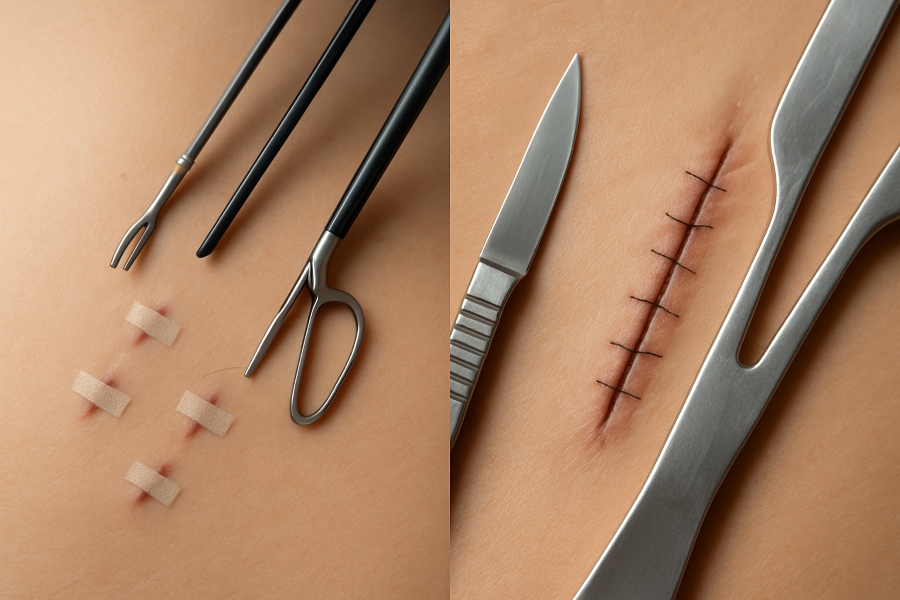
Open surgery is the more traditional method. It involves making one larger incision (cut) through the skin and muscle to allow the surgeon to see and touch the organs or tissues needing repair directly. This approach has been used for centuries and is still necessary for many complex procedures or emergencies.
What is Laparoscopic Surgery? (The Minimally Invasive Approach)
Laparoscopic surgery, often called minimally invasive surgery (MIS), uses a different technique. Instead of one large cut, the surgeon makes several small incisions (usually 0.5 to 1.5 cm). Through these tiny cuts, thin tubes called trocars are inserted. A special instrument with a camera (a laparoscope) goes through one port to send pictures to a video monitor, allowing the surgeon to see inside the body. Other long, thin laparoscopic instruments are inserted through the other ports to perform the surgery. Common procedures done this way include appendectomy, cholecystectomy (gallbladder removal), and many hernia repair surgeries.
Laparoscopic vs Open Surgery Recovery: The Big Differences
When people compare laparoscopic vs open surgery recovery, this is often where the biggest differences show up. Because laparoscopic surgery involves much smaller incisions and less cutting through muscle, the body typically heals faster.
Here’s a look at the key recovery differences:
- Hospital Stay:
- Laparoscopic: Usually shorter. Many patients go home the same day or within 1-2 days.
- Open: Typically requires a longer hospital stay, often several days up to a week or more, depending on the complexity of the surgery.
- Pain After Surgery:
- Laparoscopic: Generally causes less pain right after the procedure. The smaller incisions mean less trauma to muscles and tissues. Pain is often managed with less strong medication.
- Open: Usually results in more significant post-operative pain due to the larger incision and tissue manipulation. More robust pain management is often needed.
- Laparoscopic: Generally causes less pain right after the procedure. The smaller incisions mean less trauma to muscles and tissues. Pain is often managed with less strong medication.
- Return to Normal Activities:
- Laparoscopic: Patients often return to light activities, like walking, very quickly (sometimes the same day). Returning to work or strenuous activities is typically much faster, often within 2-4 weeks.
- Open: Recovery is slower. It takes longer to regain strength and mobility. Returning to work or strenuous activities can take 6-8 weeks or even several months. This is a major factor in laparoscopic vs open surgery recovery time.
- Scarring:
- Laparoscopic: Results in several small scars that are often less noticeable over time.
- Open: Leaves one larger scar at the site of the incision.
Comparing Costs: A More Complex Picture
Looking at laparoscopic vs open surgery costs isn’t always straightforward. While a shorter hospital stay with laparoscopic surgery can lower the cost of the hospital bed and nursing care, the picture is more complex:
- Operating Room Time & Equipment: Laparoscopic procedures sometimes take longer in the operating room because the surgeon is working indirectly. Also, the specialized laparoscopic instruments (trocars, camera equipment, specific surgical tools, clip appliers, energy devices) can be more expensive than standard open surgery tools.
- Overall Hospital Costs: Due to the factors above, the overall hospital bill for a laparoscopic procedure isn’t always cheaper than an open one, even with a shorter stay. Sometimes it’s similar, or in some cases, initially higher due to the technology costs.
- Patient’s Out-of-Pocket Costs: This depends heavily on insurance coverage, deductibles, and co-pays, which can vary widely regardless of the surgical approach. However, a faster recovery can mean less time off work, which saves the patient money in lost wages.
So, while the perception is often that minimally invasive means cheaper, the surgery costs comparison is procedure-dependent and influenced by many factors beyond just the surgical fee.
Outcomes and Potential Risks
Both laparoscopic surgery and open surgery are considered safe and effective when performed by skilled surgeons for appropriate conditions. Comparing surgical outcomes involves looking at how well the surgery fixed the problem and the potential complications.
- Effectiveness: For many common procedures (like the ones mentioned previously), studies show that the long-term effectiveness of laparoscopic and open surgery is similar.
- Complication Rates: Laparoscopic surgery may have a lower risk of certain complications compared to open surgery, such as:
- Wound infections (due to smaller incisions).
- Large incisional hernias later on.
- Less blood loss.
- Specific Risks: Both approaches have their specific risks. Open surgery has risks related to the larger incision. Laparoscopic surgery has risks related to creating the space in the abdomen (insufflation with gas) and the potential for injury to organs that are harder to feel directly.
- Conversion to Open: It’s important to know that a laparoscopic procedure might need to be converted to open surgery during the operation if unexpected problems arise, like excessive bleeding or difficulty seeing the anatomy. This is a safety measure.
Which Approach is Chosen?
The decision between laparoscopic vs open surgery isn’t just about preference. The surgeon considers several factors:
- The specific medical problem being treated.
- The patient’s overall health and medical history.
- Previous surgeries (which can cause scar tissue).
- The complexity of the particular case.
- The surgeon’s experience and expertise with each technique.
Your surgeon will discuss the best approach for your situation.
Comparing laparoscopic vs open surgery reveals distinct differences, most notably in recovery time. Laparoscopic surgery typically offers a faster return to daily life, less pain, and smaller scars due to its minimally invasive nature. While surgery costs can be complex to compare, and outcomes are often similar in terms of effectiveness, the benefits of quicker surgical recovery make the laparoscopic approach preferable for many conditions when it is medically appropriate. Both are vital techniques in modern medicine, chosen carefully to ensure the best possible result for the patient.