
Table of Contents
ToggleThe Surgeon’s Arsenal: A Guide to the Latest Laparoscopic Devices
Welcome to the future of surgery. The operating theater, once a landscape of large incisions and long recovery periods, has been transformed by a revolution of precision and minimal trauma. At the heart of this transformation lies a collection of extraordinary instruments—the surgeon’s arsenal.
Here at Lapex Surgical, a proud manufacturer from the heart of Sialkot, we believe in empowering surgeons with the best tools to perform life-changing procedures. We are not just creating instruments; we are forging the future of healthcare. This comprehensive guide is designed to shed light on the latest advancements in laparoscopic devices, exploring the technology, benefits, and critical role they play in modern minimally invasive surgery (MIS).
The Evolution of Laparoscopy: A Journey of Precision
For decades, open surgery was the gold standard. While effective, it came with significant drawbacks for patients, including large scars, a higher risk of infection, and extended hospital stays. The advent of laparoscopy, or “keyhole surgery,” in the late 20th century marked a paradigm shift. By using a series of small incisions, surgeons could perform complex procedures with a camera and specialized instruments.
The early days of laparoscopy were impressive, but limited. Today, we stand on the cusp of an even more exciting era. The latest laparoscopic devices are not just incremental improvements; they are a leap forward in ergonomics, visualization, and surgical efficiency.
The Pillars of Modern Laparoscopy: Unveiling the Technology
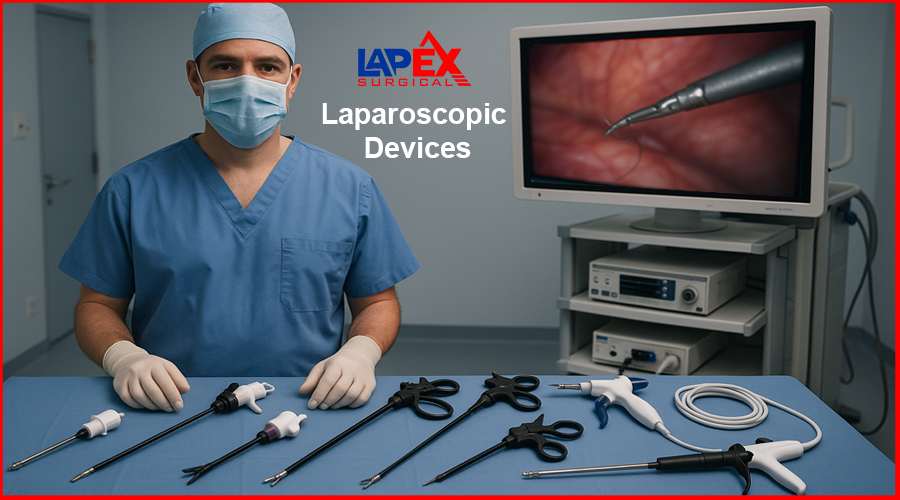
Modern laparoscopic surgery is a symphony of interconnected technologies. Each instrument plays a vital role in the overall success of the procedure. To truly understand the surgeon’s arsenal, we must look at the key components and their latest innovations.
1. Advanced Visualization Systems: Seeing is Believing
The surgeon’s eyes in a laparoscopic procedure are the visualization system. What was once a standard definition, two-dimensional view has evolved into a breathtakingly clear, multi-dimensional experience.
4K and 3D Laparoscopes: High-definition 4K laparoscopes provide a level of detail four times greater than standard HD. This ultra-clear image allows for precise identification of even the smallest anatomical structures, reducing the risk of error. The integration of 3D technology further enhances this by restoring crucial depth perception, a sense often lost in traditional 2D laparoscopy. This is particularly vital for complex suturing and dissection.
Augmented Reality (AR) and Artificial Intelligence (AI): The future is here. AI-powered systems are now being integrated into visualization, providing real-time data and predictive analytics. For instance, AI can help identify critical structures like blood vessels, while AR overlays can project patient-specific data, such as a CT scan, directly onto the live surgical image. This creates a powerful, data-rich environment for the surgeon.
2. Ergonomics and Dexterity: Tools for the Human Body
The surgeon is a highly skilled professional, but the physical demands of long hours of surgery with rigid instruments can lead to musculoskeletal injuries. The latest devices are designed with the surgeon’s well-being in mind.
Ergonomic Handles and Articulating Instruments: Redesigned handles with improved grip and weight distribution are reducing hand and wrist fatigue. A major advancement is the development of articulating instruments, which mimic the natural movement of a human wrist. These devices can bend and rotate at the tip, allowing for a wider range of motion and access to difficult-to-reach areas, all while operating through a small incision.
Mini-Laparoscopic Instruments: Pushing the boundaries of minimal invasiveness, these instruments are smaller than 3mm in diameter. They are used in “mini-laparoscopy,” a technique that results in even smaller scars, less postoperative pain, and faster patient recovery.
3. The Power of Energy: Cutting-Edge Energy Devices
Energy devices are the workhorses of the laparoscopic arsenal, used for cutting, coagulating, and sealing tissue. The evolution of these tools has focused on precision, safety, and efficiency.
Advanced Bipolar and Ultrasonic Systems: The latest energy devices utilize advanced bipolar and ultrasonic technology. Unlike older monopolar systems that send current through the patient’s body, advanced bipolar instruments contain the current between the jaws of the instrument, providing a safer, more precise seal on blood vessels. Ultrasonic devices use high-frequency vibrations to simultaneously cut and coagulate tissue, minimizing thermal spread and reducing damage to surrounding structures.
Integrated Cutting and Sealing: Some of the most advanced energy devices now combine both cutting and sealing mechanisms into a single instrument. This eliminates the need for instrument exchanges, saving time in the operating room and reducing the overall complexity of the procedure.
4. Trocar Systems: The Gateways to the Body
Trocars are the essential entry points for all laparoscopic instruments. Innovations in trocar design are centered on minimizing trauma and preventing gas leakage.
Bladeless and Optical Trocars: Traditional trocars used a blade to puncture the abdominal wall. Modern bladeless and optical trocars use a blunt tip to separate tissue layers rather than cutting them. Optical trocars incorporate a camera that allows the surgeon to visualize the layers as the trocar is inserted, ensuring a safer entry.
Modular and Self-Retaining Systems: Newer trocar systems are modular, allowing for easy interchangeability of components. Some even feature self-retaining mechanisms, which help prevent the trocar from slipping out during surgery, maintaining a stable surgical field.
5. Suturing and Clip Appliers: Closing the Deal
While much of the focus is on cutting and dissection, the final stages of a procedure—suturing and hemostasis—are just as critical.
Automated Suturing Devices: These devices simplify the complex task of laparoscopic suturing by automating parts of the process, making it faster and more consistent.
Advanced Clip Appliers: Modern clip appliers are designed for better ergonomics and more secure vessel occlusion. They come in various sizes and materials to accommodate different surgical needs.
Why Lapex Surgical? Our Commitment to the Arsenal
At Lapex Surgical, we are driven by a singular mission: to provide the highest quality laparoscopic and surgical instruments that meet the evolving needs of surgeons and, most importantly, their patients. As a manufacturer in Sialkot, a city with a rich heritage in surgical instrument craftsmanship, we blend this legacy with modern innovation and rigorous quality standards.
Our commitment to excellence is reflected in:
Uncompromising Quality: Every instrument we manufacture undergoes stringent quality control checks to ensure it meets international standards. We are ISO 13485, CE certified, and adhere to global regulatory requirements.
Innovation-Driven Design: Our R&D department works tirelessly to incorporate the latest technological advancements into our product lines, from ergonomic handles to precision-engineered tips.
A Complete Arsenal: We offer a wide range of laparoscopic devices, including bipolar/monopolar forceps, electrosurgical scissors, needle holders, trocars, and comprehensive surgical training simulators. We provide a complete solution for the modern operating room.
Frequently Asked Questions (FAQs) about Laparoscopic Devices
This section addresses common questions, building trust, and providing valuable information to potential customers.
Q1: What are the primary benefits of using advanced laparoscopic instruments?
A: The latest devices offer several key benefits, including:
Enhanced Visualization: 4K and 3D imaging provide superior clarity and depth perception.
Improved Surgical Outcomes: Greater precision leads to less tissue trauma and lower complication rates.
Reduced Surgeon Fatigue: Ergonomically designed tools and articulating tips minimize physical strain.
Faster Patient Recovery: Smaller incisions result in less pain, shorter hospital stays, and quicker return to normal activities.
Q2: How do electrosurgical instruments work in a laparoscopic procedure?
A: Electrosurgical instruments use high-frequency electrical current to cut, coagulate, or seal tissue. Monopolar systems apply current to the tissue through a single tip and require a grounding pad on the patient. Bipolar systems confine the current between the two tips of the instrument, providing more localized and safer energy application, especially in delicate areas.
Q3: What role does Lapex Surgical play in the global market for these devices?
A: As a leading manufacturer from Sialkot, Lapex Surgical is a key player in the global B2B market. We specialize in providing high-quality, cost-effective laparoscopic and surgical instruments to hospitals, distributors, and surgical centers worldwide, ensuring they have access to state-of-the-art tools without compromising on quality.
Q4: Are disposable or reusable instruments better?
A: Both have their place. Reusable instruments are often more cost-effective over their lifespan and are favored for their environmental sustainability. Disposable instruments eliminate the need for sterilization and reduce the risk of cross-contamination. Many modern operating rooms use a combination of both to optimize for cost, safety, and efficiency.
Q5: What are the latest innovations in laparoscopic training?
A: Advances in training include virtual reality (VR) simulators and portable surgical simulators. These systems provide a risk-free environment for surgeons to practice complex procedures, develop muscle memory, and master new instruments before entering the operating room. Lapex Surgical offers a range of high-fidelity simulators to support this critical aspect of surgical education.
A Table of Core Laparoscopic Instruments and Their Functions
This table provides a quick, easy-to-digest overview of the essential tools in a laparoscopic set.
| Instrument Category | Specific Devices | Primary Function | Latest Innovation / Feature |
| Visualization | Laparoscope, Camera Head, Light Cable | Provides visual feedback from inside the body. | 4K and 3D imaging for superior depth perception and clarity. |
| Access | Veress Needle, Trocar System, Cannula | Creates and maintains access ports for instruments and gas insufflation. | Bladeless, optical trocars for safer entry; self-retaining cannulas. |
| Grasping & Dissection | Atraumatic Graspers, Toothed Forceps, Dissectors | Holds, manipulates, and separates tissue. | Ergonomic handles, articulating tips for increased dexterity. |
| Cutting & Coagulation | Monopolar Hook, Bipolar Forceps, Scissors | Cuts tissue and controls bleeding (hemostasis). | Advanced bipolar and ultrasonic energy systems with minimal thermal spread. |
| Suturing & Ligation | Needle Holder, Suture Passer, Clip Applier | Closes wounds, ties knots, and ligates vessels. | Automated suturing devices; specialized clip appliers for secure hemostasis. |
| Auxiliary | Suction/Irrigation Device, Specimen Retrieval Bag | Removes fluids, debris, and extracts excised tissue. | High-flow, multi-functional suction/irrigation systems. |
The Future is Now: Robotic-Assisted and Hybrid Laparoscopy
While this guide focuses on traditional laparoscopic devices, it’s impossible to discuss the future without mentioning robotic-assisted surgery. Robotic platforms, such as the Da Vinci System, integrate with laparoscopic instruments to provide a surgeon with enhanced dexterity, tremor filtration, and a magnified 3D view. Lapex Surgical recognizes this trend and designs instruments that are compatible with the evolving surgical landscape.
The next generation of surgery will also see the rise of hybrid procedures, where robotic platforms are used for the most delicate parts of an operation, and handheld laparoscopic devices complete the rest. This blending of technologies promises to deliver the best of both worlds—precision and efficiency.
The Arsenal is in Your Hands
The advancements in laparoscopic technology have not only made surgery safer and more effective for patients, but they have also created a more sustainable and ergonomic environment for the surgical team. From the crystal-clear visuals of 4K laparoscopes to the intelligent precision of advanced energy systems, “The Surgeon’s Arsenal” is more powerful and sophisticated than ever before.
At Lapex Surgical, our commitment is to be a trusted partner in this journey of innovation. Our meticulously crafted instruments from Sialkot are a testament to our commitment to quality, precision, and the well-being of both patients and surgeons. We invite you to explore our full range of products and discover how we are helping to shape the future of minimally invasive surgery, one instrument at a time.