Table of Contents
ToggleBeyond the Operating Table: The Unseen Journey of a Surgical Instrument from Sialkot to the OR
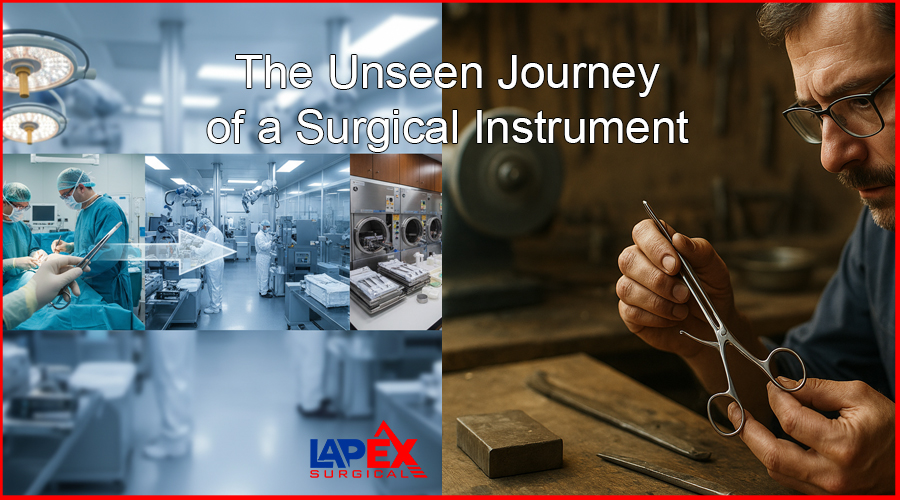
The operating room is a place of profound purpose and intense focus. In a space defined by cutting-edge technology and human skill, a surgeon holds a tool—a retractor, a pair of forceps, a needle holder—and with it, the power to change a life. The instrument feels natural in the hand, its weight balanced, its function flawless. It is a tool of precision, a testament to the art of craftsmanship. But how did it get there? What is the unseen journey that transforms raw material into this object of immense trust?
This is the story of a surgical instrument from Lapex Surgical. It is a narrative that begins not in a sterile hospital but in the heart of Sialkot, Pakistan, a city with a legacy of craftsmanship that has quietly equipped the global surgical community for over a century. It is a journey of fire and steel, of human hands and automated precision, of unwavering quality control and global logistics. It is a story of a promise—a commitment to surgical excellence forged long before the instrument ever arrives in the surgeon’s hand.
This article invites you to step behind the curtain and trace the lifecycle of a life-saving tool, from the moment a block of raw steel is selected to the instant it becomes a critical partner in the operating room.
1. The Genesis: Sourcing the Soul of the Instrument
Every great story begins with its origin. For a surgical instrument, the origin is a piece of steel. But not just any steel. The foundation of every Lapex Surgical instrument is a material of unparalleled purity and resilience: premium German stainless steel.
The choice of this material is deliberate and non-negotiable. It is the very first step in our rigorous quality control process. Unlike other steels, German Stainless steel is renowned for its specific metallurgical properties that are essential for surgical applications. It contains precise percentages of chromium and nickel, which provide exceptional corrosion resistance, a critical attribute for an instrument that must withstand repeated exposure to bodily fluids and the harsh chemicals of sterilization. Its inherent hardness allows it to hold a razor-sharp edge or maintain a precise form over countless uses.
Upon its arrival at our facilities in Sialkot, each batch of raw steel is subjected to a battery of tests. We check for chemical composition, hardness, and metallurgical structure to ensure it meets our exacting standards. Only after passing these initial gates does the material earn the right to begin its transformation.
This raw steel is the soul of the instrument, a silent promise of durability and reliability that will carry through every stage of its long and meticulous journey. We understand that without this uncompromising foundation, no amount of skill or technology can compensate.
2. The Art of Transformation: Manufacturing from Raw Steel to Refined Tool
The journey from a block of steel to a fully formed surgical instrument is an intricate process, a symphony of fire, force, and finesse. It is here that the heritage of Sialkot’s artisans truly comes to life, a perfect blend of a centuries-old craft and the precision of modern engineering.
Forging: The Art of Shaping
The process begins in the forge. Our master craftsmen, many of whom are inheritors of a family trade passed down through generations, heat the steel to a specific temperature where it becomes malleable. With powerful hammers and presses, they meticulously shape the raw block into a rough approximation of its final form—the jaws of a pair of forceps, the shaft of a retractor, the handle of a needle holder. This process of forging realigns the grain structure of the steel, giving the instrument its foundational strength and durability. It’s an act of controlled violence and immense artistry, an initial baptism by fire that sets the stage for the tool’s life.
Milling and Grinding: The Path to Precision
From the raw forging, the instrument moves to the next stage: the application of precision. Here, modern CNC (Computer Numerical Control) machines work in harmony with human expertise. These machines, guided by a digital design, mill and grind the forged steel, removing excess material with astonishing accuracy. They create the intricate joints, the delicate serrations on the jaws, and the precise curves that define each instrument’s function.
But the machines are only part of the story. The final grinding and sharpening—especially for instruments like surgical scissors or dissectors—is often performed by hand. Our skilled artisans, with a trained eye and a steady hand, bring the cutting edges to a razor sharpness that only human touch can achieve. This is where the artistry of Sialkot truly shines through, ensuring the instrument is not just functional but an extension of the surgeon’s hand.
Heat Treatment: Imparting Strength and Flexibility
One of the most critical and often unseen stages in the journey is heat treatment. This scientific process is the key to balancing two opposing but essential properties of steel: hardness and flexibility. If the instrument is too hard, it will be brittle and prone to breaking. If it is too soft, it will deform and lose its function.
Our instruments are heated in controlled furnaces to temperatures as high as and then rapidly cooled in a process called quenching. This makes the steel extremely hard. It is then followed by tempering, a process of reheating the steel to a lower temperature (200∘C to 500∘C) to reduce its brittleness and increase its toughness and ductility. The entire process is meticulously monitored to ensure each instrument achieves the optimal balance required for its specific surgical application.
Stage of Heat Treatment | Action | Resulting Property |
|---|---|---|
Annealing | Heating and slow cooling | Softens the steel for easy machining |
Hardening | Heating to a high temperature, then rapid cooling | Maximizes hardness and strength |
Tempering | Reheating to a lower temperature | Reduces brittleness, improves toughness, and ductility |
Assembly and Finishing: The Final Touch
Once the individual components are shaped, heat-treated, and refined, they are meticulously assembled. For instruments with multiple parts, like a needle holder or forceps, our technicians work with precision to ensure that the hinges are perfectly aligned and the jaws coapt flawlessly.
Following assembly, the instrument undergoes a series of finishing steps. It is polished to a flawless, mirror-like finish. This isn’t just for aesthetics; it’s a vital part of quality control. A smooth surface is easier to clean and sterilize, reducing the risk of bioburden adhesion. The final finish is a testament to the dedication of our team, a final polish that prepares the instrument for its ultimate purpose.
3. The Guardian’s Promise: Quality Control and International Certifications
The journey of a Lapex Surgical instrument is defined by a series of gates. At each stage of production, the instrument must pass rigorous quality control (QC) checks. This is the guardian’s promise—that no tool with a flaw, no matter how minor, will ever leave our facility.
Layered Quality Assurance
Our QC process is not a single checkpoint but a layered, comprehensive approach that begins with the raw material and ends with the final packaged product.
Initial Visual & Dimensional Inspection: After each major manufacturing stage (forging, grinding, milling), every single instrument is inspected by hand. Our trained inspectors use micrometers and gauges to check for dimensional accuracy, and their trained eyes look for any imperfections—a hairline crack, a rough spot, or a misalignment in the jaws.
Functional Testing: The instrument is tested for its intended function. For scissors, we test the cutting edge on a specific material to ensure sharpness. For forceps, we test the gripping power and the coaptation of the jaws. For retractors, we test the strength and rigidity of the shafts.
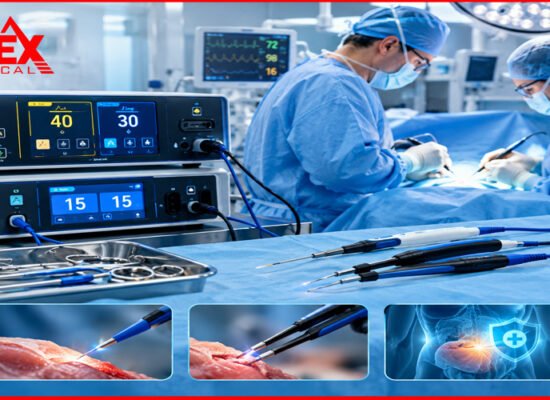
Specialized Testing for Electrosurgical Instruments: For our electrosurgical product line, the QC process includes a crucial additional step: electrical integrity testing. We apply a specific voltage to the instrument’s insulation to check for any microscopic pinholes or flaws that could lead to unintended current leakage—a critical safety measure that prevents patient burns.
The Uncompromising Standard: International Certifications
Our internal QC is a promise to ourselves, but our external certifications are a promise to the world. We adhere to the most demanding international standards, providing our partners with an external validation of our commitment to quality.
ISO 13485:2016 (Medical Devices – Quality Management Systems): This is the gold standard for medical device manufacturing. Our compliance with ISO 13485:2016 dictates every aspect of our operations, from design and development to production and distribution, ensuring a systematic and transparent approach to quality that puts patient safety first.
CE Mark (MDR 2017/745): This mark signifies our compliance with the stringent health, safety, and environmental protection requirements for medical devices in the European Union. Our adherence to the latest Medical Device Regulation (MDR) is a testament to the high quality and safety of our products.
GMP/FDA Compliance: We operate under Good Manufacturing Practices and adhere to the regulations of the U.S. FDA, further demonstrating our commitment to global regulatory excellence.
These certifications are more than just badges; they are a public declaration of our unwavering commitment to quality and patient safety.
4. From the Factory Floor to the World: Packaging and Distribution
The journey doesn’t end when the instrument is polished and inspected. The final stages are equally critical, ensuring the instrument arrives at its destination in perfect condition, ready for its critical role.
Cleaning and Sterilization Preparation
After passing all QC checks, each instrument undergoes a meticulous cleaning process to remove any residues from manufacturing. It is then placed in a clean-room environment for final packaging. Our instruments are packaged in sealed, sterile-ready pouches or trays that protect them from contamination and physical damage during transit. The packaging is designed to maintain the instrument’s integrity until it is opened in the hospital for final sterilization.
Global Logistics: The Final Leg of the Journey
From our facilities in Sialkot, our instruments embark on their global journey. Our efficient and robust distribution network ensures that our high-quality surgical tools reach hospitals and clinics in countries around the world. It is a carefully orchestrated process, where every step—from warehousing to shipping—is managed to ensure the instruments arrive safely and on time. Our commitment to our partners means we are not just a manufacturer but a reliable supplier, providing a steady flow of high-quality tools that healthcare professionals can depend on.
5. The Ultimate Destination: In the Hands of the Surgeon
After thousands of kilometers and a journey of immense care and precision, the instrument reaches its final destination: the operating room. It is unsealed, sterilized, and presented to the surgeon. As the surgeon takes it in their hand, they are not just holding a piece of metal. They are holding the culmination of a legacy.
They are holding the hard-won properties of German stainless steel, the controlled force of the forge, the surgical precision of the mill, the scientific balance of heat treatment, the meticulous artistry of polishing, the promise of a flawless QC check, and the secure journey of a protective package.
The surgeon’s focus is on the patient, on the intricate dance of the procedure. They trust their tools implicitly. This trust is the ultimate reward of our unseen journey. It is the recognition that every stage of the process, every skilled hand, every QC check, and every international certification has a single, profound purpose: to empower the surgeon to perform with confidence and to ensure the best possible outcome for the patient.
The unseen journey is a story of human dedication—from the artisans in Sialkot who pour their generational knowledge into every tool, to the quality control inspectors who are the final guardians of our promise, to the logistics team that ensures timely delivery. It is a journey that transforms a piece of steel into a life-saving tool, a journey that Lapex Surgical is proud to undertake with every instrument we create.
Frequently Asked Questions (FAQ)
Q1: Why is Lapex Surgical’s Sialkot heritage so important to its manufacturing process?
A1: Sialkot has a centuries-old heritage of surgical instrument craftsmanship. This tradition provides Lapex Surgical with access to a deep pool of skilled artisans and inherited knowledge in metallurgy, forging, and finishing. This human expertise is combined with modern technology to produce instruments of exceptional quality, balance, and durability.
Q2: What is the significance of using German stainless steel?
A2: German stainless steel is the preferred material for high-quality surgical instruments due to its superior properties. It offers exceptional corrosion resistance, is incredibly durable, and can maintain a sharp edge or precise form over many years of use and repeated sterilization, ensuring a long and reliable lifespan for the instrument.
Q3: How does Lapex Surgical ensure the quality of its instruments?
A3: Our quality assurance process is multi-layered and rigorous. It includes initial material verification, a visual and dimensional inspection after each manufacturing stage, and specialized functional testing for each instrument. We also adhere to strict international standards like ISO 13485 and the CE Mark, which are externally audited and certified.
Q4: What is the purpose of the heat treatment process?
Q4: Heat treatment is a critical, scientific process that balances the hardness and flexibility of the steel. It prevents the instrument from becoming too brittle and breaking, while also ensuring it is hard enough to hold its shape and maintain a sharp edge. It is a fundamental step in ensuring the instrument’s longevity and reliable performance.
Q5: Are Lapex Surgical’s instruments packaged to be sterile?
A5: Our instruments are meticulously cleaned and packaged in a clean-room environment. While they are not sold as sterile, they are sealed in sterile-ready pouches or trays that protect them from contamination during transit and are designed for safe and easy sterilization by the hospital staff before being used in a surgical procedure.
Q6: How does the quality of the instrument impact patient outcomes?
A6: The quality of the instrument directly impacts patient safety and surgical outcomes. A reliable, well-balanced, and precisely-engineered instrument allows a surgeon to perform with greater confidence and accuracy, reducing the risk of complications like tissue damage or bleeding, and ultimately leading to a more successful procedure and faster patient recovery.