7 Essential Features to Look for in a Laparoscopic Trocar: The Ultimate Buyer’s Guide
In the high-stakes environment of a modern operating theater, the success of a minimally invasive surgery (MIS) often hinges on the very first step: establishing access. The laparoscopic trocar is the gateway through which every other instrument passes. While it might seem like a simple mechanical tool, the difference between a mediocre trocar and a precision-engineered instrument can mean the difference between a seamless procedure and a traumatic entry complication.
At Lapex Surgical, based in the world-renowned surgical manufacturing hub of Sialkot, we understand that precision is non-negotiable. Whether you are a surgeon, a procurement officer, or a medical distributor, understanding the technical nuances of trocars is essential for patient safety and surgical efficiency.
In this exhaustive guide, we explore the seven essential features that define a world-class laparoscopic trocar and why these specifications matter in the clinical setting.
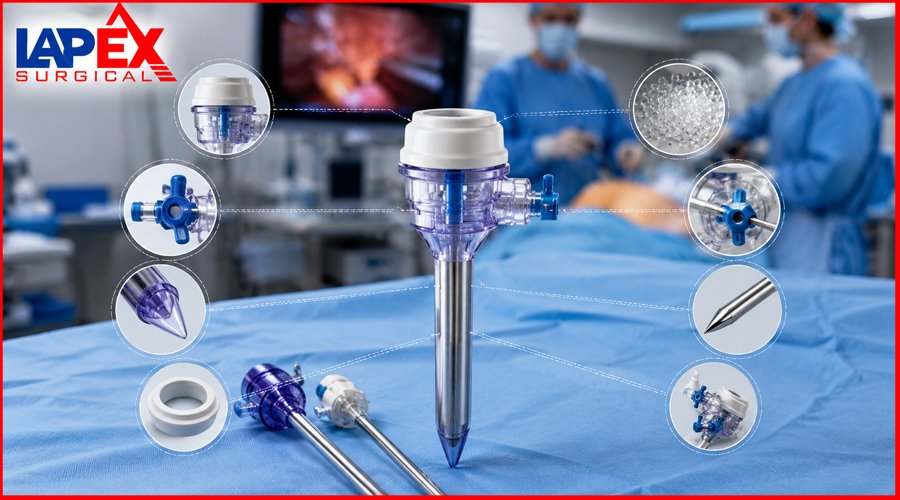
1. Advanced Tip Design: Bladed vs. Dilating (Shielded Entry)
The primary function of a trocar is to penetrate the abdominal wall. Traditionally, this was done with sharp, stainless steel blades. However, modern surgery has evolved toward safety-first designs.
Bladed Trocars
Sharp-tipped trocars require less force to insert but carry a higher risk of accidental visceral or vascular injury. If choosing a bladed model, ensure it features a spring-loaded safety shield that snaps forward to cover the blade immediately upon entering the peritoneal cavity.
Dilating (Bladeless) Trocars
The industry is shifting toward bladeless, dilating tips. These designs do not cut the tissue fibers but rather stretch and separate them.
- Why it matters: Dilating tips result in smaller fascial defects, reducing the risk of port-site hernias and speeding up patient recovery times.
- Lapex Insight: Our bladeless trocars are designed with a low-profile tip geometry that provides tactile feedback, allowing the surgeon to “feel” each layer of the abdominal wall during entry.
2. Valve Integrity and Airtight Seal Technology
Maintaining a stable pneumoperitoneum (the inflation of the abdomen with CO2) is critical. If a trocar leaks, the operative field collapses, obstructing the surgeon’s view and increasing the risk of injury.
The Dual-Valve System
A high-quality trocar must have a robust internal valve system. Look for:
- Main Seal: A flexible, durable seal that accommodates instruments of varying diameters (e.g., from 5mm to 12mm) without losing pressure.
- Sub-seal/Duckbill Valve: To prevent gas escape when the instrument is removed.
Comparative Analysis: Seal Materials
| Material | Durability | Seal Reliability | Friction Level |
|---|---|---|---|
| Standard Silicone | High | Moderate | Medium |
| Reinforced Polyisoprene | Very High | Excellent | Low |
| Lapex Proprietary Blend | Exceptional | Superior | Ultra-Low |
3. Ergonomic Handle Design and Control
Surgeons often perform multiple procedures a day. Hand fatigue is a real concern. The trocar handle (the part that sits in the palm during insertion) must be designed for a natural grip.
- Palm Fit: The handle should be contoured to distribute the insertion pressure across the palm rather than focusing it on a single point.
- Non-Slip Texture: In the fluid-heavy environment of surgery, a slippery handle is a liability. Look for textured surfaces that ensure a secure grip even with wet gloves.
- Profile Height: Low-profile trocars are preferred because they allow for a wider range of instrument movement and prevent “clashing” with other instruments during multi-port surgeries.
4. Cannula Fixation: Stability Without Trauma
Once the trocar is inserted, it must stay in place. A trocar that slips out mid-surgery (extubation) is a major annoyance and a safety risk. Conversely, a trocar that is too aggressive can damage the abdominal wall.
Features to Look For:
- Threaded Cannulas: Deep, atraumatic threads provide excellent “grip” in the abdominal wall, ensuring the port stays anchored even during vigorous instrument exchanges.
- Inverted Ribs: Some designs use inverted ribs that allow for easy insertion but provide resistance against pulling out.
- Clear Cannula Sleeves: Transparent sleeves are essential for visualizing the instrument passage and checking for any internal bleeding at the port site.
5. Instrument Compatibility and Friction Reduction
The internal diameter of the trocar must be precise. A 5mm instrument should glide through a 5mm trocar with minimal resistance.
- Low Friction Coating: High-end trocars often feature an internal lubricant or specialized coating to prevent “instrument drag.” This allows for the delicate, precise movements required in microsurgery.
- Universal Seal Adapters: Look for trocars that do not require external reducers. A universal seal that can switch from a 12mm stapler to a 5mm grasper without manual adjustment is a significant time-saver in the OR.
6. Material Science: Reusable vs. Disposable
As a manufacturer in Sialkot, Lapex Surgical specializes in high-grade stainless steel and medical-grade polymers. The debate between reusable and disposable trocars often comes down to cost vs. convenience.
Reusable Trocars (The Lapex Strength)
- Sustainability: Reduces medical waste significantly.
- Cost-Effectiveness: After 10–15 uses, the cost per procedure drops well below that of disposables.
- Construction: Crafted from high-tensile stainless steel with specialized insulation to prevent electrosurgical “stray current” injuries.
Hybrid Trocars
A growing trend is the “Hybrid” model—a reusable cannula with a disposable valve/seal system. This offers the stability of metal with the guaranteed airtightness of a new seal for every procedure.
7. Electrosurgical Compatibility and Safety
Since trocars are often used alongside monopolar and bipolar electrosurgical instruments (like the ones found in the Lapex Electrosurgical Catalog), safety is paramount.
- Insulation Integrity: For metal trocars, the insulation must be flawless to prevent “Capacitive Coupling.” This is where the electrical charge from a hook or scissor jumps to the trocar and burns the patient’s skin or internal organs.
- Lapex Safety Standards: Every trocar manufactured at our Sialkot facility undergoes rigorous dielectric testing to ensure it can withstand high-voltage surgical currents without leakage.
Why Sialkot Craftsmanship Matters for Laparoscopy
Sialkot is not just a city; it is a legacy. At Lapex Surgical, we combine centuries of metal-working heritage with 21st-century ISO-certified manufacturing processes.
When you choose a Laparoscopic Trocar from Lapex, you are getting:
- Precision Engineering: Every tip is hand-checked for the perfect balance of sharpness and safety.
- Surgical Grade Steel: We use only the highest quality alloys that resist corrosion and withstand thousands of autoclave cycles.
- Global Compliance: Our instruments meet stringent international standards, making them suitable for hospitals in Europe, the Americas, and beyond.
Frequently Asked Questions (FAQ)
Q1: What is the most common size for a laparoscopic trocar?
The most common sizes are 5mm and 10mm/12mm. The 5mm port is typically used for graspers and dissectors, while the 12mm port is used for larger instruments like staplers, clip appliers, or for tissue extraction.
Q2: Are bladeless trocars really safer than bladed ones?
Statistically, yes. Bladeless trocars use a “dilating” technique which significantly reduces the incidence of port-site hernias and vascular injuries because it separates tissue rather than cutting it.
Q3: How do I maintain my reusable trocars?
Proper sterilization is key. They should be disassembled immediately after surgery, cleaned with a neutral pH detergent, and inspected for any nicks or scratches before being autoclaved.
Q4: Can I use a 5mm instrument in a 12mm trocar?
Yes, provided the trocar has a universal seal or you use a “reducer” cap. Lapex Surgical trocars are designed with advanced seals that automatically adjust to different instrument diameters.
Q5: Why should I buy from a Sialkot-based manufacturer like Lapex Surgical?
Sialkot offers the best price-to-quality ratio in the world. You receive premium-grade surgical instruments that meet German standards at a fraction of the cost of Western-branded equivalents.
Comparison Table: Disposable vs. Reusable Trocars
| Feature | Disposable Trocars | Reusable Trocars (Lapex) |
|---|---|---|
| Initial Cost | Low | High |
| Long-term ROI | Low | Very High |
| Environmental Impact | High Waste | Low Waste |
| Sharpness | Guaranteed New | Depends on Maintenance |
| Tactile Feedback | Moderate | High (Weighted Steel) |
| Safety Seals | Built-in | Replaceable/Modular |
Making the Right Choice
Selecting the right laparoscopic trocar is about balancing the surgeon’s need for ease of entry with the patient’s need for safety and minimal trauma. By focusing on the seven features outlined above—tip design, seal integrity, ergonomics, fixation, friction, material, and electrical safety—you ensure that your surgical facility is equipped for success.
At Lapex Surgical, we are proud to continue Sialkot’s tradition of excellence. We invite you to explore our full range of Laparoscopic Instruments and experience the precision that only a dedicated manufacturer can provide.
Ready to upgrade your surgical suite? Contact the Lapex team today for a custom quote or a digital catalog of our latest precision instruments.