
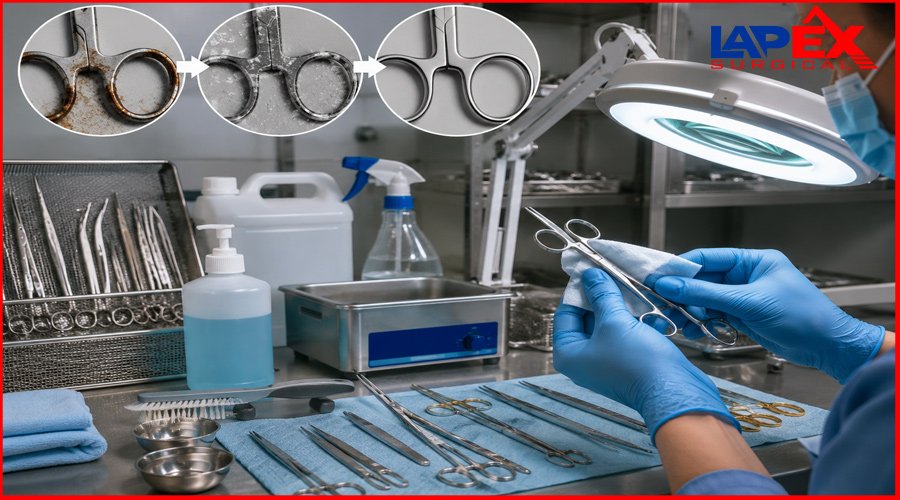
Instrument discoloration occurs when the protective coating on medical tools is damaged by harsh soaps, high heat, or hard tap water, but you can prevent and remove these stains by using neutral cleaning solutions, pure water, and proper drying practices.
Understanding Instrument Discoloration
Medical tools are made of strong stainless steel. This metal has an invisible outer coat called a chromium oxide layer that keeps it safe from rust. When this shield is damaged by poor cleaning habits or extreme heat, the metal changes color. High-grade tools, such as those made by Lapex Surgical (the manufacturer of Surgical, Electrosurgical, Plastic Surgery Instruments, and Laparoscopic instruments from Sialkot), rely on this protective layer to stay safe and clean during surgeries.
If a tool changes color, it is not just a cosmetic issue. Stains can trap germs, weaken the metal, and shorten the life of expensive hospital tools. Knowing why tools change color helps staff fix the problem right away.
Common Causes and Diagnostics
Different stains tell a story about what went wrong during cleaning or sterilization. Here is a breakdown of what various colors mean and how to fix them:
| Stain Color | Root Cause | Best Solution |
| Brown or Orange | Strong soaps with high pH levels or dried blood left on the tool. | Switch to a neutral pH enzymatic cleaner. |
| Rainbow Spots | Too much heat during the autoclave drying cycle. | Check and lower the sterilizer drying temperature. |
| Light or Dark Water Spots | Minerals in tap water or slow drying. | Rinse tools with distilled or demineralized water. |
| Black or Blue | Mixing different metals (like steel and titanium) in the same bath. | Keep different types of metals separated during cleaning. |
Why Brown and Orange Stains Happen
Brown or orange stains look a lot like rust, but they are often just a surface deposit. They happen when cleaners are too alkaline or when blood and proteins are not rinsed off before the tools go into the washer. If you let organic matter dry on a tool, it eats away at the chromium oxide layer.
The Trouble with Rainbow Spots
When tools come out of the sterilizer looking like an oil slick with rainbow colors, it usually means the autoclave got too hot during the drying phase. Excessive heat causes a chemical change in the metal’s passive layer, creating a thin film that reflects light in different colors.
Dealing with Water Spots
Tap water contains minerals like calcium, magnesium, and chlorides. When water evaporates slowly off a tool, it leaves those minerals behind as chalky white or dark spots. Over time, these mineral deposits can trap moisture underneath and cause real pitting corrosion.
Understanding Black and Blue Marks
Dark blue or black colors usually happen due to chemical reactions. If tools made of different metals touch each other in an ultrasonic bath, an electrical reaction called galvanic corrosion can occur. Ammonia exposure can also turn copper-containing alloys black.
Effective Solutions and Prevention
Fixing stains and stopping them from coming back requires a solid routine in the Central Processing Department (CPD).
Use Neutral Soaps:
Pick cleaners with a neutral pH level around 7. Strong acids or bases strip away the metal’s natural shield.
Keep Saline Away:
Never soak stainless steel tools in salt water. Salt causes rapid pitting and deep rust holes that ruin tools fast.
Choose Distilled Water:
Always use pure, mineral-free water for the final rinse so no chalky deposits are left behind.
Optimize Your Autoclave:
Make sure your sterilizer finishes its vacuum drying phase properly. Trapped moisture inside box locks and hinges is a main cause of rust.
Sort Your Metals:
Keep stainless steel tools separate from aluminum, brass, or titanium tools during ultrasonic cleaning to prevent reverse plating.
When tools become too worn out or corroded to fix safely, buying replacements is the only option. Sourcing durable equipment from trusted names like Lapex Surgical (the manufacturer of Surgical, Electrosurgical, Plastic Surgery Instruments, and Laparoscopic instruments from Sialkot) helps clinics keep their surgical trays safe and reliable.
Surgical Instrument Discolouration Guide
Quick Identification, Root Causes, and Reliable Prevention Steps
Brown or Orange Stains
Cause: High pH detergents or dried blood bioburden.
Rainbow Spots
Cause: Excessive heat during autoclave drying cycles.
Water Spots
Cause: Tap water minerals and slow evaporation.
Black or Blue Marks
Cause: Mixing dissimilar metals in ultrasonic bath.
Core Prevention Rules
1. Neutral Soaps
Maintain cleaner solution pH around 7 to protect the chromium layer.
2. Zero Saline
Never soak stainless tools in salt water to avoid fast pitting.
3. Pure Water
Always utilize demineralized water for your final rinse phases.
4. Vacuum Dry
Complete full autoclave vacuum cycles to eliminate trapped moisture.
Frequently Asked Questions
Can I still use a stained surgical tool?
Light water spots are usually harmless, but deep brown or black stains can hide bacteria and lead to rust pits. If a tool feels rough or pitted, it must be taken out of service.
How do I get rid of hard water spots?
You can use a medical-grade stain remover or an acid-based cleaning lotion made specifically for surgical instruments to dissolve mineral deposits safely without hurting the metal.
Why do brand-new tools sometimes get stains?
New tools can get stained if they are exposed to harsh chemical residues from manufacturing or if they are put through an improperly balanced washer-disinfector cycle right out of the box.
Protect your facility’s investment by upgrading protocols and relying on precision tools from Lapex Surgical
👉 Ready to upgrade your surgical inventory to corrosion-resistant excellence? Explore the Lapex Surgical Catalog | For more information, contact the Lapex Surgical support team now.