Table of Contents
ToggleBeyond the Blade: Lapex Surgical Pioneers the Future of Laparoscopic Instruments with AI, AR & Nanotech
The operating room of tomorrow is not a distant fantasy; it’s being built today, piece by meticulous piece. At the heart of this transformation lies the evolution of laparoscopic instrumentation – tools that have already revolutionized patient care by making surgery less invasive, safer, and reducing recovery times. But what does the next generation of these essential instruments look like?
It’s a future where a surgeon’s intuition is augmented by real-time data, where visual limitations vanish with augmented reality, and where instruments operate at a scale previously unimaginable, thanks to nanotechnology. This isn’t just about bigger screens or faster robots; it’s about fundamentally reshaping the capabilities of the tools themselves, turning them into “smart surgical instruments.”
At Lapex Surgical, nestled in the historic city of Sialkot – a global cradle of surgical instrument craftsmanship – we are not merely observing these seismic shifts. We are actively shaping them. Our legacy of precision manufacturing is now infused with a relentless pursuit of innovation, ensuring that the future of laparoscopic instrumentation is built on a foundation of both unparalleled skill and cutting-edge technology.
This article delves into the exciting realm of advanced technologies in MIS, exploring how Artificial Intelligence (AI), Augmented and Virtual Reality (AR/VR), Nanotechnology, and the concept of “smart instruments” are converging to redefine surgical excellence. We will highlight Lapex Surgical’s pivotal role in integrating these innovations, ensuring that our instruments continue to lead the way in surgical precision, safety, and efficacy.
The Evolution Continues: From Vision to Precision
Minimally Invasive Surgery (MIS) has come a long way since its inception. What began as a visual challenge with limited dexterity has continuously evolved, driven by technological advancements in optics, robotics, and instrument design. Today, we stand on the cusp of an even more profound transformation.
The global laparoscopic devices market, valued at over USD 8.64 billion in 2025, is projected to reach USD 12.49 billion by 2030, exhibiting a healthy CAGR of 7.65%. This growth is a testament to the ongoing preference for MIS, bolstered by innovations in 4K and 3D imaging, the increasing adoption of robotic platforms, and a rising global geriatric population requiring surgical interventions. Energy devices and robotic-assisted platforms are driving this growth, underscoring the need for more advanced and capable tools.
However, the future isn’t just about what’s already here; it’s about the emerging technologies in MIS that are poised to redefine the limits of surgical intervention.
Emerging Technologies: The Pillars of Tomorrow’s Laparoscopic Instruments
Powerful cross-disciplinary advancements are driving the next wave of innovation in laparoscopic instrumentation.
1. Augmented Reality (AR) & Virtual Reality (VR) in Surgery
AR and VR are no longer confined to gaming; they are becoming integral to surgical planning, training, and even intraoperative guidance.
Virtual Reality (VR): VR immerses surgeons in a completely simulated environment. This is revolutionary for:
Training and Skill Acquisition: VR simulators provide a risk-free environment for surgeons to practice complex laparoscopic procedures, refine their hand-eye coordination, and master new techniques. They offer objective performance metrics and personalized feedback, accelerating skill development.
Preoperative Planning: Surgeons can “walk through” a virtual 3D model of a patient’s anatomy, identifying critical structures and planning the optimal surgical approach, reducing surprises during the actual procedure.
Augmented Reality (AR): AR overlays digital information onto the real-world view of the surgical field. This offers immediate, context-aware insights:
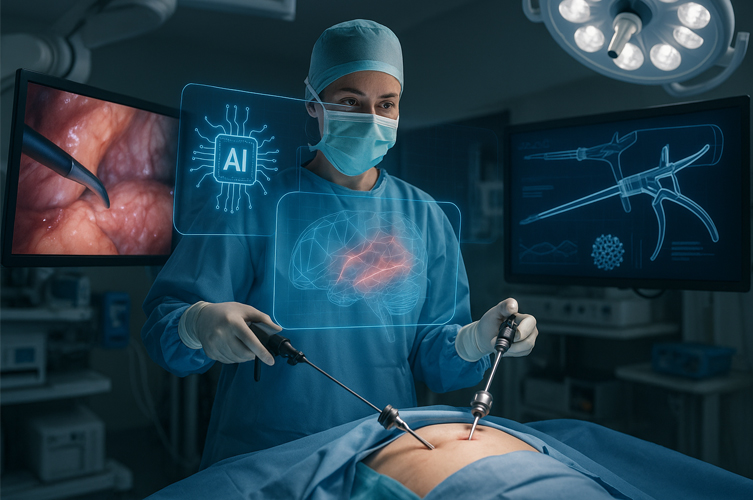
Enhanced Visualization: Surgeons can view real-time anatomical data (e.g., blood vessels, nerves, tumor margins) from pre-operative scans superimposed directly onto the patient’s body or laparoscopic monitor. This “X-ray vision” significantly improves precision and safety, especially in complex anatomies.
Navigation and Guidance: AR can guide instrument placement and trajectory, helping surgeons precisely target specific areas and avoid critical structures. This can reduce operative time and improve outcomes.
Collaboration: Remote proctoring and real-time collaboration can be facilitated via AR, allowing experienced surgeons to guide less experienced colleagues from a distance.
Lapex Surgical’s Role: Our commitment to surgical education is already manifest in our portable training simulators. We are actively exploring how to integrate AR and VR capabilities into these platforms, providing an even more immersive and effective training experience, directly impacting the adoption curve for new surgical techniques and instruments. Furthermore, as AR becomes more commonplace in the OR, our instruments will be designed for optimal visibility and integration within these enhanced visual fields.
2. Artificial Intelligence (AI) in Surgery
AI’s impact on laparoscopic instrument design and surgical workflow is multifaceted, moving beyond simple automation to intelligent augmentation.
Preoperative Planning & Predictive Analytics: AI algorithms can analyze vast datasets of patient medical records, imaging scans (CT, MRI), and past surgical outcomes to create detailed 3D models of patient anatomy. This enables surgeons to meticulously plan procedures, predict potential complications, and choose the most effective surgical approach, even before the first incision.
Intraoperative Guidance & Real-time Feedback:
Computer Vision: AI-powered computer vision can analyze live laparoscopic video feeds to identify anatomical landmarks, highlight critical structures (e.g., blood vessels, nerves, tumor margins), and track instrument movement in real-time. This provides surgeons with an “intelligent co-pilot” during complex maneuvers.
Smart Instrument Control: In robotic systems, AI can refine instrument movements, enhance precision, filter tremors, and even prevent collisions, augmenting the surgeon’s dexterity.
Tissue Recognition: AI can be integrated into instruments (e.g., smart forceps) to provide real-time information about tissue type, stiffness, and abnormalities (e.g., distinguishing cancerous from healthy tissue), guiding resection margins.
Postoperative Care & Personalized Medicine: AI can monitor patient recovery, predict potential complications, and even suggest personalized interventions based on individual patient data, improving overall outcomes and reducing readmissions.
Training & Skill Assessment: AI-based simulations offer personalized guidance and real-time feedback, helping surgeons identify areas for improvement and accelerate skill acquisition, thereby addressing the shortage of advanced-skill laparoscopic surgeons.
Lapex Surgical’s Role: The impact of AI on laparoscopic instrument design is profound. We are exploring the integration of smart sensors and AI-compatible data outputs within our instruments. This means designing instruments that can communicate with AI systems, providing vital real-time feedback on tissue interaction, force applied, or even temperature. Our OEM capabilities position us perfectly to partner with developers building AI-powered surgical platforms, providing the physical “hands” of their intelligent systems.
3. Nanotechnology in Surgical Instruments
Operating at the atomic and molecular scale, nanotechnology promises unprecedented precision and functionality for surgical tools.
Enhanced Precision and Miniaturization: Nanoscale surgical instruments can have sharper, more precise tips and edges, allowing for extremely accurate dissection with minimal tissue damage. This opens possibilities for surgery at the cellular level.
Improved Strength and Durability: Incorporating nanomaterials like carbon nanotubes or graphene into instrument design can create tools that are stronger, lighter, and more resistant to wear, corrosion, and repeated sterilization cycles. This increases instrument longevity and reliability.
Smarter Coatings for Reduced Infection Risk: Nanocoatings (e.g., silver nanoparticles, antimicrobial surfaces) can be applied to instruments to inhibit bacterial adhesion and growth, significantly reducing the risk of surgical site infections—a major concern in healthcare. Some even enable self-cleaning properties.
Biocompatibility: Nanomaterials can be designed to be highly compatible with human tissue, reducing adverse reactions and improving integration in implantable devices.
Enhanced Diagnostics and Targeted Delivery: Nanosensors integrated into instruments can detect biochemical changes at the cellular level, providing real-time diagnostic information. Nanoparticles can also be used for targeted drug delivery or enhanced imaging contrast agents.
Lapex Surgical’s Role: As manufacturers of surgical instruments that demand exceptional material integrity, Lapex Surgical is closely monitoring and researching the application of nanotechnology. Our current focus on premium, corrosion-resistant stainless steel and robust construction aligns perfectly to create even more durable and biocompatible instruments. We envision applying nanoscale surface treatments to enhance grip, reduce friction, and provide antimicrobial properties for our future lines of smart surgical instruments.
The Rise of Smart Surgical Instruments: Defining the Future
The convergence of these technologies leads to the concept of “smart surgical instruments” – tools that move beyond passive functionality to active, intelligent assistance.
Characteristics of Smart Surgical Instruments:
Sensor Integration: Embedded sensors can measure force, pressure, temperature, tissue impedance, and even biochemical markers.
Real-time Feedback: Providing auditory, visual, or haptic (tactile) feedback to the surgeon based on sensor data. For example, a smart forceps could vibrate when it detects a nerve or visually highlight a tumor margin on the display.
Connectivity: Ability to communicate data wirelessly with robotic systems, AI platforms, or AR displays.
Adaptive Capabilities: Instruments that can subtly change their properties (e.g., stiffness, cutting edge) based on real-time tissue interaction or surgeon input.
Miniaturization: Enabling surgery through even smaller incisions or natural orifices, reducing trauma.
Examples:
Smart Laparoscopic Forceps: Equipped with sensors to provide tactile feedback, helping surgeons detect tissue stiffness or abnormalities like tumors with greater accuracy, compensating for the lack of direct haptic feel in current laparoscopic systems.
Intelligent Energy Devices: Automatically adjusting energy delivery based on tissue type and thickness, preventing damage to surrounding structures.
Surgical Robots with Integrated Nanosensors: Performing highly precise movements and diagnostic functions within the body with minimal invasiveness.
Lapex Surgical: Sialkot’s Apex in Innovation and Quality
Our journey at Lapex Surgical is a testament to the enduring power of Sialkot’s craftsmanship combined with a forward-thinking vision. For decades, our skilled artisans have meticulously shaped surgical-grade stainless steel into instruments renowned for their precision, durability, and ergonomic excellence. This foundational expertise positions us uniquely to embrace the future of laparoscopic instrumentation.
How Lapex Surgical is Leading the Way:
Unwavering Quality & Compliance: Our comprehensive certifications (ISO 13485, CE MDR, ISO 9001, ISO 14001, ISO 45001, GMP/FDA) are not just badges; they are the bedrock of trust that allows us to integrate new technologies responsibly. Every material selection, every manufacturing process, and every finished product adheres to the most stringent global standards, crucial for the highly sensitive nature of advanced surgical tools.
Precision Engineering for Integration: The demanding requirements of AI-driven systems and AR-guided surgery necessitate instruments manufactured to incredibly tight tolerances. Our advanced CNC machining capabilities, combined with the unparalleled “human touch” of Sialkot’s skilled artisans in final tuning and finishing, ensure that our instruments are perfectly suited for seamless integration with these complex platforms.
Specialization in Critical Components: We are intensifying our focus on developing the crucial components that underpin advanced MIS. This includes:
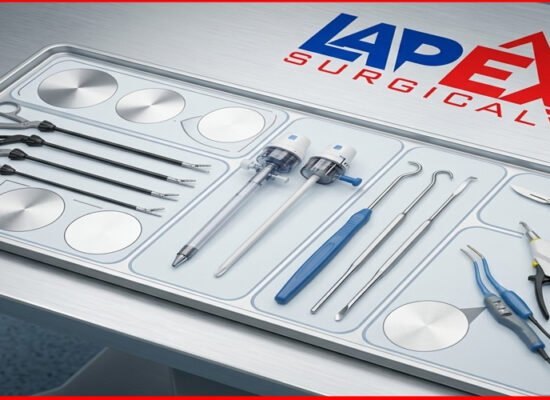
Next-Generation Trocars: Designing trocars with improved seals for stable pneumoperitoneum, enhanced material for smooth insertion, and features compatible with smart systems.
Advanced Electrosurgical Tools: Innovating bipolar and monopolar instruments with enhanced insulation, precise energy delivery, and potential for integrated tissue feedback.
Specialized Grasping and Dissecting Instruments: Refining our designs to offer superior articulation, grip, and tactile feedback, even for robotic or sensor-integrated applications.
Investing in R&D and Collaboration: Lapex Surgical is actively engaged in research and development to explore the practical applications of AI, AR, and nanotechnology in instrument design. We seek collaborations with academic institutions, technology developers, and leading surgeons to co-create the tools of tomorrow.
OEM Partnership for the Future: Our proven OEM capabilities make Lapex Surgical an ideal partner for technology companies developing new surgical robots or AI-powered platforms. We can transform their innovative concepts into tangible, high-quality instruments, leveraging our manufacturing prowess and stringent quality control.
Ethical Manufacturing and Sustainable Practices: As we embrace advanced technologies, we remain committed to ethical manufacturing practices. Our emphasis on durable, high-quality, reusable instruments also supports environmental sustainability by reducing waste, a growing concern in the healthcare industry.
The Road Ahead: Redefining Surgical Possibilities
The future of minimally invasive surgery is bright, promising even less invasive procedures, personalized treatment plans, and enhanced patient outcomes. Laparoscopic instrumentation will continue to be the essential link between the surgeon’s skill and the patient’s anatomy, but these tools will be smarter, more precise, and more connected than ever before.
Lapex Surgical is proud to stand at the forefront of this evolution. We believe that true innovation stems from a deep understanding of both traditional craftsmanship and emerging technologies. By seamlessly blending Sialkot’s heritage of excellence with the transformative potential of AI, AR, and nanotechnology, we are not just manufacturing surgical instruments; we are shaping the future of surgical care, one precise, intelligent tool at a time.
Frequently Asked Questions (FAQ)
Q1: What are "smart surgical instruments"?
A1: Smart surgical instruments are tools that integrate advanced technologies like sensors, microchips, and connectivity to provide real-time data, feedback (visual, auditory, haptic), and even adaptive capabilities to the surgeon during a procedure. They move beyond passive functionality to offer intelligent assistance.
Q2: How will Augmented Reality (AR) and Virtual Reality (VR) impact laparoscopic surgery?
A2: VR is transforming surgical training and preoperative planning by providing immersive, risk-free simulations and 3D anatomical models. AR will revolutionize intraoperative guidance by superimposing real-time patient data (e.g., pre-operative scans, critical structures) onto the surgeon’s view, enhancing precision and safety during live procedures.
Q3: What is the role of Artificial Intelligence (AI) in the future of laparoscopic instrumentation?
A3: AI will impact laparoscopic instruments by assisting in preoperative planning, providing real-time guidance during surgery (e.g., identifying tissue, tracking instruments), refining robotic movements, and even helping to design more optimal instrument features based on data analysis. It essentially augments the surgeon’s capabilities.
Q4: How does nanotechnology apply to surgical instruments?
A4: Nanotechnology enables the creation of surgical instruments with enhanced precision (sharper tips), superior durability (stronger materials), and advanced functionalities (antimicrobial coatings, biocompatible surfaces). It allows for manipulation and diagnostic capabilities at a microscopic level, leading to less tissue trauma and reduced infection risk.
Q5: How is Lapex Surgical integrating these advanced technologies into its manufacturing process?
A5: Lapex Surgical is leveraging its precision manufacturing capabilities (CNC, laser welding, hand-finishing) to create instruments compatible with AI and AR systems. We are researching the application of nanomaterials for enhanced instrument properties and are actively pursuing OEM partnerships with technology developers. Our focus is on building “smart” instrument components and adapting our designs for the future.
Q6: What specific advantages does Lapex Surgical's Sialkot heritage offer in this high-tech future?
A6: Sialkot’s legacy provides an unparalleled foundation of artisanal skill in working with surgical-grade materials and achieving meticulous finishes. This human precision, combined with our modern technological investments, ensures that even the most advanced “smart” instruments from Lapex Surgical retain superior tactile quality, balance, and the inherent durability that comes from generations of specialized craftsmanship.
Q7: Will these advanced instruments replace surgeons or increase surgical costs significantly?
A7: The goal of these advanced instruments and technologies is to augment surgeons’ capabilities, not replace them. They enhance precision, safety, and efficiency, allowing surgeons to perform more complex procedures with better outcomes. While initial investment in new technologies can be higher, the long-term benefits in reduced complications, shorter hospital stays, and improved patient recovery often lead to overall cost-effectiveness. Lapex Surgical also focuses on providing high-quality, durable instruments that offer excellent value.