Table of Contents
ToggleWhy Customizing Your Laparoscopic Instrument Sets Saves Money: The Definitive Guide to Lean Surgery
In the modern healthcare landscape, the operating room (OR) is both a primary revenue generator and a major source of waste. Operating rooms typically account for 30%-60% of total hospital costs. Within this high-stakes environment, surgical instruments represent approximately 15% of the total expenses.
Many hospitals operate under the misconception that buying “standard” off-the-shelf instrument sets is the most economical choice. However, data-driven analysis suggests otherwise. Customization—the process of tailoring surgical trays to the specific needs of a procedure or surgeon—is a powerful tool for financial optimization. By applying “Lean” principles to surgical instrumentation, facilities can achieve significant savings while improving patient safety.
1. Eliminating “Instrument Bloat” and Tray Redundancy
The most immediate financial benefit of customization is the elimination of “instrument bloat.” Over time, surgical trays tend to grow as different surgeons add their preferred tools, but rarely are unused tools removed.
The 80/20 Rule in the OR
Academic reviews and observational studies consistently show that a staggering 78%-87% of instruments on standard surgical trays go completely unused during a procedure. On average, only 13% to 22% of the tools prepared for a surgery are actually utilized.
When you customize a tray with Lapex Surgical, you are essentially performing a “Lean audit” on your inventory.
Removal of Redundancy: By removing the “seldom-used” 30%-60% of tools, you reduce the physical weight of the tray and the complexity of the set.
Cost Avoidance: Removing redundant instruments from rotation can lead to annual cost avoidance of up to $531,929 for a large surgical department.
Table 1: The Impact of Tray Optimization
| Metric | Standard (Overloaded) Tray | Customized (Lean) Tray | Financial Impact |
| Tool Utilization | 13% – 22% | 85% – 100% | High Efficiency |
| Reprocessing Time | 8.4 Minutes | 4.7 Minutes | 44% Labor Reduction |
| Waste (Per Case) | High (Unused tools cleaned) | Minimal | Direct Utility Savings |
2. Reducing Reprocessing and Labor Expenses
The purchase price of a laparoscopic instrument is only the tip of the iceberg. The true financial burden lies in the post-operative lifecycle: decontamination, inspection, assembly, and sterilization.
The Hidden Cost of a Single Cycle
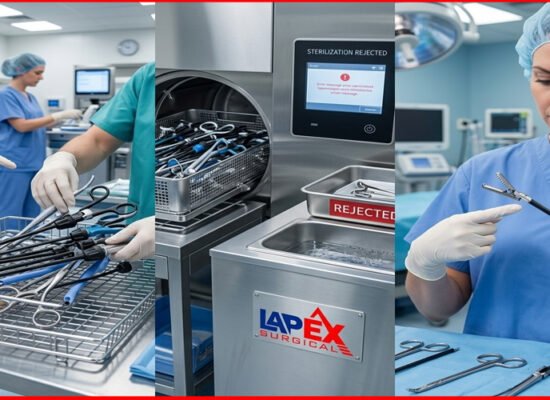
Every instrument on a tray, whether it touched the patient or not, is considered “exposed” once the tray is opened. This means it must undergo the full reprocessing cycle.
Sterilization Costs: Estimates for sterilizing a single instrument range from $0.34 to $0.51, depending on its complexity (e.g., “closed” instruments vs. those with “lumens”).
Cumulative Impact: In high-volume facilities, reducing the number of instruments per tray by just $20 tools can save nearly $15,000 annually in labor and materials alone.
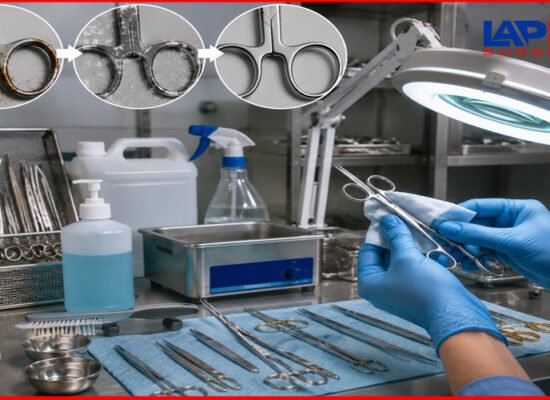
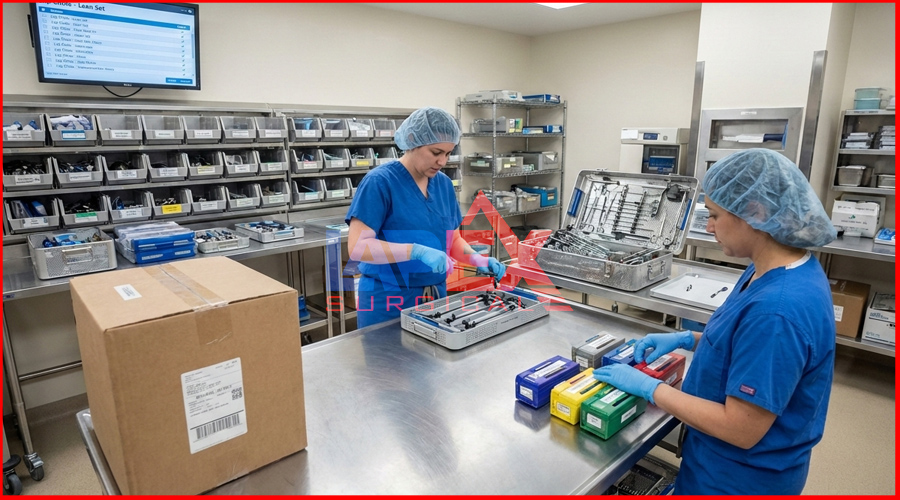
Customized trays allow the Sterile Processing Department (SPD) to work with greater precision. Smaller, procedure-specific sets require less water, less chemical detergent, and shorter assembly times, allowing for a faster turnaround of critical assets.
3. Improving Operating Room (OR) Turnover and Efficiency
Time is the most valuable commodity in surgery. OR downtime due to lack of instrument availability or slow turnover is a significant “dissatisfier” for surgeons and a financial drain on the hospital.
Faster Setup and Breakdown
Customization streamlines the workflow for scrub technicians and nurses.
Reduction in Assembly Time: Lean-optimized trays have been shown to reduce assembly times by 58% to 66%.
Increased Case Volume: Faster OR turnover allows facilities to schedule more procedures per day. In some cases, optimized technology and tray setups have reduced total turnover time by up to 57 minutes.
Reducing Decision Fatigue
When a surgeon is presented with a “lean” set tailored to their specific technique (e.g., a customized Lapex bariatric or gynecological kit), they spend less time searching for tools. This improves surgical flow and reduces the risk of operative errors associated with using the wrong instrument for a specific task.
4. Minimizing Inventory Holding Costs and Storage
Excessive backup inventory is “dead money.” Many hospitals carry thousands of instruments in cabinets that are rarely, if ever, used.
Strategic Sourcing and Space
Inventory Waste: Carrying redundant sets increases insurance premiums and requires expensive climate-controlled storage space that complies with fire codes and health guidelines.
Purchase More Intelligently: Customization allows facilities to move away from bulk-buying generic kits and instead invest in high-performance tools, such as German-grade steel laparoscopes or tungsten carbide-tipped graspers, only where they are truly needed.
5. Enhancing Instrument Longevity and Reducing Repair Costs
Laparoscopic instruments are delicate. Misuse is a primary driver of repair costs.
Preventing “Improvisation”
When a tray isn’t customized for the specific procedure, surgical staff may “improvise” by using a delicate dissector for a task that requires a heavy grasper. This leads to:
Premature Wear: Misaligned jaws, dull blades, and insulation failure.
High Repair Bills: Repair costs typically account for 70% of the annual maintenance budget for surgical sets.
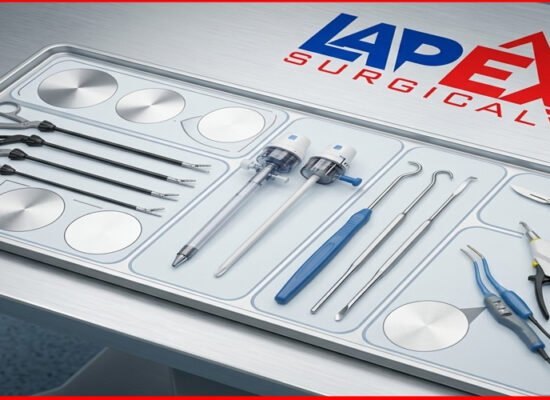
By outfitting your suite with procedure-specific sets from Lapex Surgical, you ensure the right tool is available for the right task. This preserves the integrity of the instrument’s mechanical properties, such as the “spring action” in Veress needles or the sharpness of Metzenbaum scissors.
6. The “ROI of Quality”: Reusable vs. Disposable Customization
A critical part of customizing your instrument strategy is deciding which components should be reusable and which should be disposable.
The 9x Cost Advantage
While disposable instruments offer convenience and a lower upfront price, they are significantly more expensive over time. Studies indicate that the cost of laparoscopic surgery is nine times higher when using disposable instruments compared to high-quality reusables.
The Hybrid Model
Lapex Surgical recommends a customized “Hybrid Model” for maximum ROI:
High-Quality Reusables: Invest in standard hand instruments (graspers, scissors, needle holders) made of German-grade stainless steel. These can withstand hundreds of sterilization cycles.
Strategic Disposables: Use single-use trocars or staplers for high-infection risk cases or emergency surgeries where sterilization turnaround is impossible.
One study predicted that shifting a surgical department to high-quality reusables could save approximately €80,000 annually.
7. Clinical Outcomes and Risk Mitigation
Financial savings also come from the prevention of complications. Surgical site infections (SSIs) cost the American healthcare system an estimated $3.3 billion annually.
Reducing SSIs Through Better Design
Customized modular instruments (like the 3-piece assembly from Lapex Surgical) allow for deep cleaning of internal channels and lumens, which is where 99.8% of bioburden is removed.
Bioburden Risk: Non-customized, non-dismantlable tools are prone to harboring blood and debris, which can lead to pathogens being introduced into the patient.
Ergonomics: Including customized handle designs (e.g., pistol vs. axial grips) reduces surgeon fatigue, which is directly linked to operative accuracy and long-term musculoskeletal costs for the hospital.
8. Environmental Sustainability as a Financial Goal
Green healthcare is no longer just an ethical choice; it is a financial imperative. The cleaning and sterilization of reusable instruments account for 90% of their total environmental impact.
Carbon Footprint: Leaner trays mean fewer instruments to process, leading to less water, energy, and chemical detergent usage.
Waste Reduction: Streamlined trays lead to less packaging waste and lower medical waste disposal fees, which is critical given that the medical industry faces a massive plastic waste crisis.
The Lapex Surgical Edge: Sialkot’s Artisanal Precision
When you choose to customize with Lapex Surgical, you are leveraging the unique “cluster effect” of Sialkot, Pakistan. This city produces 75%–80% of the world’s manual surgical instruments.
Our manufacturing process combines:
Generational Craftsmanship: Artisans with a “sixth sense” for metalwork perform the final delicate adjustments and mirror-polishing that machines cannot replicate.
Modern Technology: We use CNC machining, laser cutting, and vacuum melting to ensure metallurgical purity and compliance with ISO 13485 and CE Marking.
Summary: The Economic Path to Lean Surgery
| Strategy | Financial Benefit | Long-Term Outcome |
| Eliminate Bloat | Annual savings of up to $50,000 per tray type | Reduced inventory waste |
| Lean Reprocessing | 44% reduction in set assembly costs | Faster SPD turnaround |
| OR Optimization | 12% – 22% reduction in surgery time | Higher case volume |
| High-Quality Steel | 9x more cost-effective than disposables | Superior ROI |
Conclusion
Building a profitable and efficient surgical suite requires more than just buying equipment; it requires a strategic partnership with a manufacturer that understands the science of “Lean Surgery.” By customizing your laparoscopic instrument sets, you eliminate the waste of unused tools, slash reprocessing expenses, and empower your surgical team with the precision of artisanal Sialkot craftsmanship.
At Lapex Surgical, we don’t just sell instruments; we provide the data-driven customization you need to optimize your bottom line and ensure patient safety.
👉 Contact us today for a consultation on how to turn your surgical trays into lean, high-performing assets.
Frequently Asked Questions (FAQ)
Q1: How much money can tray optimization actually save?
A: Studies have shown annual savings ranging from $50,000 to over $1.39 million, depending on the size of the facility and the level of instrument redundancy removed.
Q2: Will removing instruments from a tray put patients at risk?
A: No. Customization is based on direct observation of instrument use and surgeon feedback. Studies consistently show that tray optimization improves efficiency without compromising quality, safety, or education.
Q3: Why are reusable instruments 9 times cheaper than disposables?
A: While reusables have a higher upfront cost, they amortize quickly (often after just 6–15 procedures). Disposables require a full purchase price for every single surgery, which adds up to a much higher “Total Cost of Ownership”.
Q4: What is the benefit of a "Modular" laparoscopic instrument?
A: Modular instruments (3-piece design) can be completely disassembled. This is essential for reaching internal channels during cleaning to prevent bioburden build-up and reduce the risk of surgical site infections.
Q5: How does Lapex Surgical ensure the quality of its customized sets?
A: We adhere to international standards, including ISO 13485:2016 and CE marking. Every instrument undergoes a rigorous passivation process (HNO3 bath) to ensure maximum corrosion resistance and a long operational lifespan.