Table of Contents
ToggleThe Cutting Edge: How Modern Surgical Instruments are Redefining Patient Outcomes
The Instrument as an Extension of the Surgeon
For centuries, the story of surgery has been a tale of incredible human skill and courage. Yet, in the narrative of medical progress, the tools themselves often play a silent, supporting role. Today, that role is changing. We are in the midst of a revolution where the very instruments in a surgeon’s hands are no longer just tools; they are advanced technological marvels. This revolution, driven by a relentless pursuit of precision and patient safety, is fundamentally redefining what is possible in the operating room.
At Lapex Surgical, our mission is to stand at the forefront of this evolution. From our home in Sialkot, Pakistan, a city with a centuries-old heritage of fine craftsmanship, we forge a new path where tradition meets cutting-edge innovation. We believe that modern surgical instruments are the key to unlocking superior patient outcomes, and this guide will explore how these incredible tools are making surgery safer, faster, and more effective than ever before.
Part 1: The Foundation of Precision – Materials, Ergonomics, and Manufacturing
The journey of a modern surgical instrument begins long before it ever enters an operating room. It starts with a commitment to excellence in design and engineering. Gone are the days when a surgical tool was simply a piece of stainless steel forged into a functional shape. Today’s instruments are the result of advanced materials science and ergonomic design.
Beyond Standard Steel: While surgical-grade stainless steel remains a staple, modern instruments incorporate advanced materials like titanium, ceramics, and even single-use polymers. Titanium, for example, is favored in certain orthopedic and laparoscopic instruments for its exceptional strength-to-weight ratio and biocompatibility.
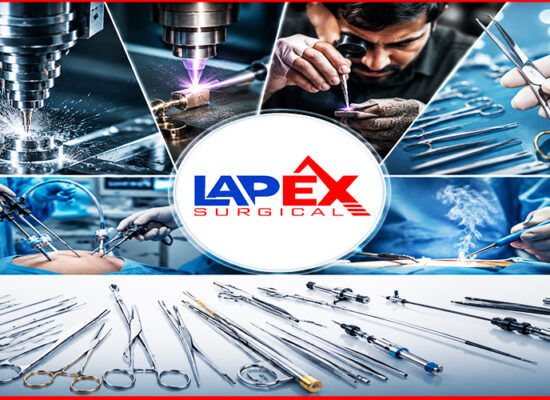
Precision Manufacturing: The human hand can only achieve so much. Modern surgical instruments are now often manufactured using computer-aided design (CAD), laser cutting, and robotic polishing. This ensures that every curve, every cutting edge, and every lock-and-ratchet mechanism is precisely uniform, eliminating the minute variations that can affect performance.
The Science of Ergonomics: A surgeon’s focus during a long procedure is paramount. Modern instruments are designed with ergonomics in mind, featuring lightweight builds, anti-slip grips, and balanced weight distribution. These design choices reduce hand fatigue and allow for greater control, which directly translates into more precise movements and better patient outcomes.
Part 2: The Laparoscopic Revolution: The Power of Less
Perhaps no area of modern surgery exemplifies the impact of instruments more than the shift to minimally invasive surgery (MIS), a category dominated by laparoscopy. By replacing large incisions with a few small punctures, laparoscopic surgery has completely transformed patient care.
Smaller Incisions, Faster Recovery: Patients who undergo laparoscopic procedures experience significantly less pain, shorter hospital stays, and quicker recovery times. The key to this revolution lies in the specialized instruments that allow surgeons to operate with precision inside the body without a large open field.
The Evolution of Laparoscopic Instruments: From basic trocars and graspers to advanced articulating instruments and automated staplers, the technology has exploded. A modern laparoscopic grasper, for example, is not a simple pincer; it is a meticulously crafted instrument with a fine-tuned jaw, allowing for delicate tissue manipulation without trauma.
Visualization is Key: The ability to see inside the body is crucial. Modern laparoscopes are equipped with high-definition cameras and fiber optics that provide a clear, magnified view of the surgical site. Some even offer 3D imaging, giving surgeons an unparalleled sense of depth perception, which is critical for complex tasks.
Lapex Surgical’s Role in the Laparoscopic Revolution: Our legacy is intertwined with the evolution of laparoscopic surgery. At Lapex Surgical, we specialize in producing a full range of high-quality laparoscopic instruments, from our durable trocars to our fine-tipped graspers and dissectors. Our instruments are designed to give surgeons the confidence to perform complex minimally invasive procedures, knowing their tools are an extension of their skill, not a limitation.
Part 3: The Power of Energy-Based Instruments: Cutting and Coagulating with Precision
The modern operating room is a symphony of technologies, and a major part of that is the use of energy to cut and coagulate tissue. While traditional scalpels remain vital, energy-based devices have revolutionized hemostasis and dissection.
Electrosurgery: A Dual-Purpose Tool: Modern electrosurgical instruments (ESU) use high-frequency current to cut tissue and stop bleeding simultaneously. The ability to precisely control this energy flow has dramatically reduced blood loss during surgery and improved visualization.
Bipolar is Better: A key advancement has been the widespread adoption of bipolar electrosurgery. Unlike monopolar systems, which send current through the patient’s body, bipolar instruments confine the current to the tissue grasped between the two tips of a forceps. This dramatically reduces the risk of stray current, minimizing collateral thermal damage and making it ideal for delicate procedures.
Beyond Electricity: Innovation doesn’t stop at electricity. Instruments like ultrasonic (or harmonic) scalpels use high-frequency vibrations to cut and coagulate tissue with minimal lateral thermal spread. This technology is particularly valuable in procedures where delicate nerves or other vital structures are in close proximity.
Lapex Surgical’s Contribution to Energy-Based Devices: At Lapex Surgical, our commitment to safety and precision is built into our entire line of electrosurgical products. Our bipolar forceps, for example, are meticulously crafted to ensure flawless energy delivery and reliable coagulation, protecting delicate surrounding tissue. We provide the tools that empower surgeons to harness the power of modern energy-based surgery with confidence and control.
Part 4: Specialized and “Intelligent” Instruments
Modern surgery is no longer a one-size-fits-all practice. As specialties have evolved, so too have the instruments that support them. We are now seeing the emergence of highly specialized and even “intelligent” instruments.
Tailored for the Task: From the robust bone saws and retractors of orthopedic surgery to the fine, delicate microsurgical instruments for plastic and reconstructive procedures, modern instruments are tailored for specific tasks. This specialization ensures that surgeons have the perfect tool, designed for optimal performance in their unique field.
The Rise of Robotic-Assisted Surgery: While robotic surgery is driven by complex systems, its success still relies on the instruments at the end of the robotic arms. These instruments, known as EndoWrist® instruments in the da Vinci system, offer a range of motion that exceeds the human hand’s, providing unparalleled dexterity and precision.
Smart Feedback: The future promises “smart” instruments equipped with sensors that can provide real-time feedback on tissue tension, pressure, and temperature, helping surgeons make more informed decisions during a procedure.
A Look at the Lapex Surgical Portfolio: Our product range reflects the diversity of modern surgery. We offer specialized instruments for Orthopedic, Plastic Surgery, and General Surgery, each category designed with a deep understanding of the unique challenges and requirements of that field. This comprehensive approach ensures that, regardless of the specialty, Lapex Surgical has a solution that meets the highest standards of quality and function.
The Lapex Surgical Edge: Where Tradition Meets Innovation
The story of modern surgical instruments cannot be told without mentioning the history of Sialkot. For over a century, this city has been a global hub for surgical instrument manufacturing, built on a heritage of skilled craftsmanship. At Lapex Surgical, we honor this tradition by blending time-honored expertise with state-of-the-art technology.
Our instruments are not mass-produced; they are meticulously crafted, inspected, and tested to meet and exceed global quality standards. We hold prestigious certifications such as ISO 13485 (Medical Devices Quality Management) and the CE Mark (MDR 2017/745), which are a testament to our unwavering commitment to manufacturing excellence and patient safety. We are more than a manufacturer; we are a partner in surgical innovation, working to provide the tools that enable better outcomes and advance global healthcare.
The Future in Their Hands
The operating room of today is a place of unprecedented technological integration, where the lines between human skill and instrument capability are blurring. The advent of modern surgical instruments, from the ergonomic redesign of a simple forceps to the complexity of a robotic-assisted arm, has led to a paradigm shift in patient care. The benefits—reduced trauma, faster recovery, and improved outcomes—are clear and life-changing.
For healthcare professionals, staying at the “cutting edge” means not just mastering surgical techniques but also understanding and demanding the best in the instruments they use. The quality, precision, and innovation embodied in these tools are the silent, yet powerful, force that is making modern medicine safer and more effective for everyone.
Frequently Asked Questions (FAQ)
Q1: How do modern surgical instruments improve patient outcomes?
A1: Modern instruments improve patient outcomes by enabling greater precision, reducing tissue trauma, and facilitating minimally invasive techniques. This leads to less pain, shorter hospital stays, and a lower risk of complications.
Q2: What is the main difference between traditional and modern surgical instruments?
A2: While traditional instruments were largely based on foundational designs, modern instruments feature advanced materials, ergonomic designs, and often incorporate technology like energy delivery (bipolar, ultrasonic) and automation, making them more specialized and safer.
Q3: What are laparoscopic instruments and why are they important?
A3: Laparoscopic instruments are specialized tools used for minimally invasive surgery. They are long, thin, and often have articulating jaws that allow surgeons to operate through small incisions, significantly reducing patient recovery time and trauma.
Q4: How does Lapex Surgical ensure the quality of its instruments?
A4: Lapex Surgical combines centuries-old Sialkot craftsmanship with modern precision manufacturing. The company adheres to strict international quality standards, including ISO 13485 and the CE Mark, and performs rigorous inspections to ensure every instrument meets the highest benchmarks for safety and performance.
Q5: What is the benefit of an ergonomic surgical instrument design?
A5: An ergonomic design reduces hand and wrist fatigue for the surgeon, especially during long procedures. This allows for greater focus, improved dexterity, and more controlled movements, which directly contribute to the precision and safety of the surgery.
Q6: What certifications should I look for in a surgical instrument manufacturer?
A6: Key certifications to look for are ISO 13485, which is the international standard for medical device quality management, and the CE Mark, which confirms compliance with European safety regulations. These certifications demonstrate a manufacturer’s commitment to producing safe, high-quality products.