From Minimally Invasive to Reconstructive: The Evolution of High-Performance Surgical Tooling
The modern operating room demands an unprecedented convergence of micro-machining precision, flawless thermal insulation, and ultra-sharp structural tolerances. As a premier global manufacturer rooted in the historic surgical manufacturing hub of Sialkot, Pakistan, Lapex Surgical bridges the gap between traditional craftsmanship and next-generation biomedical engineering. By unifying the development of highly articulate laparoscopic instruments, advanced electro-surgical instruments, durable General Surgery Instruments, and ultra-precise Plastic Surgery Instruments, we deliver medical devices that minimize patient trauma, optimize ergonomic control for surgeons, and survive the punishing environments of repetitive autoclave sterilization cycles.
The New Frontier of Operative Metallurgy
For more than a century, surgical instrument manufacturing relied almost exclusively on the steady hands of master blacksmiths and die-forgers. A surgical scissors or a tissue forceps was a purely mechanical extension of the surgeon’s hand. However, the dawn of the twenty-first century initiated a radical paradigm shift. The rise of minimally invasive surgery (MIS), combined with the necessity for intraoperative hemostasis (blood clotting control) and rapid cosmetic reconstructive healing, has forced a massive evolution in manufacturing philosophy.
Today, an elite manufacturer cannot simply forge steel; we must manipulate raw matter at the molecular level. The modern surgical tool is a complex system involving biocompatible polymers, high-frequency electrical pathways, fiber-optic light transmission, and microscopic physical geometries.
At Lapex Surgical, based in Sialkot—a city globally renowned for supplying over 70% of the world’s hand-held surgical instruments—we have combined this deep, generational metalworking heritage with advanced computer-aided design (CAD), multi-axis CNC milling, and laser-welding technologies. This comprehensive article explores the mechanical, thermal, and physical evolutions that have reshaped high-performance surgical tooling from massive open-cavity procedures to microscopic reconstructive adjustments.
1. The Shift to Minimally Invasive Design: From Open Cavities to 5mm Profiles
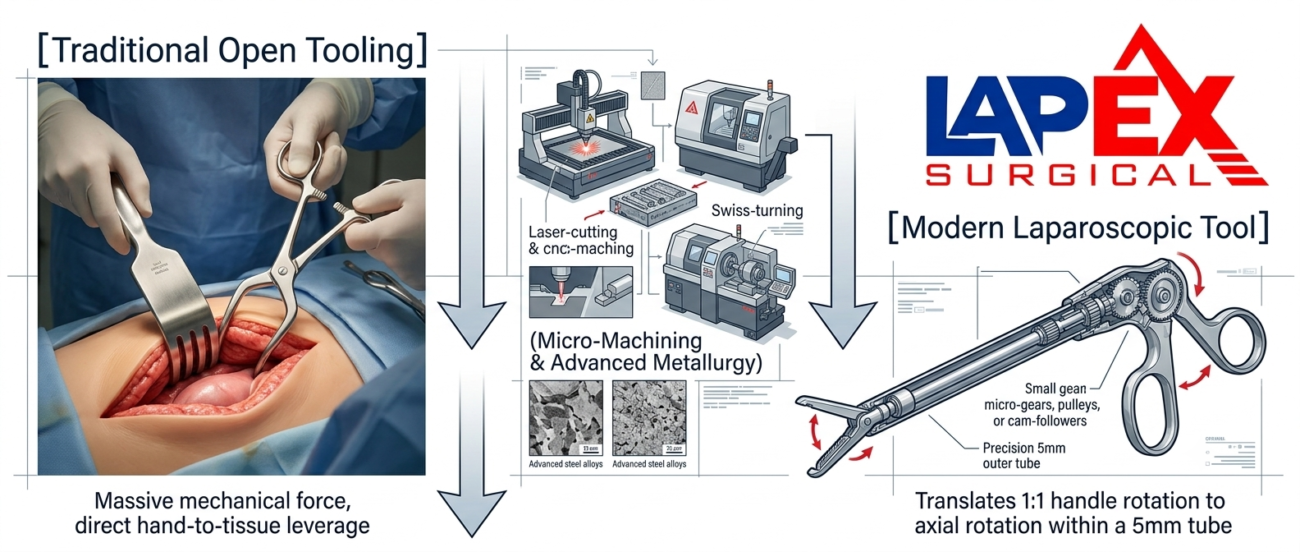
The transition from large open laparotomies to minimally invasive keyhole surgeries completely transformed how surgical tools are engineered. Historically, standard General Surgery Instruments like Kelly forceps, Mayo scissors, and heavy retractor systems were designed for maximum tactile leverage. They required heavy cross-sections of martensitic stainless steel to withstand the physical forces applied by a surgeon working inside an open abdominal cavity.
When laparoscopic techniques gained global dominance, the physical constraints changed dramatically. The surgeon no longer had direct physical access to the tissue; instead, they had to operate through a rigid trocar sleeve measuring between 3mm and 10mm in diameter, with 5mm becoming the universal clinical baseline.
The Micro-Machining Revolution
To shrink a fully functional tissue grasper, a dissecting scissors, or a needle driver down into a 5mm or 3mm cylindrical shaft while preserving its structural strength requires advanced micro-machining. Every internal component—including the push-pull drive rods, the sub-millimeter clevis pins, and the dual-pivoting instrument jaws—must be machined to tolerances of less than 0.005 mm.
At Lapex Surgical, this transition required a total overhaul of our manufacturing facilities in Sialkot:
- Multi-Axis CNC Swiss Turning: This technology allows us to machine the ultra-long, ultra-thin internal drive rods of our laparoscopic instruments from solid ground bars of AISI 304 or 316L stainless steel without causing any structural warping or axial distortion.
- Wire Electrical Discharge Machining (EDM): Traditional drop-forging cannot create the microscopic serrations required on the inside of a 5mm Maryland dissector jaw. We deploy Wire EDM to cut these complex geometries through hardened steel with absolute geometric precision, leaving completely smooth, burr-free edges that eliminate unintended tissue tearing.
- Axial Rotation Mechanics: Modern laparoscopic workflows require a full 360-degree rotation of the tool tip while the handle remains static. Our engineering team developed a specialized low-friction polymer indexing wheel integrated into the lightweight handle assembly. This ensures that the surgeon receives direct tactile feedback, allowing them to feel the precise density and resistance of the internal tissues being manipulated.
2. Energy Integration: The Evolution of Insulated Electrosurgical Instruments
As surgeries became less invasive, mechanical cutting and suture tying alone were no longer sufficient. Minimally invasive fields require rapid, dependable, and smoke-free methods to achieve immediate hemostasis. This need drove the integration of radiofrequency (RF) electrical energy directly into the surgical tool, transforming passive stainless steel rods into advanced, active electro-surgical instruments.
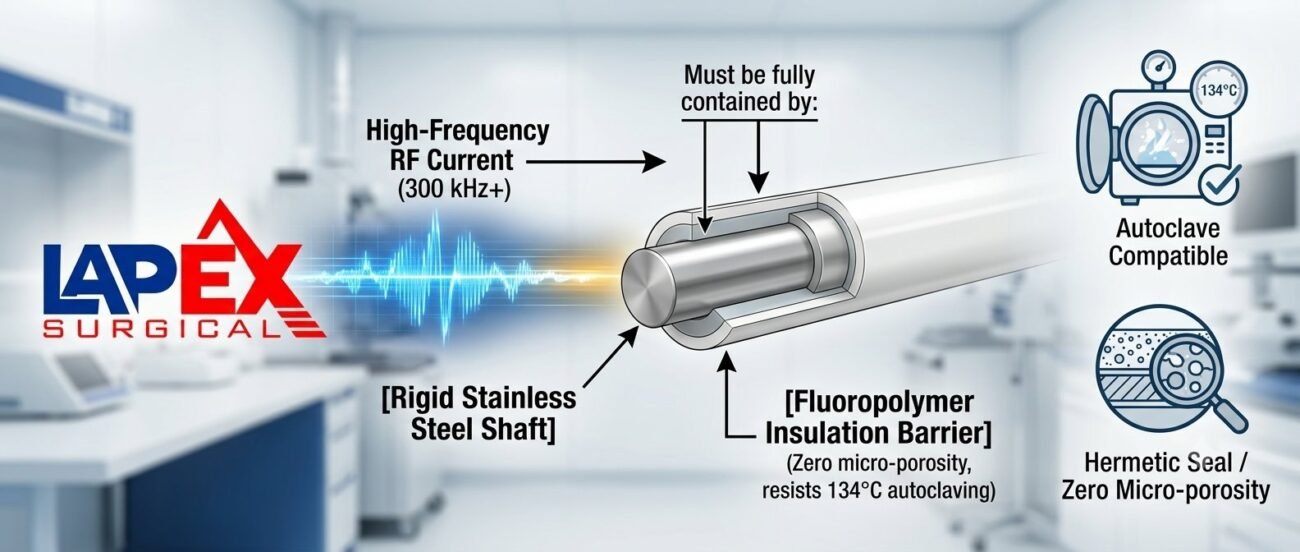
The introduction of high-frequency alternating current (typically ranging from 300 kHz to over 1 MHz) allows surgeons to cut through dense biological tissues or vaporize cellular structures while simultaneously sealing blood vessels. However, delivering this powerful electrical current deep inside a patient’s body cavity through a narrow metallic trocar introduces significant engineering challenges.
The Science of Advanced Dielectric Insulation
The primary risk associated with electrosurgery—specifically monopolar systems—is stray electrical energy, insulation breakdown, or capacitive coupling. If the high-voltage current breaks through the defensive coating of a laparoscopic shaft, it can cause severe, unseen thermal burns to adjacent internal organs, leading to catastrophic post-operative complications.
To eliminate these clinical risks, Lapex Surgical employs a multi-layered insulation and testing framework:
- Fluoropolymer Heat-Shrink Materials: We coat our electrosurgical shafts using proprietary, medical-grade fluoropolymers (such as PTFE and FEP). These materials exhibit an incredibly high dielectric strength, easily resisting voltages exceeding 4000V without experiencing electrical breakdown.
- Zero-Porosity Coating Deposition: Standard spray-on insulations often develop microscopic air bubbles (micro-porosity) during curing, which can crack under repeated thermal expansion. Lapex utilizes an automated heat-activation process that shrinks the insulation material uniformly onto the stainless steel core, creating a completely tight, seamless bond along the entire length of the instrument shaft.
- High-Voltage Porosity Testing: Before leaving our Sialkot facility, every single electrosurgical instrument undergoes an intensive high-frequency insulation spark test. The tool is subjected to a continuous electrical load significantly higher than normal clinical limits to ensure that even the smallest, microscopic insulation fault is detected and rejected.
Bipolar Integration and Thermal Management
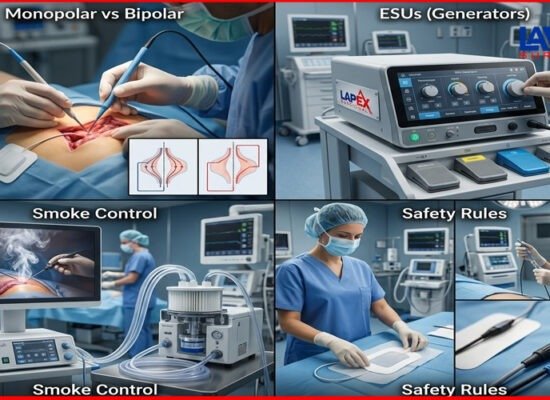
While monopolar instruments use a separate patient return electrode pad, modern surgeries increasingly rely on bipolar electro-surgical instruments (such as advanced bipolar forceps and vessel sealers). In a bipolar configuration, both the active and return currents pass through the two opposing jaws of the instrument itself.
This setup confines the RF energy to a tiny, specific window of tissue, drastically reducing lateral thermal spread—the unwanted conduction of heat into nearby healthy nerves and structures. Engineering these bipolar tools requires complete electrical isolation between the two jaw halves, separated by a microscopic ceramic or high-performance polymer spacer capable of withstanding the intense, localized heat generated during rapid tissue coagulation.
3. Aesthetic and Structural Precision: The Overlap of Reconstructive and Micro-Tools
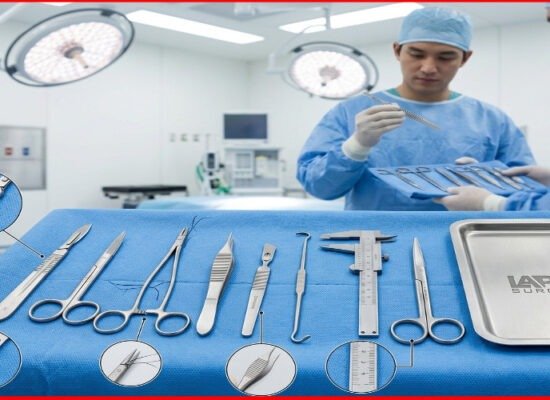
At first glance, a massive abdominal retractor used in standard General Surgery Instruments appears to have little in common with a micro-needle holder used to reconstruct delicate facial tissue. However, at the manufacturing level, there is a profound, intersecting relationship between the structural integrity of minimally invasive tools and the refined tolerances required for Plastic Surgery Instruments.
Plastic, reconstructive, and microsurgical procedures demand tools that can manipulate tissue without causing any cellular crushing or visible bruising. A surgeon performing an intricate microvascular anastomosis—such as splicing together a torn 1mm blood vessel during digit reattachment—requires micro-scissors and micro-forceps that meet with absolute geometric perfection.
Cross-Discipline Geometric Tolerances
This exact level of structural precision is what makes a laparoscopic instrument truly high-performance. When a surgeon operates a 5mm laparoscopic grasper via a 40cm shaft, any minor misalignment or mechanical play in the handle assembly multiplies down the length of the tool, causing the tip to wobble or slip.
The manufacturing solutions we developed for microvascular plastic surgery are directly integrated into our laparoscopic product lines:
- Tungsten Carbide (TC) Inlays: To prevent slipping when holding incredibly fine needles or slick suture materials, we bond micro-grained Tungsten Carbide inserts onto the functional tips of our needle holders and forcep jaws. These inlays are plasma-welded onto the stainless steel base and then ground using diamond-tipped wheels to create ultra-fine, pyramid-shaped teeth that grip securely with minimal physical clamping pressure.
- The Leaf-Spring Suspension and Pin-less Hinges: Traditional box-locks used in basic General Surgery Instruments can catch hair, accumulate bioburden, or develop a slight physical looseness over time. For our high-tier Plastic Surgery Instruments and articulating laparoscopic tips, Lapex utilizes custom-machined, interlocking screw joints and internal leaf-spring systems. This guarantees a completely fluid opening and closing action, removing any mechanical backlash or loose play from the handle to the tip.
- Micro-Polishing and Passivation: Reconstructive surgery requires an instrument surface that prevents proteins and blood cells from adhering to it. We subject our tools to an advanced electrochemical passivation process. This removes any free iron molecules from the outer layer of the steel, creating a smooth, ultra-pure chromium oxide protective layer that resists corrosion and prevents tissue adhesion.
4. Comprehensive Manufacturing Comparison
To help medical procurement officers, hospital distributors, and surgical product managers choose the right tools for their inventories, the table below highlights the distinct engineering specifications, material requirements, and testing standards across all four core lines manufactured by Lapex Surgical.
| Attribute / Specification | General Surgery Instruments | Laparoscopic Instruments | Electro-Surgical Instruments | Plastic Surgery Instruments |
| Primary Materials Used | AISI 410 / 420 Martensitic Stainless Steel; Carbon Steel | AISI 304 / 316L Austenitic & Hardened 17-4 PH Steel | AISI 304 Stainless Steel Core with PTFE/FEP Coatings | High-Grade Titanium Alloys; Premium AISI 440C Steel |
| Typical Tool Dimension Range | 12cm to 35cm overall length; solid forged profiles | 3mm to 10mm shaft diameter; 33cm to 45cm shaft lengths | Variable hand-switching pencils to 5mm insulated shafts | 8cm to 18cm overall length; ultra-fine micro-tips (down to 0.1mm) |
| Core Mechanical Mechanism | Traditional Box-Lock, Interlocking Ratchets, Solid Rivets | Internal Push-Pull Coaxial Rods, 360° Indexing Wheels | Hand-Switching Rockers, Coaxial Bipolar Connector Pins | Internal Leaf-Springs, Precision Pin-less Screw Joints |
| Primary Finishing Technology | Satin / Matte Finish via glass-bead blasting | Electro-polished metal; matte anti-reflective coatings | High-voltage dielectric insulation; non-stick jaw finishes | Highly polished, specular, or dark ceramic non-reflective coatings |
| Sterilization Compatibility | Standard Steam Autoclave (134°C); Gamma Ray | Steam Autoclave; Ethylene Oxide (EtO); Plasma STERRAD | Specialized low-temp cycles or validated high-temp Autoclave | Delicate Steam Autoclave; Ultrasonic cleaning cycles |
| Critical Quality Test Metric | HRC Hardness Testing (48-52 HRC); Cut testing via standard felt | Axial deflection limits; Tip clamping force verification | High-voltage spark leak detection (>4000V test) | Micro-alignment check under 40X optical magnification |
5. Maintenance, Sterilization, and Quality Assurance: The Manufacturer’s Protocols
A surgical instrument is only as reliable as its last sterilization cycle. In a busy hospital environment, instruments are continuously cycled through manual pre-cleaning, automated ultrasonic washers, harsh enzymatic detergents, and high-temperature steam autoclaves (134°C at 2.1bar atmospheric pressure).
If an instrument is poorly manufactured, this aggressive environment causes rapid degradation: crevice corrosion develops inside the joints, insulation jackets crack, and cutting edges grow dull.
The Threat of Bioburden and Lumens
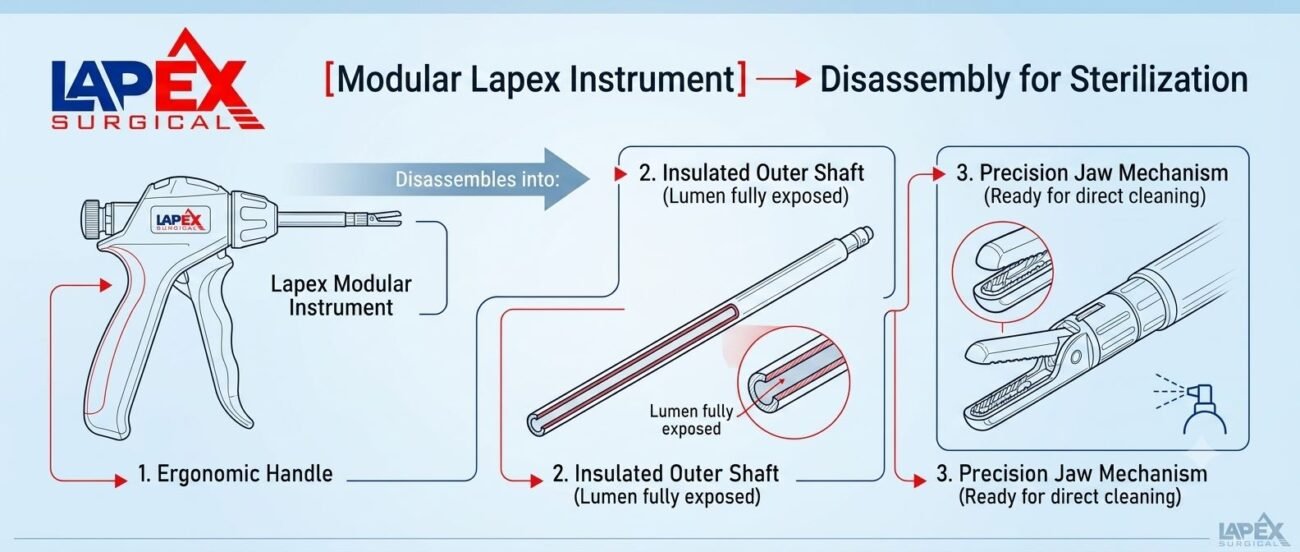
The complex, hollow design of modern laparoscopic instruments introduces serious decontamination risks. Unlike a solid, single-piece General Surgery Instrument like a scalpel handle or a retractor, a laparoscopic shaft contains a long internal channel (lumen) housing the mechanical drive rod. If blood, tissue proteins, or saline solutions dry inside this lumen, they form a resilient biofilm shield that protects underlying bacteria from steam sterilization.
To overcome this cleaning challenge, Lapex Surgical has engineered two advanced design options into our laparoscopic and electrosurgical instruments:
- Integrated Flushing Ports: Our standard modular instruments feature dedicated Luer-lock cleaning ports at the base of the handle. This allows processing staff to attach pressurized enzymatic cleaning solutions directly to the instrument, flushing away debris from the internal channel without needing to disassemble the tool.
- Take-Down Modular Designs: For high-turnover surgical facilities, we manufacture fully modular, three-piece “take-down” laparoscopic tools. These can be completely disassembled into individual components (handle, outer shaft insulation tube, and internal jaw insert) within seconds without requiring extra tools. This gives reprocessing teams complete visual confirmation that all surfaces are thoroughly clean before autoclaving.
The Sialkot Advantage: Combining Heritage with Modern QA
Sialkot’s global reputation for surgical manufacturing was built on an exceptional, generational talent for manual metal alignment. No automated machine can perfectly replace the trained eye of a master artisan, checking if two fine scissor blades mesh with the exact amount of progressive resistance.
At Lapex Surgical, we preserve this valuable human craftsmanship while reinforcing it with rigorous, data-driven Quality Assurance protocols. Every batch of steel arrives with verified mill test certifications, checking its specific chemical composition down to the exact percentages of Chromium, Carbon, and Nickel.
Our in-house metallurgy labs perform destructive tensile strength testing, Rockwell hardness mapping (HRC), and copper sulfate testing to verify absolute resistance to rust and oxidation. By integrating this advanced testing framework with traditional hand-finishing mastery, we ensure that every instrument delivered to your hospital performs reliably, case after case.
Frequently Asked Questions (FAQ)
Q1: Why does Lapex Surgical manufacture tools in Sialkot, and what sets your quality apart from cheap alternative suppliers?
Answer: Sialkot is the global capital for surgical instrument manufacturing, possessing a century-old ecosystem of metalworking knowledge, specialized tempering facilities, and master craftsmen. However, not all Sialkot manufacturers operate at the same level.
Lapex Surgical stands out because we have fully integrated this local artisanal craftsmanship with modern Western manufacturing standards. We invest heavily in multi-axis CNC machines, German-engineered vacuum heat-treatment furnaces, and automated ISO 13485 quality management systems. This ensures that every tool we produce delivers the exact consistency, material purity, and durability demanded by top-tier global hospitals.
Q2: How does insulation breakdown occur in electro-surgical instruments, and how can surgical staff prevent it?
Answer: Insulation breakdown happens when the protective fluoropolymer layer on an instrument shaft develops micro-cracks, scratches, or thinning due to normal wear and tear, mechanical scraping against sharp metal trocars, or repeated exposure to intense autoclave heat. When this insulation barrier fails, electrical current arcs out to the nearest conductor, which can cause severe thermal injuries to nearby healthy tissues.
To prevent this, surgical teams should avoid using metal cleaning brushes or abrasive pads on insulated shafts. Processing departments must use specialized electronic insulation testers (often called marquee testers) before every sterilization cycle to catch any microscopic electrical leaks.
Q3: What are the distinct benefits of using Titanium instead of Stainless Steel for Plastic Surgery Instruments?
Answer: While high-grade stainless steel remains excellent for holding sharp cutting edges, Titanium alloys offer unique benefits for delicate reconstructive and micro-surgical applications:
Weight Reduction: Titanium is roughly 45% lighter than stainless steel, significantly reducing hand fatigue for surgeons during long, exhausting microscopic procedures.
Non-Magnetic Properties: Titanium is completely non-magnetic, meaning micro-needles will not stick or cling to the instrument jaws during fine suturing workflows.
Superior Corrosion Resistance: Titanium forms a highly stable, inert oxide layer that provides near-perfect resistance to aggressive surgical solutions and repeated chemical sterilization cycles.
Q4: How do the manufacturing requirements differ between Monopolar and Bipolar electrosurgical tools?
Answer: Monopolar instruments require only a single electrical path running down the shaft to the active tip, needing a uniform outer layer of high-voltage dielectric insulation.
In contrast, bipolar instruments must house two separate, completely isolated electrical pathways within a single shaft. The two jaws must be electrically insulated from one another using microscopic ceramic or high-tech polymer barriers. This makes bipolar tools significantly more complex to machine and assemble, requiring tight manufacturing tolerances to prevent internal short circuits.
Q5: What is the optimal cleaning protocol to maintain the sharp cutting edges of fine plastic surgery and laparoscopic scissors?
Answer: To preserve micro-sharp cutting edges, instruments must never be allowed to have blood or saline solutions dry on their surfaces. They should be wiped down with sterile water immediately after use.
During automated reprocessing, fine Plastic Surgery Instruments should be placed in dedicated, silicone-padded sterilization trays to prevent them from shifting and bumping against heavier tools. Mechanical cleaning should utilize neutral-pH enzymatic detergents, and ultrasonic cleaning cycles should be limited to the manufacturer’s specified duration to avoid microscopic vibration damage along the cutting edges.
Partnering with Lapex Surgical for the Future of Operative Care
The ongoing evolution of high-performance surgical tooling relies on a deep, practical understanding of both clinical needs and material science. As surgeries continue to progress toward smaller incisions, robotic integration, and localized energy delivery, the demands placed on surgical manufacturers will only intensify.
Lapex Surgical remains dedicated to driving this technological evolution. By continuously upgrading our CNC machining infrastructure, implementing advanced multi-layered insulation technologies, and upholding the meticulous traditions of Sialkot’s master toolmakers, we produce premium instruments that surgeons can rely on implicitly. Whether you are expanding your hospital’s inventory of reliable General Surgery Instruments, implementing advanced electro-surgical instruments, upgrading to high-definition laparoscopic instruments, or outfitting a world-class reconstructive suite with ultra-precise Plastic Surgery Instruments, Lapex Surgical is your trusted manufacturing partner.
- Ready to elevate your surgical workflows? Contact our technical sales team at our Sialkot headquarters today to request an itemized product catalog, order custom-engineered tool prototypes, or arrange an international distribution partnership. Let’s build the future of patient care together.