Inadequate reprocessing of general surgery instruments is a silent, global patient safety crisis. Biofilm, micro-cracks, hollow channels, financial shortcuts, and regulatory gaps combine to put surgical patients at risk every single day — in both high-income and low-income countries alike. The solution lies in better standards, smarter instrument design, and a frank conversation the healthcare industry has been reluctant to have.
The Instrument You Never Think About Could Be the One That Harms You
Every year, hundreds of millions of surgical procedures are performed worldwide. Patients focus on their diagnosis, their surgeon’s credentials, the hospital’s reputation — rarely on the metal instruments that will enter their bodies. Why would they? That’s the surgeon’s job. That’s the hospital’s responsibility.
But here’s the uncomfortable truth: the reprocessing of general surgery instruments — the cleaning, disinfection, and sterilization cycle that happens between every use — is one of the most underregulated, underfunded, and dangerously inconsistent processes in modern healthcare.
When it fails, the consequences are severe: surgical site infections (SSIs), transmission of bloodborne pathogens, outbreaks of drug-resistant organisms, and, in the worst cases, patient deaths. These events are rarely traced back to the instrument. They’re attributed to post-operative complications, patient comorbidities, or environmental factors. The instrument escapes scrutiny — and the cycle continues.
This article pulls back the curtain on the full reprocessing lifecycle of surgical instruments, the systemic failures that compromise sterility, the global inequality in sterilization standards, and the innovations — from Sialkot’s manufacturing floors to the world’s most advanced hospital networks — that may finally be changing the equation.
Part 1: The Lifecycle of a Reusable General Surgery Instrument
Understanding the risk begins with understanding the journey. A single reusable general surgery instrument — let’s say a Kelly hemostatic forceps — may be used hundreds or thousands of times over its service life. Each use initiates a reprocessing cycle that must be executed perfectly, every single time.
The Seven Stages of Instrument Reprocessing
| Blood, tissue, and debris were wiped or flushed post-surgery immediately | Description | Key Risk Point |
|---|---|---|
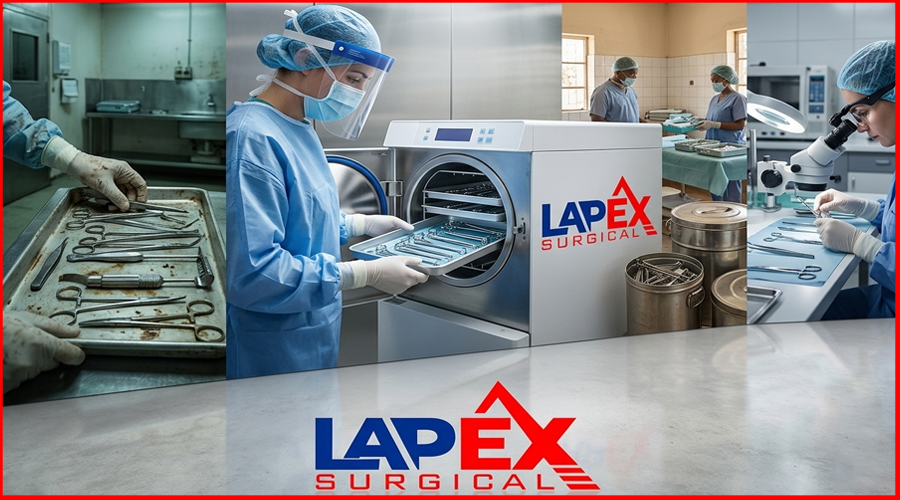
| 1. Point-of-Use Decontamination | Blood, tissue, and debris wiped or flushed immediately post-surgery | 4. Automated Washer-Disinfectors |
| 2. Transport to CSSD | Instruments moved to Central Sterile Services Department | Contaminated instruments can pose exposure risk to transport staff |
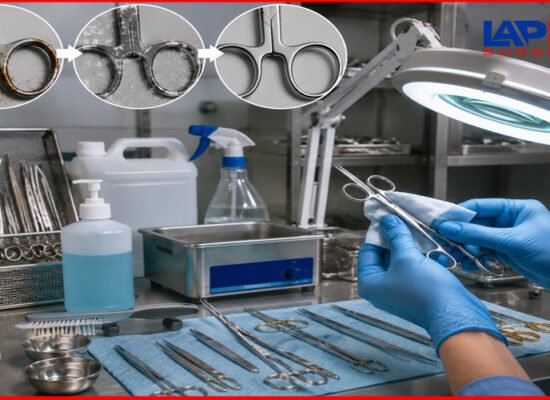
| 3. Manual Pre-Cleaning | Physical scrubbing to remove gross soil | Human error: missed hinges, box locks, lumens |
| 4. Automated Washer-Disinfector | Incorrect loading, inadequate temperature, and detergent failure | Incorrect loading, inadequate temperature, detergent failure |
| 5. Inspection & Testing | Visual and functional check of instruments | Poor lighting, rushed inspections, invisible contamination |
| 6. Packaging | Improper packaging compromises the sterile barrier | Breached packaging, compression, and humidity damage |
| 7. Sterilization | Steam (autoclave), ETO, hydrogen peroxide plasma | Overloading chambers, improper cycle parameters |
| 8. Storage & Delivery | Sterile instruments held and delivered to OR | Breached packaging, compression, humidity damage |
Each of these eight stages represents a potential failure point. The terrifying reality is that contamination at any single stage can result in a non-sterile instrument reaching a patient — often with no visible indicator of that failure.
Why Reusable Instruments Remain Standard
Despite the risks, reusable general surgery instruments dominate surgical practice globally, and for legitimate reasons:
- Cost efficiency: A high-quality stainless steel surgical instrument, properly maintained, can last 5–10 years and thousands of uses, amortizing its cost dramatically.
- Performance: Premium reusable instruments often offer superior tactile feedback, precision, and durability versus single-use alternatives.
- Environmental burden: Single-use instruments generate significant medical waste, contributing to landfill and incineration loads.
- Resource availability: In many settings, single-use alternatives simply aren’t available or affordable.
The tension between these advantages and the contamination risks they create sits at the heart of the global surgical safety challenge.
Part 2: How Reprocessing Fails — The Science of Contamination
When reprocessing fails, it rarely announces itself. There’s no alarm, no visible warning. A contaminated instrument looks identical to a sterile one. Understanding the mechanisms of failure is the first step toward prevention.
Biofilm: The Invisible Enemy in General Surgery Instruments
Biofilm is perhaps the most dangerous and least understood contamination threat in surgical instrument reprocessing. A biofilm is a structured community of microorganisms — bacteria, fungi, or both — encased in a self-produced protective matrix called an extracellular polymeric substance (EPS).
Why is biofilm so dangerous in surgical instruments?
- Biofilms are 1,000 times more resistant to antibiotics and disinfectants than planktonic (free-floating) bacteria
- They can form on stainless steel surfaces in as little as 24–48 hours if residual organic material remains after cleaning
- Once established, biofilm cannot be eliminated by standard sterilization cycles alone — the EPS matrix provides a physical barrier against steam, chemicals, and radiation
- Biofilm-harboring instruments may pass visual inspection and even biological indicator tests, yet still transmit infection
The most vulnerable instrument designs for biofilm accumulation:
- Box-lock hinges and ratchet mechanisms in hemostats and needle holders
- Serrated jaw surfaces on graspers and clamps
- Cannulated (hollow) shafts in suction devices and laparoscopic trocars
- Lumens of flexible endoscopes and irrigation channels
A 2018 study published in the American Journal of Infection Control found biofilm present on up to 30% of reprocessed surgical instruments sampled from accredited hospitals — instruments that had cleared all standard sterility checks.
Micro-Cracks and Surface Degradation
General surgery instruments undergo enormous stress during use — compression, torque, impact, thermal cycling from sterilization. Over time, this creates micro-cracks in the metal surface, particularly at high-stress points like jaw box locks and handles.
These micro-cracks are problematic for two critical reasons:
- They are impossible to clean. Cleaning brushes, ultrasonic cleaners, and washer-disinfectors cannot penetrate micron-level surface defects. Organic material and microorganisms become permanently lodged.
- They accelerate corrosion. Stainless steel’s protective chromium oxide layer is disrupted at crack sites, accelerating pitting corrosion that further deepens the contamination reservoirs.
The solution — which many institutions fail to implement rigorously — is systematic instrument inspection and retirement protocols. An instrument with visible pitting, corrosion, or compromised surface integrity should be removed from service, not reprocessed. In practice, financial pressure often overrides this judgment.
The Hollow Channel Problem in Laparoscopic and Complex Instruments
The rise of minimally invasive surgery has introduced a new category of reprocessing nightmare: instruments with complex internal geometries. Laparoscopic instruments, robotic surgical tools, and articulating devices feature:
- Internal channels that carry irrigation fluid or house cables
- Telescoping mechanisms with internal joints
- Multicomponent assemblies requiring full disassembly before cleaning
The challenge is that most CSSD (Central Sterile Services Department) technicians are trained on traditional general surgery instruments. The reprocessing protocols for complex laparoscopic instruments are dramatically more involved, often requiring manufacturer-specific instructions that vary instrument by instrument.
Studies have shown that laparoscopic instruments have a significantly higher rate of residual contamination post-reprocessing compared to traditional open surgery instruments, primarily due to these internal geometric complexities.
Part 3: The Global Disparity — Sterilization Standards in High-Income vs. Low-Income Countries
The contamination crisis is not distributed evenly. Where you have surgery performed matters enormously — and not just because of the surgeon’s skill.
High-Income Country Standards
In countries like the United States, Germany, the United Kingdom, and Japan, surgical instrument reprocessing is governed by detailed regulatory frameworks:
- United States: FDA oversight of medical devices, AAMI (Association for the Advancement of Medical Instrumentation) standards, and The Joint Commission accreditation requirements
- European Union: EN ISO 17664 (reprocessing of medical devices), MDR 2017/745 compliance
- United Kingdom: MHRA guidelines, HTM 01-01 (Health Technical Memorandum) for decontamination
- Japan: Ministry of Health, Labour and Welfare sterilization guidelines
These frameworks mandate:
- Validated reprocessing protocols specific to each instrument
- Periodic biological and chemical indicator testing
- Staff training and competency assessments
- Infrastructure standards for CSSD facilities
Yet even in these regulated environments, failures occur. Hospital-acquired infections (HAIs) remain stubbornly persistent. The gap between written standards and actual practice — driven by staffing shortages, time pressure, and budget constraints — is often wider than regulators acknowledge.
Low- and Middle-Income Country Realities
In low- and middle-income countries (LMICs), the picture is dramatically more concerning. The Lancet Commission on Global Surgery has documented that in many LMICs:
- Autoclave availability is severely limited — many district hospitals share a single sterilizer, or rely on cold chemical sterilization methods of questionable efficacy
- There are no national standards equivalent to AAMI or EN ISO for surgical instrument reprocessing
- CSSD facilities, where they exist, frequently lack the infrastructure (clean water, consistent electricity, temperature monitoring) to execute validated sterilization cycles
- Instrument reuse without adequate reprocessing occurs regularly due to supply shortages
Comparative Overview of Reprocessing Standards:
| Factor | High-Income Countries | Low/Middle-Income Countries |
|---|---|---|
| Regulatory framework | Comprehensive (FDA, MHRA, EU MDR) | Partial or absent |
| Autoclave availability | Near-universal | Limited; often 1 per facility |
| Staff training | Formal CSSD certification programs | Largely informal, on-the-job |
| Instrument inspection protocols | Standardized, documented | Ad hoc |
| Single-use instrument access | Widely available | Often, chemical indicators only |
| Sterilization monitoring | Biological + chemical indicators | Often chemical indicators only |
| Instrument retirement criteria | Defined, enforced | Financial pressure overrides |
The result is a two-tier global surgical system where the same general surgery instruments — often manufactured to identical specifications in places like Sialkot, Pakistan — are maintained at vastly different safety standards depending on where they land.
Part 4: The Financial Pressure That Compromises Sterility
Money is the factor that no one in healthcare wants to discuss openly, but it drives sterilization failures more than almost any other variable.
The Budget Squeeze on CSSD Departments
Central Sterile Services Departments are cost centers. They generate no direct revenue. In a hospital obsessed with margins, CSSD is perpetually underfunded and understaffed.
The consequences are measurable:
- Technician-to-instrument ratios are routinely exceeded, leading to rushed manual cleaning steps
- Inspection time per instrument tray is compressed far below recommended guidelines
- Equipment maintenance for washer-disinfectors and autoclaves is deferred to cut costs, introducing cycle variability
- Staff turnover is high, meaning experience and institutional knowledge are constantly depleted
A 2020 analysis of U.S. hospitals found that CSSD departments were operating at an average of 73% of recommended staffing levels, with peak surgical volume periods creating acute shortfalls.
The “Just Reprocess It” Culture
Perhaps more damaging than underfunding is the cultural norm in many institutions of reprocessing instruments beyond their safe service life. When a surgeon reports that a hemostatic forcep is misfiring or a needle holder’s jaw alignment is off, the ideal response is instrument retirement. The common response is a second attempt at adjustment, re-reprocessing, and return to service.
This practice:
- Places visibly compromised instruments — with micro-cracks, corrosion, and compromised surface integrity — back into patient contact
- Signals to CSSD staff that instrument retirement is a financial decision, not a safety one
- Creates a culture where quality shortcuts are normalized
The Cost of Getting It Wrong
Paradoxically, the cost of cutting corners in sterilization vastly exceeds the cost of doing it right. A single surgical site infection attributable to instrument contamination can result in:
- Extended patient hospitalization: Average SSI adds 7–11 additional hospital days
- Additional treatment costs: Antibiotic therapy, wound management, potential reoperation
- Litigation exposure: Instrument contamination cases are among the most legally indefensible in healthcare negligence
- Reputational damage: A single contamination outbreak can devastate a facility’s surgical volume for years
The math is unambiguous: investing in robust reprocessing infrastructure, adequate staffing, and quality instrument retirement programs costs a fraction of a single contamination event. Yet the upfront investment remains the barrier, particularly in resource-constrained settings.
Part 5: Regulatory Blind Spots — What the FDA and WHO Still Haven’t Addressed
Regulatory frameworks for general surgery instruments and their reprocessing have advanced significantly over the past two decades. But significant blind spots remain — gaps that leave patients and healthcare workers exposed.
The Instructions for Use (IFU) Problem
Every reusable surgical instrument must be accompanied by manufacturer-provided Instructions for Use (IFU) specifying validated reprocessing protocols. In theory, this creates a clear pathway for safe sterility. In practice:
- IFU documents are frequently inadequate. Manufacturers may specify generic cleaning protocols that haven’t been clinically validated for their specific instrument design.
- IFU compliance is not systematically verified. No regulatory body in the U.S. or EU conducts routine audits of CSSD departments to confirm IFU adherence for specific instruments.
- Complex instrument IFUs are often incompatible with hospital workflow. A laparoscopic instrument that requires 45-minute manual cleaning per the IFU will routinely receive 15-minute cleaning in a busy hospital CSSD — with no mechanism to detect or prevent this.
The Single-Use (SUD) Reprocessing Gray Zone
A significant and controversial practice in healthcare is the reprocessing of instruments labeled “single-use only” (SUD). This is widespread — particularly in high-income countries where the economics of SUD reprocessing are attractive — and it occurs in a regulatory environment that varies dramatically:
- United States: FDA permits third-party reprocessing of SUDs under specific regulations, with the reprocessor assuming manufacturer liability. However, enforcement of reprocessing standards for these devices is inconsistent.
- European Union: MDR 2017/745 permits SUD reprocessing in healthcare institutions under strict conditions, but implementation varies by member state.
- Most of the world: SUD reprocessing occurs with minimal or no regulatory oversight, often by hospital CSSD staff using general instrument protocols that were never validated for the SUD in question.
The clinical risk of SUD reprocessing is real and documented: device failure, sterility compromise, and patient harm have all been attributed to inappropriate SUD reprocessing.
WHO’s Global Surgical Safety Gap
The World Health Organization’s Surgical Safety Checklist — introduced in 2008 — has been one of the most impactful patient safety interventions in history. But it doesn’t address instrument reprocessing. WHO’s surgical safety frameworks focus on peri-operative processes: site marking, team briefings, and count verification. The sterility of the instruments themselves falls into a policy gap at the global level.
WHO has published guidelines on decontamination and sterilization, but these are advisory, not enforceable. In the 116 countries where the WHO has identified significant surgical access deficits, there is no mechanism to ensure that the instruments being used meet any minimum reprocessing standard.
Part 6: Emerging Solutions — From Disposables to Sustainable Reprocessing Technologies
The contamination crisis is driving innovation across several fronts. The question is whether these solutions can scale fast enough, and equitably enough, to make a difference globally.
Solution 1: Single-Use Disposable Instrument Kits
The concept is straightforward: eliminate reprocessing risk by using instruments once and discarding them. Single-use surgical instrument sets — typically made from medical-grade stainless steel or high-grade polymer — are increasingly available for common procedures.
Advantages:
- Guaranteed sterility at the point of use (if packaging integrity is maintained)
- Eliminates all reprocessing failures
- Simplifies CSSD operations
- Reduces HAI risk attributable to instruments
Disadvantages:
- Significantly higher per-procedure cost
- Substantial environmental impact — medical waste generation
- Performance may be inferior to quality reusable instruments
- Supply chain vulnerability
- Carbon footprint of manufacturing, packaging, and disposal
Single-use instruments make economic sense in specific contexts: short, standardized procedures; high-throughput ambulatory surgery centers; settings where reprocessing infrastructure is inadequate. They are not a universal solution.
Solution 2: Advanced Automated Reprocessing Systems
Technology is addressing many of the human error components of reprocessing:
- Automated tracking systems using RFID or barcode tags to follow individual instruments through every reprocessing cycle, creating an auditable chain of custody
- AI-assisted inspection systems using computer vision to identify surface defects, corrosion, and contamination that human inspectors miss
- Intelligent washer-disinfectors with real-time cycle monitoring, automatic alerts for parameter deviations, and digital cycle records
- Plasma sterilization advances enabling rapid, low-temperature sterilization of heat-sensitive instruments that steam autoclaves damage
These technologies are available today, predominantly in high-income country facilities. Their cost remains prohibitive for most of the world.
Solution 3: Instrument Design for Reprocessability
A paradigm shift is emerging in surgical instrument design: rather than designing for performance alone and leaving reprocessing as an afterthought, forward-thinking manufacturers are designing instruments for reprocessability from the outset.
This means:
- Minimizing internal channels and hollow spaces that trap contamination
- Using surface finishes and coatings that resist biofilm attachment
- Designing joint mechanisms that can be fully disassembled for cleaning
- Selecting materials that maintain surface integrity through hundreds of sterilization cycles
- Standardizing modular components to simplify IFU compliance
Lapex Surgical, manufacturing from Sialkot — one of the world’s premier surgical instrument manufacturing hubs — represents the kind of producer increasingly integrating these principles. Sialkot’s manufacturers supply a significant proportion of the world’s general surgery instruments, laparoscopic instruments, electrosurgical instruments, and plastic surgery instruments. The quality standards, material choices, and design decisions made on these production floors have a direct and measurable impact on reprocessing safety worldwide.
Solution 4: Capacity Building in Low-Resource Settings
Technical solutions mean nothing without the human infrastructure to implement them. Global initiatives are working to build CSSD capacity in LMICs:
- WHO’s decontamination guidelines adapted for resource-limited settings
- NGO-led programs training local biomedical technicians in sterilization validation
- Regional manufacturing partnerships producing quality instruments closer to the point of need
- Tele-mentoring programs connecting CSSD professionals across settings
These initiatives are underfunded relative to their potential impact, but they represent the most realistic path to equitable surgical safety globally.
Part 7: What Hospitals Can Do Right Now
The contamination crisis isn’t waiting for regulatory reform or technological breakthroughs. Hospitals and surgical facilities can take meaningful action today.
Immediate Steps for Surgical Facilities
- Conduct a CSSD infrastructure audit. Is your sterilization equipment calibrated, maintained, and performing validated cycles? When were biological indicators last run, and were results documented?
- Review your IFU compliance rate. Pull the IFUs for your 10 most frequently used instrument sets. Is your actual reprocessing protocol in compliance? This exercise alone often reveals significant gaps.
- Implement instrument tracking. Even a basic barcode system that tracks sterilization date, cycle parameters, and use count per instrument tray dramatically improves accountability and enables contamination event tracing.
- Establish and enforce instrument retirement criteria. Work with surgeons and CSSD leadership to define clear, objective criteria for instrument retirement — and actually enforce them, despite budget pressure.
- Invest in CSSD staffing and training. The ratio of trained CSSD technicians to instrument volume is one of the most impactful variables in reprocessing quality.
- Source instruments from manufacturers with documented reprocessing validation. Ask your instrument suppliers for validated IFUs and reprocessing data. Suppliers who cannot provide this documentation create liability you cannot manage.
Frequently Asked Questions (FAQ)
Q: How common are surgical infections caused by contaminated instruments?
Attributing surgical site infections (SSIs) specifically to instrument contamination is methodologically difficult, as SSI causation is rarely investigated at that level. However, studies estimate that 5–10% of SSIs in high-income countries and potentially much higher rates in LMICs may be attributable to inadequate instrument sterilization. Given that approximately 300 million surgical procedures occur annually worldwide, even conservative estimates suggest hundreds of thousands of preventable infections per year.
Q: Can you tell if a surgical instrument hasn’t been properly sterilized?
No, not by looking at it. A properly cleaned instrument that has failed sterilization is visually indistinguishable from a fully sterile one. Sterility can only be confirmed through biological indicator testing of sterilization cycles and rigorous process validation — not through visual inspection of individual instruments.
Q: What is the difference between sterilization and disinfection?
Disinfection reduces the number of viable microorganisms on a surface to a level considered safe for most purposes — but does not eliminate all bacterial spores. Sterilization eliminates all forms of microbial life, including the most resistant bacterial spores. Surgical instruments that enter sterile body tissue or the bloodstream require sterilization, not merely disinfection.
Q: Are instruments from Sialkot, Pakistan, considered high quality for reprocessing purposes?
Sialkot produces an estimated 70–80% of the world’s surgical instruments and has been a global manufacturing hub for over a century. Instrument quality varies significantly by manufacturer — premium Sialkot manufacturers like Lapex Surgical produce instruments to ISO 13485 standards, with materials and surface finishes validated for repeated reprocessing. As with any manufacturer globally, the key is documented quality management systems, validated reprocessing protocols, and transparent material specifications.
Q: What is the most dangerous type of instrument to reprocess?
Complex laparoscopic instruments with internal channels and multicomponent assemblies consistently show the highest rates of residual contamination post-reprocessing in published studies. Hinged instruments (hemostats, needle holders) with box-lock mechanisms are the second-highest risk category due to the difficulty of accessing and cleaning the hinge mechanism.
Q: How often should surgical instruments be retired from service?
There is no universal cycle count at which an instrument must be retired — it depends on the instrument type, material, usage intensity, and reprocessing method. Instruments should be retired based on functional assessment (mechanism failure, blade dulling), visual inspection (pitting, corrosion, surface damage), and any deviation from performance standards. In well-run facilities, every instrument is inspected after every reprocessing cycle, and retirement decisions are made by trained technicians following documented criteria.
Q: What regulations govern surgical instrument reprocessing?
In the United States, the FDA regulates instrument labeling and manufacturer IFU requirements, while the Joint Commission and AAMI standards govern hospital reprocessing practice. In the EU, EN ISO 17664 and MDR 2017/745 apply. Globally, there is no binding international treaty or standard — WHO guidelines are advisory only, leaving a significant regulatory vacuum in most LMICs.
The Silence Must End
The reprocessing of general surgery instruments is the unglamorous, underfunded, and dangerously underscrutinized backbone of surgical safety. Every day, in every hospital on every continent, the assumption that instruments are sterile is made — and in too many cases, it is made without the evidence to support it.
The contamination crisis is not inevitable. It is the product of specific, addressable failures: biofilm-vulnerable instrument designs, inadequate IFU compliance, global sterilization inequality, financial shortcuts that prioritize margins over patient safety, and regulatory frameworks that have not kept pace with the complexity of modern surgical instruments.
The path forward requires commitment from every stakeholder in the surgical instrument ecosystem — from manufacturers in Sialkot designing reprocessability into every instrument, to hospital administrators allocating the resources that CSSD departments actually need, to regulators developing enforceable global standards, to global health organizations making sterilization infrastructure part of surgical access investment.
The instruments are small. The stakes are not.
About Lapex Surgical
Lapex Surgical is a premier manufacturer of general surgery instruments, electrosurgical instruments, plastic surgery instruments, and laparoscopic instruments, headquartered in Sialkot, Pakistan — the global capital of surgical instrument manufacturing. With a commitment to ISO 13485-compliant quality management, precision craftsmanship, and validated reprocessing performance, Lapex Surgical supplies healthcare facilities across the world with instruments designed to meet the highest standards of surgical safety and durability.
👉 For product inquiries, quality documentation, or partnership opportunities, visit www.lapexsurgical.com.