The Lifespan of Precision: Mastering Reusable Laparoscopic Trocars for 500+ Sterilization Cycles
In the modern operating room (OR), where every choice is measured against the dual pillars of patient safety and clinical efficiency, the instruments used in Minimally Invasive Surgery (MIS) are subjected to scrutiny. Among these instruments, the laparoscopic trocar—the essential gateway to the surgical field—bears the heavy responsibility of ensuring a stable working environment from the first incision to the final closure.
For a surgeon engaged in a minimally invasive procedure, their focus is channeled through a narrow scope, and their hands rely entirely on the instruments connecting them to the surgical field. These instruments—especially the functional ends, known as Laparoscopic Instruments Tips (such as the fundamental graspers, dissectors, and scissors)—are the precise extension of the surgeon’s will.
The critical decision of choosing between disposable polymer ports and reusable laparoscopic trocars significantly impacts patient outcomes, operational budgets, and the long-term sustainability of the surgical department. While disposables offer guaranteed first-time performance, they carry a persistent, recurring cost and environmental footprint. The reusable alternative, however, represents a true investment—a commitment to durable precision, provided the instrument is engineered to withstand the relentless cycle of use and sterilization.
At Lapex Surgical, rooted in the global hub of surgical craftsmanship in Sialkot, Pakistan, we engineer our reusable metal trocars not just for a procedure, but for a lifespan of precision. Our trocars are meticulously designed to surpass performance expectations, offering the rigidity and reliability required for complex procedures while guaranteeing functionality across 500 or more sterilization cycles. This extensive lifespan redefines the economics and operational excellence of your surgical suite.
This definitive guide is designed for surgeons, surgical technologists, sterile processing professionals, and procurement managers who seek the optimal balance of clinical quality, operational longevity, and financial prudence. We will delve into the material science, engineering principles, and critical maintenance protocols that allow a premium metal trocar system to deliver unparalleled stability and value over hundreds of procedures.
1. The Gateway to MIS: Reusable Trocars Defined
The trocar assembly is the fundamental prerequisite for establishing a successful laparoscopic surgical field. It is the sealed channel through which the laparoscope and working instruments are passed, and its primary function is to maintain the pneumoperitoneum—the insufflation that inflates the abdominal cavity to create space for the surgeon to operate. A failure in the trocar system means a failure of the surgical environment.
The trocars presented by Lapex Surgical highlight a specialized, multi-component design that utilizes the inherent strength and durability of surgical-grade metal to achieve lasting performance.
1.1. The Essential Triad: Components of the Trocar (Expanded)
Every complete trocar system is a composite of three indispensable, interlocking components. The synergy between these parts determines the system’s stability and its ability to maintain the sealed environment.
The Cannula (Sleeve or Port)
The Cannula is the hollow, tubular structure that defines the working channel and remains seated in the patient’s abdominal wall for the duration of the procedure.
Material Science and Rigidity: Our reusable cannulas are forged from surgical-grade stainless steel. This metal construction provides superior rigidity and structural integrity that is essential for effective torque transmission. During surgery, the trocar acts as a fulcrum. When a surgeon applies force to manipulate a distant instrument tip, the metal cannula ensures that the force is transferred precisely, without the shaft flexing or bending—a common instability issue with lower-grade polymer disposables, especially in or diameters.
Stopcock Mechanics: Integral to the cannula is the stopcock, a small, two-way valve handle. This is the manual interface for managing the flow of gas. It allows the insufflator tubing to connect directly to the abdominal cavity, controlling the entry and release of gas to maintain the targeted intra-abdominal pressure (typically around ). In Lapex metal systems, the stopcock mechanism is robustly threaded and constructed to withstand repeated high-pressure gas connections and sterilization cycles without developing micro-leaks or seizing.
The Obturator (The Penetrator)
The Obturator is the inner component, typically a long, pointed rod, which is inserted through the cannula to safely establish the initial passage through the abdominal wall.
Function and Safety: The obturator’s design is purely for insertion. It separates and penetrates tissue layers (skin, fascia, peritoneum). Crucially, the obturator is removed immediately after the cannula is confirmed to be safely placed in the peritoneal cavity. Reusable metal obturators must maintain their factory-set sharpness and geometry perfectly, procedure after procedure, ensuring clean, controlled entry with minimal drag.
The Reusable Mandate: For reusable instruments, the obturator tip’s structural integrity against blunting or chipping during handling and sterilization is paramount. High-quality surgical steel is specifically chosen for its ability to hold a fine edge while resisting corrosion from disinfectants.
The Seal/Valve System
Located at the top of the cannula, the Seal/Valve System is the true sentinel of the pneumoperitoneum.
Mechanism of Airtight Seal: This mechanism is what prevents the gas from escaping when an instrument is inserted, removed, or when the cannula is momentarily empty. In reusable systems, the seal must be durable and replaceable if necessary, built to endure the pressure changes and frictional forces of instruments being passed through it.
Valve Types for Longevity: Lapex Surgical utilizes robust mechanical valves designed for exceptional longevity. Common designs include:
Duckbill Valves: Simple, overlapping silicone or rubber flaps.
Flapper or Leaf Valves: Mechanically sprung metal or polymer gates. The longevity of these parts in our reusable system is achieved by using medical-grade silicone and specialized elastomers that resist breakdown from heat and chemical sterilization, ensuring flawless sealing across hundreds of cycles with minimal maintenance.
1.2. The Critical Role of Pneumoperitoneum
The trocar system’s mission is to maintain the pneumoperitoneum. This is not merely about inflating the abdomen; it is about sustaining a stable, pressurized field of operation where visibility and safety are optimized.
The formula for intra-abdominal pressure () is complex, but its steady maintenance is directly tied to the integrity of the trocar’s seal system. A sudden drop in (due to a faulty seal) can lead to:
Loss of visualization.
Increased risk of bleeding due to reduced pressure tamponade.
Prolonged operative time.
By choosing Lapex reusable metal trocars, surgeons are selecting a system whose structural components—the cannula and the valve housing—are inherently more resilient to deformation and pressure fluctuations than thin, disposable plastic alternatives.
2. Engineering Durability: The Lapex Sialkot Metal Advantage
The decision to invest in reusable metal trocars over disposables is rooted in a fundamental appreciation for material science, cost efficiency, and enduring quality. For Lapex Surgical, manufacturing in Sialkot, Pakistan, means leveraging a multi-generational legacy in metalworking to create instruments optimized for permanence.
2.1. Metal vs. Polymer: A Deep Dive into Material Comparison
The performance disparity between surgical-grade metal and single-use polymer trocar systems is most evident under stress and over time.
Feature | Lapex Reusable Metal Trocar System | Polymer Disposable Trocar System |
|---|---|---|
Shaft Rigidity (Torque Control) | Superior: High-grade stainless steel offers unparalleled stiffness, critical for precise instrument manipulation and resisting deflection. | Limited: Polymer can flex, especially in longer cannulas or larger diameters (), leading to poor torque transmission and instrument instability. |
Sterilization Resistance | Excellent: Designed to withstand high-temperature steam sterilization cycles (autoclaving) without degradation, pitting, or corrosion. | None: Single-use only; material can degrade under heat/chemicals, leading to disposal after one use. |
Sealing Mechanism Longevity | Robust: Mechanical valves and durable, replaceable seals designed for friction resistance and long-term pressure maintenance. | Compromised: Delicate seals engineered only for single use; wear is immediate and non-repairable. |
Cost Profile | High Initial Investment: Exceptional ROI over time, dramatically lowering the cost per procedure. | Low Initial Cost: Very high recurring cost; zero ROI. |
Environmental Impact | Minimal: Greatly reduced surgical waste over the instrument’s lifespan. | Significant: Contributes heavily to non-recyclable medical waste. |
2.2. The Lapex Reusable Metal Advantage (Reinforced)
Lapex Surgical’s commitment to metal construction offers surgeons and procurement teams three decisive advantages that translate directly into clinical and fiscal benefit:
A. Superior Durability and Rigidity: The Torque Control Mandate
The full metal shaft and head assembly ensure that the trocar performs as a fixed, rigid entry point. In the surgical field, a surgeon needs to pivot, manipulate, and sometimes use significant force through the cannula. The unparalleled shaft rigidity of our all-metal construction is essential for torque control and stability. It eliminates the micro-deflections common to less rigid systems, ensuring that the movement of the instrument handle is translated perfectly to the working tip, enhancing safety and precision when working near critical structures.
B. Cost-Efficiency and Longevity: A Proven ROI
Our trocars are not merely durable; they are guaranteed to withstand hundreds of reprocessing cycles. Designed for 500+ autoclave cycles, these metal trocars offer an exceptional Return on Investment (ROI).
If a disposable trocar costs and a Lapex reusable system costs , the break-even point is just procedures ().
If the trocar lasts procedures, the effective cost per use drops to (). This longevity frees up significant budget resources for other critical hospital needs. The system’s ability to withstand the rigors of high-temperature sterilization without degradation to the metal, threading, or stopcock mechanism is the bedrock of this financial advantage.
C. Flawless Conduction and Electrosurgery Safety
In procedures utilizing Electrosurgical Instruments (like monopolar hook or dissectors), the continuity of the grounding system is vital. A full metal path in the cannula provides a consistent, reliable grounding environment. While the working instrument itself must be properly insulated, the metal cannula system ensures flawless conduction stability, which can be an advantage for certain grounding techniques and overall OR safety protocols concerning unintended electrical paths.
2.3. Sialkot Heritage: Crafting Instruments for 500+ Cycles
The ability to create a trocar guaranteed for cycles is a testament to the Sialkot heritage—a legacy where material expertise meets meticulous finish.
Forging Precision: Our master artisans understand how to stress-relieve and temper the stainless steel during forging, maximizing its resistance to fatigue and cracking under repeated thermal cycles.
The Finish that Matters: The ultra-smooth, polished finish achieved in Sialkot is critical. Rough surfaces harbor microorganisms (bioburden) and are more susceptible to corrosion during sterilization. The impeccable finish of Lapex trocars ensures easy, thorough cleaning and prolonged material life.
3. Mastering Entry: Obturator Geometry and Technique
The obturator, the penetrating element of the trocar system, dictates the initial entry technique. Its geometry is directly related to the surgeon’s preferred method for entering the peritoneal cavity, which prioritizes speed, control, and minimization of abdominal wall trauma.
3.1. Specialized Tips: The Obturator Geometry (Reinforced)
Lapex Surgical provides a range of reusable obturators, reflecting the diversity of surgical needs and entry preferences. The decision to use one tip over another is a clinical one, but the quality of the reusable metal tip ensures the chosen technique is executed flawlessly.
A. Sharp/Pyramidal Tip (The Traditional Cut)
Design: Features a triangular or pyramidal, three-sided, sharp point.
Mechanism: This design requires moderate, controlled force. It operates by cutting and spreading the tissue layers as it advances.
Clinical Use: Provides a predictable and fast entry path. The reusable quality ensures the sharp facets remain keen, making the entry smooth and reducing the “pop” that can lead to loss of control upon breaching the peritoneum.
B. Bladed/Shielded Tip (The Controlled Advance)
Design: Features a sharp, single-plane blade often encased by a spring-loaded safety shield that retracts during entry.
Mechanism: The shield is designed to spring back and cover the sharp blade once resistance is lost (i.e., upon entry into the lower-pressure peritoneal cavity). This safety feature theoretically reduces the risk of accidental injury to internal organs.
Lapex Reusable Quality: For a reusable bladed trocar, the spring mechanism’s fatigue resistance is crucial. Lapex ensures the spring and shielding mechanism maintain their calibrated responsiveness across all cycles, guaranteeing the safety feature performs every time.
C. Blunt/Hasson Tip (The Open Technique)
Design: Features a completely blunt, conical, or rounded tip.
Mechanism: This tip is designed not to penetrate tissue blindly. It is used in the Hasson technique (Open Laparoscopy), where the surgeon makes a small incision, dissects down to the peritoneum, and places the trocar under direct vision before insufflation begins.
Clinical Use: Considered the safest option for patients with previous abdominal surgeries, as it minimizes the risk of piercing adhesions. The precision of the reusable blunt tip ensures it seats perfectly into the manually created opening without damaging the surrounding fascia.
3.2. Trocar Placement and Minimizing Abdominal Wall Trauma
Optimal reusable trocars are those that facilitate minimal trauma during entry, aiding in faster recovery and reducing the incidence of post-operative pain and Port Site Hernias (PSH).
Sharpness and Tissue Separation: A perfectly sharp, reusable tip—whether pyramidal or bladed—separates tissue layers cleanly rather than tearing them. This clean separation is fundamental to minimizing PSH risk, as it allows the fascia to close more naturally post-procedure.
The Role of Sialkot Metal: Because Lapex Surgical’s stainless steel can maintain a finer, more durable edge than disposable materials, the force required for entry () is consistently lower, ensuring a more controlled and less traumatic insertion for the patient.
4. The Unseen Battle: Reprocessing and Sterilization for Cycles
The true test of a premium reusable trocar system is not its performance in the first procedure, but its integrity after the and sterilization cycle. This longevity relies entirely on meticulous manufacturing and strict adherence to reprocessing protocols.
4.1. The Threat of Bioburden and the Challenge of Cleaning Trocars
Trocars are complex, multi-lumen instruments that collect blood, tissue fragments, and surgical debris deep within the cannula, the stopcock, and the valve assembly. This trapped material, known as bioburden, can lead to several major issues if not entirely removed:
Infection Risk: Remaining microorganisms pose a significant risk of Hospital-Acquired Infections (HAIs).
Corrosion: Blood and saline are corrosive agents. Trapped bioburden accelerates pitting and rust, destroying the instrument’s stainless steel structure over time.
Mechanical Failure: Dried tissue residues can gum up the delicate sealing mechanisms (valves and stopcocks), leading to gas leaks and functional failure during the next surgery.
The durability of the Lapex reusable system is designed to facilitate cleaning. Every component is engineered for complete disassembly, allowing sterile processing technicians full visual and mechanical access to all inner lumens and surfaces.
4.2. The -Cycle Test: What a Reusable Trocar Must Withstand
To achieve a -cycle lifespan, the material and design must withstand extreme and repeated stresses:
Ultrasonic Cleaning: High-frequency sonic waves used to dislodge microscopic debris can cause fatigue in weaker metals or poorly attached components.
Corrosion Resistance: The metal must resist pitting from saline, blood, and chemical detergents at high temperatures. Lapex utilizes specialized chromium alloys in its surgical steel to maximize this resistance.
Thermal Shock: The rapid heating and cooling during autoclaving subject the metal to significant thermal stress. A poorly manufactured instrument will quickly develop micro-fractures, which lead to eventual structural failure.
Sealing Mechanism Resilience: Elastomer components (the rubber/silicone seals) must resist thermal degradation and maintain their elasticity and sealing capability after hundreds of hours spent under high heat and steam pressure.
4.3. Table: Reprocessing Steps for Lapex Reusable Trocars (Illustrative Protocol)
The following protocol, facilitated by the precision design of Lapex trocars, is essential for maximizing the -cycle lifespan and ensuring patient safety.
Step | Action and Purpose | Critical Factor for Longevity |
|---|---|---|
1. Point-of-Use Care | Wipe gross soil/blood from the exterior immediately post-procedure; flush the cannula lumen with water/enzymatic spray. Prevents drying of bioburden. | Prevents corrosive drying of blood/saline, maintaining the integrity of the steel’s finish. |
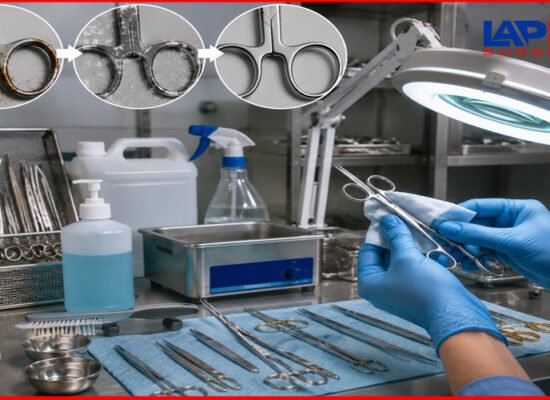
2. Manual Pre-Cleaning | Completely disassemble the trocar (cannula, seal, stopcock cap, obturator). Clean all components with a soft brush and approved enzymatic detergent. | Allows full visual access to all lumens and ensures all internal components are friction-cleaned. Essential for Lapex’s guaranteed longevity. |
3. Ultrasonic Cleaning | Place disassembled components into an ultrasonic bath with a neutral detergent for the recommended cycle time. | Removes microscopic debris from serrations, threads, and internal surfaces, preventing long-term mechanical failure. |
4. Rinsing | Rinse thoroughly with Reverse Osmosis (RO) or Distilled Water to remove all detergent residue and prevent mineral spotting/pitting. | Prevents water spot corrosion, which is a major cause of reusable instrument failure. |
5. Inspection | Visually inspect all components under magnification for residual soil, damage (pitting, dull tips), and seal integrity. Mandatory for a -cycle life. | Ensures the obturator tip is still razor-sharp and the valve elastomer is intact and elastic. |
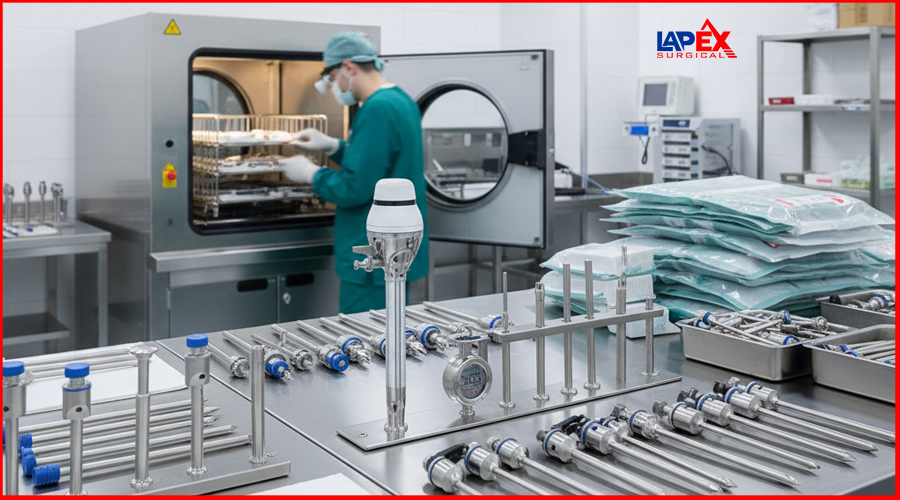
6. Sterilization | Re-package according to protocol and sterilize using high-vacuum steam sterilization (autoclave). The Lapex steel is validated for cycles. | Verifies the instrument is safe and sterile; the Lapex design resists the thermal shock of this process. |
4.4. Risk Assessment: Reusable vs. Disposable (Infection Control)
The infection control debate often centers on disposables’ guaranteed sterility versus the risk of human error in reusable reprocessing. However, a high-quality reusable system like Lapex Surgical’s, when paired with a validated sterile processing department (SPD), offers an extremely low-risk profile:
Disposable Risk: Failure is internal (manufacturing defect), or due to material breakdown/flexing during use.
Reusable Risk: Risk is external (human reprocessing error). Mitigation: The Lapex design facilitates cleaning by allowing complete disassembly and visual inspection, effectively eliminating human error risks when protocols are followed. The superior material quality also reduces the risk of corrosion-based failures that can compromise the sterile barrier.
5. Advanced Applications and System Management
Mastering the use of reusable trocars extends beyond insertion technique; it involves managing different sizes, optimizing placement for specialized procedures, and implementing robust inventory systems to track and certify their longevity.
5.1. Managing Instrument Diameter: The Precision of Size
Reusable trocars are available in various diameters, each serving a specific clinical purpose. The metal construction ensures the integrity of these varying lumen sizes.
Trocar Diameter | Primary Clinical Use | Stability Benefit of Metal |
|---|---|---|
(Mini-Laparoscopy) | Delicate procedures, pediatric surgery, diagnostic laparoscopy; minimal scarring. | Minimal risk of flexing or bending the thin shaft under manipulation. |
Standard working channel for graspers, dissectors, scissors, and small clip appliers. | Provides necessary rigidity for fine dissection and instrument exchange without jamming. | |
Used for the laparoscope (camera port) and for passing larger instruments (e.g., endo-staplers, clip appliers, and suture devices). | Essential for the camera port to prevent image shake due to cannula wobble. | |
and | For passing larger devices like retrieval bags (specimen removal), staplers, or specialized devices. | The all-metal structure is crucial here; polymer systems often fail under the mechanical stress of passing large specimens. |
5.2. Trocar Placement in Specialized Surgeries
The stability offered by Lapex metal trocars is particularly valued in high-tension or complex procedures:
Bariatric Surgery (e.g., Sleeve Gastrectomy): Procedures are often long and involve dense tissue and high torque. The rigidity of the metal cannula is essential for stable retraction and stapling.
Gynecologic Laparoscopy (e.g., Hysterectomy): Precise control in the pelvis is vital. The durable seal prevents gas leakage when the uterus is manipulated, maintaining a clear field.
Urologic Procedures (e.g., Nephrectomy): In procedures requiring complex energy devices and vascular ligation, the metal trocar’s consistent rigidity supports the stable deployment of critical instruments.
5.3. Inventory Management and Tracking for Longevity
To truly realize the -cycle ROI, hospitals must implement a robust tracking system. This is where the reusable product lifecycle is managed:
Unique Identification: Every Lapex reusable trocar is given a unique identification code (e.g., etched barcode or serialized number) for tracking.
Cycle Counting: The SPD must record the sterilization cycle count for each component (cannula, obturator, seal).
Preventive Maintenance (PM): At pre-defined cycle intervals (e.g., and cycles), components should undergo advanced (e.g., torque testing, seal replacement) to ensure performance continuity and prevent failure before the -cycle mark. Lapex Surgical provides detailed guidance based on its engineering validation.