Preventing Rust and Corrosion on Reusable Laparoscopic Tools: The Ultimate Guide for Surgical Professionals
In the high-stakes environment of the Operating Room, the reliability of a surgical instrument is non-negotiable. However, even the most expertly crafted laparoscopic tools are susceptible to the silent enemy: corrosion.
For hospital administrators and CSSD (Central Sterile Services Department) managers, rust isn’t just an aesthetic issue—it is a functional failure that compromises patient safety, leads to astronomical replacement costs, and tarnishes the reputation of the surgical facility.
At Lapex Surgical, based in the world-renowned surgical manufacturing hub of Sialkot, we combine traditional craftsmanship with modern metallurgical science. This guide explores the root causes of oxidation and provides actionable strategies for preventing rust and corrosion on reusable laparoscopic tools.
1. Understanding the Metallurgy: Why Does “Stainless” Steel Rust?
The term “stainless steel” is often misunderstood. It does not mean the metal is incapable of staining; rather, it means it “stains less” than carbon steel.
The Passive Layer
Stainless steel contains chromium (usually at least 10.5%). When exposed to oxygen, chromium forms an invisible, microscopic layer of chromium oxide on the surface. This is known as the Passive Layer.
Corrosion occurs when this passive layer is damaged and prevented from reforming.
Common Types of Corrosion in Laparoscopy
- Pitting: Small, deep holes that are often difficult to see without magnification. Usually caused by chloride ions (saline).
- Fretting: Occurs at the joints and box locks of graspers where metal rubs against metal, wearing down the protective layer.
- Galvanic Corrosion: Occurs when two different types of metal (e.g., a stainless steel shaft and a chrome-plated handle) touch in a wet environment.
- Stress Corrosion: Cracking caused by the combination of tensile stress and a corrosive environment (common in needle holder jaws).
2. The Critical Role of Water Quality
Perhaps the most overlooked factor in preventing rust and corrosion on reusable laparoscopic tools is the water used during cleaning and sterilization.
Table 1: Water Impurities and Their Effects on Instruments
| Impurity | Source | Effect on Laparoscopic Tools |
|---|---|---|
| Chlorides | Tap water / Saline | Causes aggressive pitting and rapid rusting. |
| Silicates | Detergents / Water | Leaves “rainbow” colored stains (interference colors). |
| Iron/Copper | Old plumbing pipes | Causes “deposited” rust that looks like the instrument is failing. |
| Calcium/Magnesium | Hard water | Leaves white scale (limescale) that traps bacteria. |
The Lapex Recommendation: Always use demineralized or distilled water for the final rinse and steam generation in the autoclave.
3. The “Golden Hour”: Immediate Post-Operative Care
Corrosion often begins the moment the surgeon finishes the procedure. If blood and saline are allowed to dry on the instrument, the “Golden Hour” of prevention is lost.
The Problem with Dried Blood
Blood contains high concentrations of chloride ions and proteins. As blood dries, it becomes highly acidic. This acidity eats through the chromium oxide layer of your laparoscopic graspers and dissectors in minutes.
Step-by-Step Prevention:
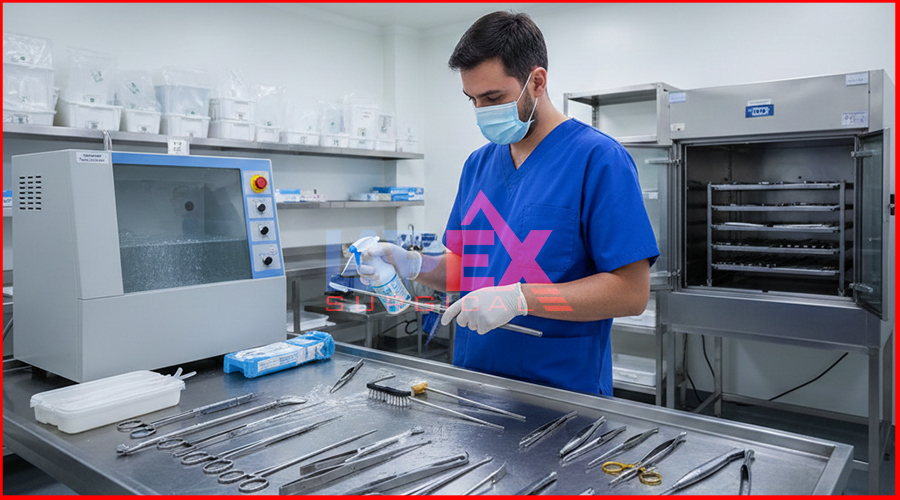
- Pre-treatment: Spray instruments with an enzymatic transport foam immediately after use. This keeps the bio-burden moist and begins breaking down proteins.
- No Saline: Never soak laparoscopic tools in saline. Use sterile water if they must be submerged.
- Transport: Use a closed container to transport tools to the CSSD to prevent evaporation.
4. Cleaning and Detergent Selection
Laparoscopic instruments are complex. They have long lumens, insulation layers, and intricate jaw mechanisms. Choosing the right chemical is vital for preventing rust and corrosion on reusable laparoscopic tools.
pH Neutrality is King
Many heavy-duty detergents are highly alkaline (high pH). While effective at removing fat, they can strip the passive layer of the steel.
- The Lapex Standard: Use pH-neutral enzymatic cleaners (pH 7.0 – 8.5).
- Lumen Care: Ensure that the internal channels of laparoscopic shafts are flushed with a pressurized water jet to remove trapped chlorides.
5. Lubrication: The “Surgical Milk” Routine
Reusable tools with moving parts—such as scissors, biopsy forceps, and Maryland dissectors—require regular lubrication.
- Why Lubricate? Lubrication prevents “metal-on-metal” friction (fretting corrosion).
- Type of Lubricant: Only use water-soluble, medical-grade lubricants. Never use industrial oils or WD-40, which trap heat and bacteria during sterilization.
- Application: Apply the lubricant after cleaning but before autoclaving. This ensures the lubricant penetrates the joints during the heat cycle.
6. Proper Autoclaving Techniques
High heat and moisture are the perfect catalysts for oxidation if not managed correctly.
- Avoid Overloading: Overcrowded trays prevent steam from circulating and lead to “wet packs.” Residual moisture in the tray is a primary cause of post-sterilization rust.
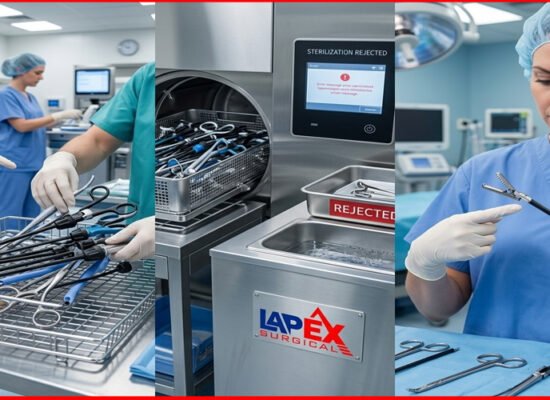
- Dry Time: Ensure the autoclave completes its full drying cycle. Instruments should never be removed while damp.
- Manifold Check: Ensure the steam being delivered is “dry steam.” “Wet steam” carries rust particles from the boiler pipes directly onto your pristine Lapex instruments.
FAQ: Troubleshooting Rust on Laparoscopic Tools
Q1: Is that brown spot actual rust or just a stain?
A: Use the “Eraser Test.” Rub a pencil eraser over the spot. If the spot is removed and the metal underneath is smooth, it is a stain (likely from water minerals). If the metal underneath is pitted or dark, it is rust.
Q2: Can one rusty instrument “infect” others?
A: Yes. During autoclaving, rust particles can become airborne in the steam and deposit onto clean instruments, causing “transferred rust.” This is why a single corroded tool must be removed from the set immediately.
Q3: Why do the tips of my laparoscopic scissors rust faster than the handles?
A: Tips are often made of harder steel (like Tungsten Carbide) to maintain sharpness. This hardness comes at the cost of some corrosion resistance. Extra care must be taken to dry the tips thoroughly.
Q4: How does Lapex Surgical ensure its instruments are rust-resistant?
A: At our Sialkot facility, we perform a Passivation Process. We submerge our finished instruments in a nitric or citric acid bath, which artificially “boosts” the chromium oxide layer, making our tools significantly more resilient than standard market offerings.
Checklist: 5 Tips for Long-Lasting Reusable Tools
- [ ] Rinse Immediately: Never let blood dry.
- [ ] Use Soft Brushes: Avoid steel wool or wire brushes which scratch the surface.
- [ ] Check Your Water: Test your CSSD water for chloride levels quarterly.
- [ ] Inspect Joints: Look for dark “sludge” in the box locks—this is a sign of fretting.
- [ ] Choose Lapex Quality: Start with high-grade AISI 420/440 German-standard steel.
Quality Manufacturing Meets Quality Care
The secret to preventing rust and corrosion on reusable laparoscopic tools is a partnership between the manufacturer and the hospital.
At Lapex Surgical, we take pride in our Sialkot heritage, where every instrument is forged with precision and passivated to perfection. However, even the best steel requires a disciplined reprocessing routine. By following the protocols outlined in this guide, you can double the lifespan of your surgical inventory, reduce costs, and—most importantly—ensure the highest level of patient care.
👉 Ready to upgrade your surgical inventory to corrosion-resistant excellence? Explore the Lapex Surgical Catalog | For more information contact our support team.