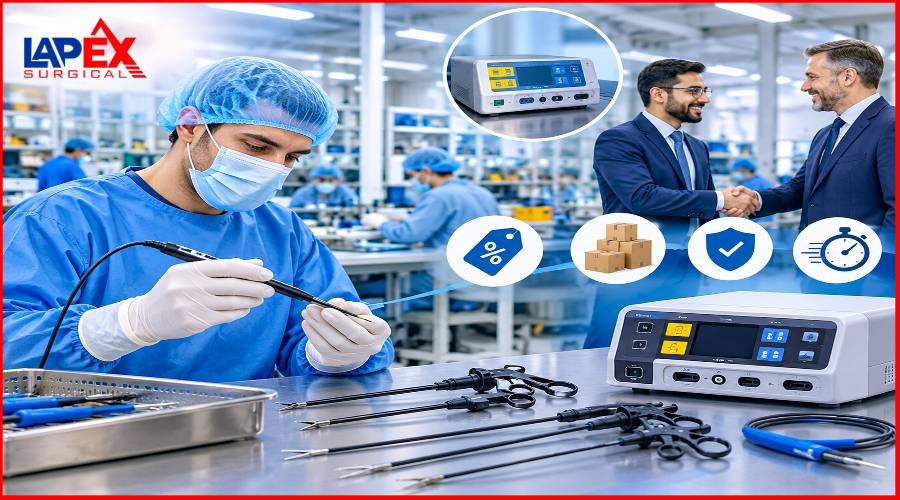
Wholesale Electrosurgical Instruments: Factory-Direct Pricing and Tiered Bulk Discounts (2026 B2B Procurement and OEM Supply Guide)
Buying wholesale electrosurgical instruments straight from a factory usually cuts your cost by removing the middlemen. Ask for tiered pricing, check the MOQ, confirm FDA 510(k) or EU MDR paperwork, and test samples on your own generators before placing a big order.
That is the short answer. The rest of this guide shows you how to do each step, with tables, checklists, and a cost example.
Who This Guide Is For
This guide is written for people who buy electrosurgical tools in volume:
- Medical device distributors
- Regional surgical supply retailers
- Hospital group purchasing organizations (GPOs)
- Ambulatory surgery center (ASC) procurement officers
- Private-label brands that want their own name on the product
If you buy through two or three layers of sellers, you pay a markup at each layer. Going to the maker removes those layers. But buying direct also puts more checking work on you. This guide helps with that.
What Are Electrosurgical Instruments?
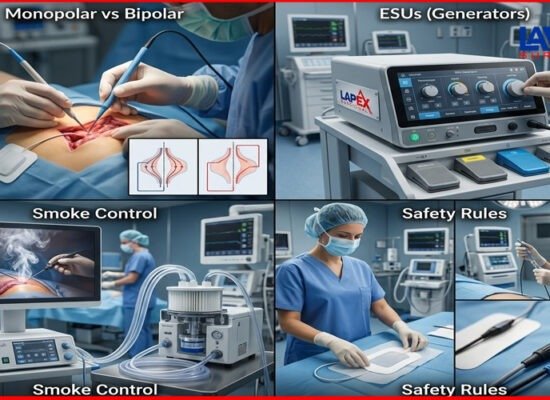
Electrosurgery uses high-frequency electric current to cut tissue or stop bleeding. A machine called an electrosurgical unit (ESU) makes the current. The tools that connect to it are the instruments and accessories. Here are the main ones:
- Monopolar pencils: Handheld tools with a button. Current flows from the tip, through the patient, and back to a return pad.
- Bipolar forceps: Two tips that work like tweezers. Current flows between the tips only. This gives more control in small areas, like neurosurgery, ENT, and plastic surgery.
- ESU cables and cords: These link the tool to the generator.
- Electrodes and tips: Blades, needles, balls, and loops in different shapes.
- Return pads: Sticky pads for monopolar work.
Most wholesale orders center on the first three: pencils, bipolar forceps, and cables.
Why Buy Factory-Direct?
A typical product may pass through a maker, an exporter, a national distributor, a regional distributor, and a local reseller. Each one adds a margin. By the time it reaches you, the price can be far above the factory cost.
Buying from a maker gives you:
- Lower unit cost. You pay the factory price plus a fair margin, not stacked margins.
- Better control over specs. You can ask for a longer cord, a different tip shape, or a different handle.
- Private-label options. The maker can laser-mark your logo and print your packaging.
- Clear traceability. You know who made the product and which batch it came from.
- Faster fixes. If there is a problem, you talk to the maker, not a chain of sellers.
There are risks too. Shipping times are longer. You handle customs. And you must check that the maker’s paperwork is real. We cover this later.
About the maker in this guide: Lapex Surgical (the manufacturer of Surgical, Electrosurgical, plastic surgery, and Laparoscopic instruments from Sialkot) supplies wholesale and OEM buyers. Sialkot, Pakistan, is a well-known center for surgical instrument making, and many world brands source from there.
Tiered Bulk Discounts and MOQ: How the Math Works
Most factories price in tiers. The more you order, the lower the price per piece. Some also offer low minimum order quantities (MOQ) so a new buyer can test the product first.
The table below shows a typical tier structure in this industry. These are example ranges to help you plan. They are not a published price list. Your real prices depend on the product, material, packaging, and order size.
| Tier | Typical Order Size (per item) | Example Discount Range vs. List Price | Best For |
|---|---|---|---|
| Sample / Trial | 1–49 pieces | List price (0%) | Testing fit, quality, and generator match |
| Tier 1 | 50–199 pieces | 5–8% | Small distributors, single clinics |
| Tier 2 | 200–499 pieces | 10–15% | ASCs, regional retailers |
| Tier 3 | 500–999 pieces | 15–22% | Larger distributors, small GPOs |
| Tier 4 / OEM | 1,000+ pieces | 22–30% or more | Private-label brands, large GPOs |
How to read this table
Say a bipolar forceps lists at $40. At Tier 2, a 12% discount brings it to $35.20. On 300 pieces, you save $1,440 versus list. At Tier 4, a 25% discount brings it to $30. On 1,000 pieces, you save $10,000.
Tips for getting the best tier
- Mix products in one order. Ask if the factory counts total order value, not just single items.
- Plan a yearly contract. Some makers give tier pricing on a 12-month forecast, shipped in parts.
- Ask about low MOQ. Many factories will cut MOQ for a first order, but may charge a bit more per piece.
- Standard vs. custom. Standard catalog items cost less and ship faster. Custom tips, logos, or packaging may raise the MOQ.
Reusable vs. Single-Use Electrosurgical Pencils and Forceps
This is one of the biggest choices for any buyer. Neither option is always right. It depends on your volume, your sterilization setup, and your local rules.
Quick comparison
| Factor | Disposable (Single-Use) | Reusable |
|---|---|---|
| Upfront cost | Low per piece | Higher per piece |
| Cost over time | Rises with every case | Falls as you reuse |
| Sterilization | Not needed (arrives sterile) | Autoclave or other cycle needed |
| Infection control | No cross-use risk | Depends on your cleaning process |
| Waste | High | Low |
| Staff work | Less | More (cleaning, checking, packing) |
| Wear and tear | None | Tips and insulation wear out |
A note on bipolar forceps
Reusable bipolar forceps are common because they are built to take heat and repeated cleaning. Look for these features:
- Non-stick silver alloy tips. Silver moves heat away from the tip very well. This helps keep tissue from sticking and burning on the tips. Less sticking means cleaner work and less tip cleaning.
- Autoclave-grade silicone insulation. The coating on the cord and forceps arms must handle steam heat over and over without cracking or going soft.
- Solid joints and spring tension. Tips should close evenly and open smoothly.
What about reusable pencils?
Reusable monopolar pencils exist, but many facilities use disposable pencils because they come sterile and are fast to set up. Ask your surgical team what they prefer.
12-Month Cost-Per-Procedure Example
Numbers help more than opinions. Here is a simple example for an ASC that does 100 bipolar procedures per month (1,200 per year).
These are sample figures to show the method. Use your own prices and labor costs.
Assumptions
- Disposable bipolar forceps: $9.00 each, one per procedure
- Reusable bipolar forceps: $45.00 each
- Reusable life: about 100 sterilization cycles per unit
- Reprocessing cost (cleaning labor, pouch, steam, checks): $4.00 per use
- The ASC buys 8 reusable units at the start so there is always a clean one ready
- Each unit is used about 150 times a year, so each needs one replacement around month 8
Quarter-by-quarter cost
| Quarter | Disposable Cost | Reusable Cost | Notes on Reusable |
|---|---|---|---|
| Q1 | $2,700 | $1,560 | $360 for the first 8 units + $1,200 reprocessing |
| Q2 | $2,700 | $1,200 | Reprocessing only |
| Q3 | $2,700 | $1,560 | $1,200 reprocessing + $360 replacements (month 8) |
| Q4 | $2,700 | $1,200 | Reprocessing only |
| 12-Month Total | $10,800 | $5,520 | |
| Cost per procedure | $9.00 | $4.60 |
What this shows
- Reusable saves about $5,280 in this example.
- The savings come from spreading the unit cost across many uses.
- If your reprocessing cost is higher, say $8 per use, reusable becomes about $8.60 per procedure, and the gap nearly closes. Know your true reprocessing cost before you decide.
- If you do only 10 procedures a month, disposable may win, because reusable units would sit unused and still need care.
Now add wholesale pricing
Buying the reusable forceps at a Tier 2 discount would lower the $45 unit cost further, and the disposable price might drop at volume too. Ask for quotes on both and rerun the math.
Generator Compatibility Checklist
A great instrument is useless if it does not fit your generator. Use this checklist before you order.
Connector and plug check
- [ ] Which generator brands and models do you use? (Valleylab/Medtronic, Erbe, Bovie/Symmetry Surgical, Conmed, Martin, others)
- [ ] What plug type does your generator take for monopolar? (For example, 3-pin or 2-pin styles vary by brand.)
- [ ] What plug type does it take for bipolar? (Banana-style 2-pin and other layouts exist.)
- [ ] Does the cable need to be Valleylab-compatible? If yes, ask the factory to confirm the exact connector type and model list.
- [ ] How long should the cord be? (Common lengths are about 3 meters, but check your room setup.)
Electrical and safety check
- [ ] Is the accessory rated for the maximum voltage your generator can put out in the mode you use?
- [ ] Does the maker test against the standard for high-frequency surgical equipment (IEC 60601-2-2 is the one to ask about)?
- [ ] Is the insulation tested for heat and repeated sterilization?
Real-world check
- [ ] Order samples first.
- [ ] Test them with your generator in the settings your surgeons use.
- [ ] Ask surgeons and nurses to give feedback on feel, weight, and tip performance.
- [ ] Check cord flexibility and how it behaves after a few autoclave cycles.
Compatibility note: “Compatible” means the product fits and works with a brand’s generator. It does not mean the product is made by that brand. Brand names like Valleylab belong to their owners and are used only to describe fit.
Regulatory Verification Checklist (FDA 510(k) and EU MDR)
This is where buyers get burned. A low price means little if the product cannot legally be sold in your market.
United States (FDA)
In the US, electrosurgical cutting and coagulation devices and their accessories are generally regulated as Class II medical devices. Most need a 510(k) clearance before sale. Here is what to check:
- [ ] Ask for the 510(k) number for each product, or a clear explanation if the product is exempt.
- [ ] Look up that number on the FDA’s public 510(k) database yourself. Do not rely only on a PDF from the seller.
- [ ] Confirm the name on the clearance matches the product you are buying and the company you are buying from, or a legal private-label arrangement.
- [ ] Check that the maker is listed in FDA establishment registration.
- [ ] Ask about the quality system. Makers selling into the US should follow FDA quality system rules.
European Union (EU MDR)
In the EU, devices must meet Regulation (EU) 2017/745 (MDR) and carry a CE mark. The risk class depends on the device and its use, so ask the seller to state the class and show the reasoning. Here is what to check:
- [ ] Ask for the CE certificate and the notified body number.
- [ ] Check that the certificate is current and covers the exact product codes you want.
- [ ] Ask who the EU Authorized Representative is, since non-EU makers must have one.
- [ ] Ask about UDI labeling and registration.
- [ ] Ask to see the Declaration of Conformity.
Quality system
- [ ] Ask for the maker’s ISO 13485 certificate. This is the standard medical device quality system.
- [ ] Check the certificate’s scope, expiry date, and issuing body.
Red flags
- The seller will not share certificate numbers.
- Certificates show a different company name.
- The paperwork covers “electrosurgical” in general but not your product codes.
- The seller says “FDA approved” for a 510(k) product. Clearance and approval are not the same thing. This wording is a sign to look closer.
Rules change, and each country has its own. Check with your regulatory advisor or local authority before importing.
Ready to Compare Real Prices?
Request Your Custom Tiered Wholesale Quote (24-Hour Factory Response)
Tell the factory your products, quantities, and generator models. You get a tiered quote built for your order.
Materials and Build Quality: What to Look For
Two instruments can look the same in a photo and perform very differently. Check these points.
Tips and electrodes
- Silver alloy tips on bipolar forceps help reduce sticking and heat buildup.
- Stainless steel is common and strong. Ask for the grade.
- Tip finish should be smooth. Rough spots can hold tissue and bacteria.
Insulation
- Autoclave-grade silicone is a common choice for reusable cords. It stays flexible and handles steam.
- Ask how many autoclave cycles the maker has tested the cord for.
- Pull and bend a sample cord. Look for cracks, stiffness, or a sticky surface after cycles.
Handles and switches
- Buttons should click with clear feedback.
- Handles should feel balanced in a gloved hand.
Packaging and labeling
- Look for batch or lot numbers.
- Look for clear product codes and use-by dates on sterile disposables.
- Check that the sterile barrier on disposables is intact.
Private Label and OEM: What You Can Customize
If you run your own brand, OEM supply lets you sell factory-made instruments under your name. Here is what is often possible:
- Laser marking of your logo on the instrument
- Custom packaging and instruction leaflets
- Cord length, plug type, and color options
- Tip shapes and sizes within the maker’s tooling range
- Kits and sets built for a procedure or specialty
Questions to ask an OEM supplier
- What is the MOQ for private label, and how does it differ from standard items?
- Who holds the regulatory clearance, and how does private labeling work for my market?
- How long does a first production run take?
- Can I approve a pre-production sample?
- What happens if a batch fails inspection?
ASC and GPO Procurement: Practical Tips
For ASC buyers
- Start with the items you use most, such as bipolar forceps, cables, and pencils.
- Choose a mix of disposable and reusable based on your sterilization capacity.
- Keep a spare stock of cables. They fail more often than people expect.
- Track cost per procedure each quarter.
For GPO buyers
- Ask for tiered pricing tied to member volume.
- Request a bid-ready document package: certificates, product codes, test reports, and sample policy.
- Check the supplier’s capacity. Can they ship steady monthly volume?
- Ask about lead times and how they handle delays.
For distributors
- Compare landed cost, not just the factory price. Add freight, duty, insurance, and testing.
- Ask about exclusivity in your region.
- Ask about return and warranty terms in writing.
Step-by-Step: How to Run a Safe First Order
- List your needs. Products, quantities per year, generator models.
- Send an RFQ. Include target quantities so you get tiered prices.
- Ask for documents. Certificates, 510(k) or CE details, test reports.
- Verify the documents. Check public databases and certificate numbers yourself.
- Order samples. Pay for them if needed. Samples show the real quality.
- Test in real settings. Use your generator. Get staff feedback.
- Start with a trial order. Use a low MOQ if possible.
- Inspect the shipment. Check counts, labels, lot numbers, and build quality.
- Scale up. Move to a higher tier once you are confident.
Wholesale Electrosurgical Instruments: Factory-Direct Guide
Buy smart in 2026. Save more. Stay compliant.
Bottom Line
Why Go Factory-Direct?
Usual route
Direct route
Every extra seller adds a markup.
Tiered Discounts by Order Size
Example ranges only. Real prices depend on product and order.
12-Month Cost Example: 1,200 Bipolar Procedures
Single-use
$9.00 per procedure
Reusable
$4.60 per procedure
Sample figures. Use your own cleaning and labor costs.
Generator Fit
- Match the plug type
- Confirm Valleylab-compatible cables
- Check cord length
- Ask about IEC 60601-2-2 tests
- Test samples on your unit
Paperwork Check
- FDA 510(k) number
- CE certificate and notified body
- ISO 13485 certificate
- EU representative and UDI
- Red flag: seller hides certificate numbers
Your First Order in 6 Steps
Ready to Compare Real Prices?
Lapex Surgical – Sialkot
Why Consider Lapex Surgical
Lapex Surgical (the manufacturer of Surgical, Electrosurgical, plastic surgery, and Laparoscopic instruments from Sialkot) works with distributors, private-label brands, and institutional buyers. Because the company makes several instrument families, you can bundle electrosurgical items with general surgical, plastic surgery, or laparoscopic items. Bundling can help you reach a higher discount tier faster.
Always run the same checks on any supplier, including this one. Ask for current certificates, test samples, and compare quotes.
Get the Full Catalog and Compatibility Chart
Download the 2026 Lapex Surgical Electrosurgical Wholesale Catalog & Generator Compatibility Matrix (PDF)
See product ranges and check which cables and tools fit your generators.
Common Mistakes Buyers Make
- Choosing on price alone. The cheapest quote can cost more if products fail or get held at customs.
- Skipping samples. A spec sheet cannot tell you how a cord feels or how tips perform.
- Not checking paperwork. Always verify certificates in public databases.
- Ignoring reprocessing costs. Reusable only wins if your cleaning process is efficient.
- Forgetting freight and duty. Compare landed cost.
- Not writing down terms. Put MOQ, lead time, warranty, and payment terms in the contract.
Frequently Asked Questions
What does “factory-direct” mean?
It means you buy from the company that makes the product, not from a trader or reseller. This usually lowers the price and gives you more control over specs.
What is a good MOQ for electrosurgical instruments?
It varies by product. Standard catalog items often have lower MOQs than custom or private-label items. Many factories will allow a small trial order for new buyers. Ask for both a trial MOQ and a tiered volume price.
Are bulk discounts the same for every product?
No. Discounts depend on the product type, material, and order size. Mixed orders may qualify for a combined tier if the factory agrees.
Is reusable always cheaper than disposable?
No. Reusable is cheaper at higher volumes when your reprocessing cost is low. At low volumes, or with high labor and sterilization costs, disposable can be cheaper. Run the numbers for your own site.
How can I check if a product has FDA 510(k) clearance?
Ask the seller for the 510(k) number, then search it in the FDA’s public database. Check that the product name and company match. Remember, “cleared” is the right word for 510(k), not “approved.”
What does EU MDR compliance involve?
The maker must meet the requirements of Regulation (EU) 2017/745, hold a valid CE certificate through a notified body where required, and name an EU Authorized Representative if based outside the EU.
What does “Valleylab-compatible” mean?
It means the cable or accessory fits and works with generators made by Valleylab (now part of Medtronic). It does not mean Valleylab made it. Ask for the exact connector type and tested models.
Can I get private-label electrosurgical instruments?
Yes, many factories offer OEM or private-label supply. You should confirm who holds the regulatory clearance for your target market and how labeling works.
How many autoclave cycles can a reusable bipolar forceps handle?
It depends on the design and materials. Many reusable instruments are rated in the range of dozens to a few hundred cycles. Ask the maker for tested cycle counts and the cleaning method they recommend.
How fast can a factory send a quote?
Many send quotes within one or two business days. The request link in this guide promises a 24-hour factory response.
Should I order samples before a big order?
Yes. Always. Test samples on your own generators and have your surgical team use them.
Final Takeaway
Factory-direct buying can lower costs, give you more control, and open the door to private label. But the savings only count if the products are compliant, compatible, and well made. Check certificates yourself. Test samples. Compare tiered quotes and run your own cost-per-procedure math.
Take the Next Step
Request Your Custom Tiered Wholesale Quote (24-Hour Factory Response)
or
Download the 2026 Lapex Surgical Electrosurgical Wholesale Catalog & Generator Compatibility Matrix (PDF)