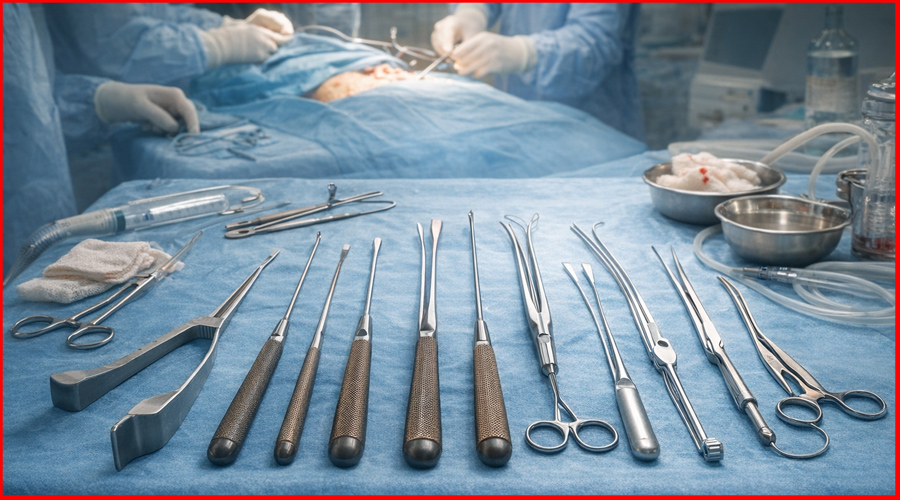
Top 10 Essential Abdominal Instruments for Modern Plastic & Reconstructive Surgery
In the delicate realm of plastic and reconstructive surgery, the bridge between a surgeon’s vision and a successful patient outcome is built upon the quality of the instruments in their hand. While the field has advanced with robotics and lasers, the core of abdominal procedures—ranging from abdominoplasty to deep-tissue reconstruction—remains centered on specialized abdominal instruments.
At Lapex Surgical, based in the world-renowned surgical manufacturing hub of Sialkot, Pakistan, we understand that “precision” isn’t just a marketing term; it is a clinical requirement. In this comprehensive guide, we explore the ten most critical abdominal instruments that define the standards of modern surgical excellence.
The Evolution of Abdominal Instrumentation
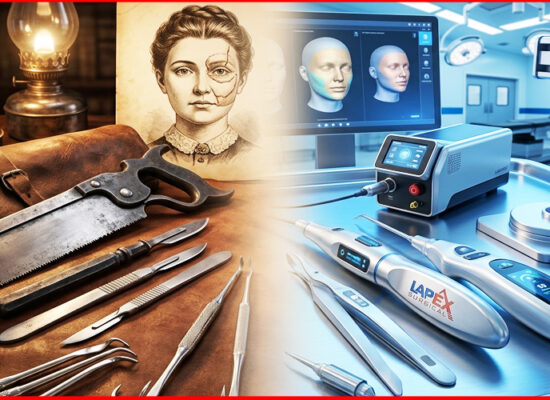
The history of abdominal surgery is a journey from “large incisions” to “minimal trauma.” Historically, abdominal instruments were heavy, high-tension tools designed for general surgery. However, the rise of aesthetic and reconstructive plastic surgery demanded a new breed of tools: those that offer the reach required for the abdominal cavity but the finesse required for skin-flap preservation and nerve protection.
Why Quality Manufacturing Matters (The Sialkot Edge)
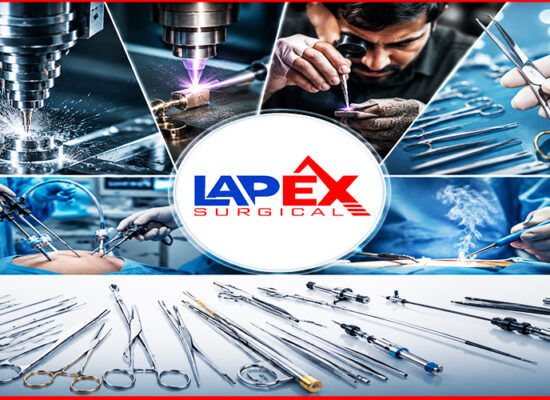
Lapex Surgical utilizes high-grade surgical stainless steel and ergonomic designs to ensure that every dissector, elevator, and retractor feels like an extension of the surgeon’s own hand. Our manufacturing process in Sialkot combines traditional craftsmanship with modern CNC precision, ensuring that the serrations, tips, and joints of our abdominal instruments never fail under the rigors of the operating room.
The Top 10 Essential Abdominal Instruments
1. Endoscopic Face Lift Dissectors (Abdominal Applications)
While often associated with facial work, specialized dissectors like the LP-1.100.10 and LP-1.100.12 are frequently utilized in specialized abdominal reconstructive procedures where deep-plane tissue separation is required with minimal trauma.
- Key Feature: Ergonomic handles and varied curvatures.
- Surgical Benefit: Allows for bloodless plane separation in “mummy makeover” procedures.
2. Endoscopic Face Lifting Elevators
Elevators such as the LP-1.100.13 (Curved) are pivotal in elevating the abdominal skin flap during a tummy tuck. Unlike standard general surgery elevators, these are designed with specific angles to respect the vascularity of the abdominal wall.
- Usage: Creating the “tunnel” in endoscopic-assisted abdominoplasty.
3. The Saldanha Solz Abdominal Retractor (LP-1.100.01)
Named after pioneers in the field, this is arguably the most critical “big” tool in the abdominal kit. The Saldanha Solz Retractor allows for the massive visualization required during a full lipectomy.
- Innovation: Its unique blade shape reduces localized pressure, preventing tissue necrosis at the incision edges.
4. Obwegeser Iliac Crest Retractor (LP-1.100.18)
In reconstructive cases involving bone grafting or deep pelvic anchoring, the Obwegeser Retractor is the gold standard.
- Why it’s essential: Its stability is unmatched, allowing the surgical assistant to provide a clear field of view for the surgeon without slippage.
5. Endoscopic Raspatories (Curved & Straight)
Precision bone and cartilage management in reconstructive abdominal wall surgery requires Raspatories like the LP-1.100.19. These tools allow surgeons to smooth surfaces or prepare attachment points for mesh or sutures.
6. Solz Navel Marker (LP-1.100.17)
In aesthetic surgery, symmetry is everything. The Solz Navel Marker is a specialized instrument used to ensure the precise repositioning of the umbilicus (belly button) during abdominal contouring.
- Precision Tool: This tool differentiates a “good” result from a “world-class” result.
7. Endoscopic Nerve Hooks
During abdominal wall reconstruction, identifying and preserving the intercostal nerves is vital for post-operative muscle function. Our LP-1.100.04 (20cm) nerve hooks provide the tactile feedback necessary to isolate delicate structures.
8. Ligature Needles (Entner Type)
Closing the fascia in an abdominoplasty requires high-tension suturing. The Entner Ligature Needle (LP-1.100.16) allows for deep-seated suturing where standard needle holders might struggle with reach or visibility.
9. Endoscopic Grasping Forceps
For minimally invasive “keyhole” abdominal surgeries, grasping forceps with specific atraumatic teeth are required to handle tissue without causing bruising or “crush” injuries.
10. Suction Elevators (Combined Action)
Tools like the LP-1.100.15 combine elevation and suction. In the fluid-heavy environment of abdominal surgery, being able to clear the field while simultaneously lifting tissue saves significant operative time.
Technical Specifications Table: Lapex Surgical Standard
| Instrument Category | Material Grade | Coating Options | Primary Use Case |
|---|---|---|---|
| Retractors | AISI 420 Stainless Steel | Satin / Mirror Finish | Visualization & Exposure |
| Dissectors | High-Carbon Surgical Steel | Non-Reflective | Plane Separation |
| Elevators | Premium 304/420 Grade | Ergonomic Polymer/Steel | Flap Elevation |
| Markers | Medical Grade Stainless | Laser-Etched Scaling | Symmetry & Mapping |
Key Considerations for Procuring Abdominal Instruments
When a hospital or surgical center looks to upgrade its abdominal kit, it must look beyond the price tag. Here are the three pillars of procurement:
1. Material Integrity
Cheap instruments use low-grade alloys that can pit or rust after repeated autoclaving. Lapex Surgical instruments undergo rigorous passivation to ensure a lifetime of corrosion resistance.
2. Ergonomics and “Feel.”
Surgeons perform abdominal procedures for 3–6 hours at a time. An instrument with a poorly designed handle causes hand cramps and fatigue. Our brown ergonomic handles (as seen in the LP-1.100.04 series) are designed to redistribute pressure across the palm.
3. Specialty Focus
General surgery tools are often too “blunt” for plastic surgery. Ensure your supplier understands the difference between a general abdominal retractor and a plastic surgery abdominal retractor.
Frequently Asked Questions (FAQ)
What are the most common abdominal instruments used in abdominoplasty?
The most common tools include the Saldanha Retractor for visualization, the Solz Navel Marker for symmetry, and specialized curved elevators for creating the abdominal skin flap.
Why should I choose surgical instruments manufactured in Sialkot?
Sialkot is the global epicenter of surgical instrument manufacturing, producing over 70% of the world’s handheld tools. Manufacturers like Lapex Surgical combine decades of generational knowledge with modern ISO-certified quality control.
How do I maintain my Lapex abdominal instruments?
Instruments should be cleaned immediately after use with a pH-neutral detergent, followed by sterilization in an autoclave. Ensure that hinged instruments are lubricated with surgical-grade “milk” regularly.
Can Lapex Surgical provide custom-modified abdominal instruments?
Yes. As a direct manufacturer, Lapex Surgical can modify lengths, curvatures, or handle types to meet the specific requirements of a surgical team or a specialized procedure.
The Future of Abdominal Surgery: Lapex Surgical’s Vision
As we move toward 2027 and beyond, the integration of laparoscopic and electrosurgical capabilities into traditional abdominal instruments is the next frontier. Lapex Surgical is already at the forefront, developing hybrid tools that allow for simultaneous cutting and coagulation during abdominal wall repair.
For distributors and healthcare providers looking for a partner in excellence, Lapex Surgical offers more than just tools—we offer the precision that saves lives and restores confidence.
For inquiries regarding our full catalog of Abdominal Instruments, Electrosurgical tools, or Laparoscopic equipment, visit the Lapex Surgical product gallery today.