Table of Contents
ToggleFDA Regulations: The Path to Market for New Surgical Devices 🏥
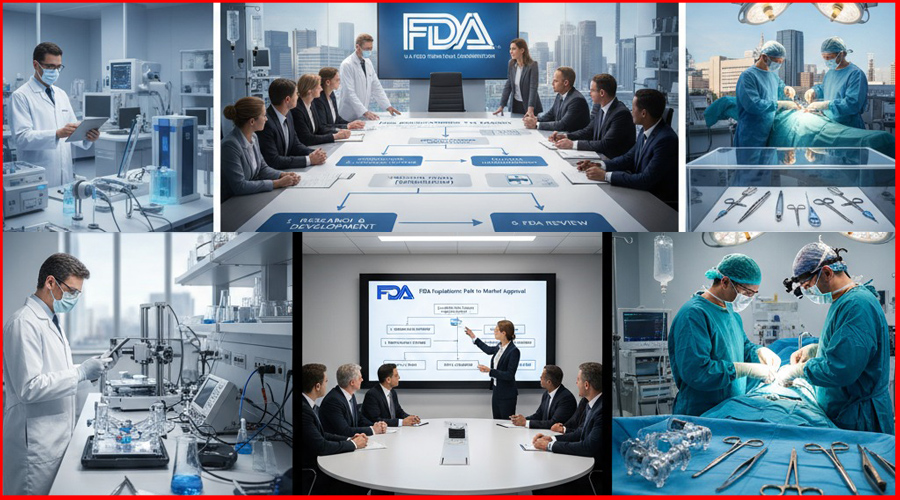
The journey of a new surgical device, from a visionary concept to a life-saving tool in an operating room, is nothing short of extraordinary. It involves intricate design, precision engineering, rigorous testing, and, critically, a complex dance with regulatory bodies. In the United States, the Food and Drug Administration (FDA) stands as the gatekeeper, ensuring that every device reaching the market is safe and effective for patients. This regulatory pathway isn’t merely a bureaucratic hurdle; it’s a foundational pillar of patient safety and public health.
For medical device manufacturers, understanding and expertly navigating the FDA’s intricate web of regulations is paramount. It demonstrates not only compliance but a deep-seated commitment to quality and ethical practice. This article delves into the essential aspects of FDA regulations for surgical devices, unraveling the various risk classifications and detailing the critical premarket pathways—from the Premarket Notification (510(k)) to the rigorous Premarket Approval (PMA) process.
At Lapex Surgical, we don’t just craft instruments; we craft confidence. Rooted in the esteemed tradition of Sialkot, Pakistan, our heritage of precision manufacturing is seamlessly integrated with a steadfast commitment to global regulatory compliance. We understand that our instruments are destined for operating rooms worldwide, and thus, our dedication to adhering to the highest standards, including those set by the FDA, is unwavering. Join us as we explore this vital landscape, positioning Lapex Surgical as a knowledgeable and reliable partner committed to bringing safe, effective, and high-quality surgical devices to market.
1. The FDA’s Mandate: Guardians of Health and Safety
The U.S. Food and Drug Administration (FDA) is a federal agency of the Department of Health and Human Services. Its primary responsibility is to protect public health by ensuring the safety, efficacy, and security of human and veterinary drugs, biological products, and medical devices. For medical devices, the FDA’s center responsible for this oversight is the Center for Devices and Radiological Health (CDRH).
What is a Medical Device?
Before delving into regulations, it’s crucial to define what the FDA considers a “medical device.” According to Section 201(h) of the Federal Food, Drug, and Cosmetic (FD&C) Act, a medical device is an instrument, apparatus, implement, machine, contrivance, implant, in vitro reagent, or other similar or related article, including any component, part, or accessory, which is:
Intended for use in the diagnosis of disease or other conditions, or in the cure, mitigation, treatment, or prevention of disease.
Intended to affect the structure or any function of the body, and which does not achieve its primary intended purposes through chemical action within or on the body, and which is not dependent upon being metabolized for the achievement of its primary intended purposes.
This broad definition encompasses everything from a simple tongue depressor to complex pacemakers and advanced robotic surgical systems. Surgical instruments, whether general, electrosurgical, plastic surgery, or laparoscopic, unequivocally fall under this classification, making FDA compliance a critical step for manufacturers like Lapex Surgical.
The FDA’s role is to scrutinize every aspect of a device’s journey, from its initial design concept to its post-market performance. This vigilance ensures that when a surgeon picks up a Lapex Surgical instrument, they do so with the utmost confidence in its safety and effectiveness, ultimately protecting the patient.
2. Risk Classification: The Cornerstone of Regulatory Strategy
The FDA employs a risk-based classification system for medical devices. This means that the level of regulatory control applied to a device is directly proportional to the risks it poses to patients and users. Devices are categorized into three classes: Class I, Class II, and Class III. Understanding this classification is the very first and most critical step in determining the appropriate regulatory pathway for any new surgical device.
Class I Devices: Low Risk, General Controls
These devices pose the lowest potential risk to patients. They are typically simple in design and have a well-understood safety profile. Most Class I devices are subject to General Controls, which include basic requirements applicable to all medical devices, regardless of class.
Examples: Most general hand-held surgical instruments (e.g., scalpels, scissors, hemostats, retractors, non-electric needle holders) that are not intended for specialized, high-risk applications.
General Controls Include:
Good Manufacturing Practices (GMP): Adherence to the Quality System (QS) Regulation (21 CFR Part 820).
Proper Labeling: Ensuring devices are adequately labeled with intended use, warnings, and instructions.
Registration and Listing: Device manufacturers must register their establishments and list their devices with the FDA.
Records and Reporting: Maintaining adequate records and reporting adverse events.
Many Class I devices are also exempt from premarket notification (510(k)), meaning they don’t require an explicit submission to the FDA before marketing.
Class II Devices: Moderate Risk, General and Special Controls
Class II devices present a moderate risk to patients. General Controls alone are insufficient to ensure their safety and effectiveness. Therefore, these devices are subject to both General Controls and Special Controls.
Examples: Many laparoscopic instruments, electrosurgical pencils, certain types of powered surgical instruments, infusion pumps, surgical lasers, and some plastic surgery instruments.
Special Controls May Include:
Performance Standards: Specific requirements for device performance.
Postmarket Surveillance: Monitoring devices after they are on the market.
Patient Registries: Tracking patient outcomes for specific devices.
Specific Labeling Requirements: Additional warnings or instructions.
Guidance Documents: FDA-issued documents outlining expectations.
The vast majority of Class II devices require Premarket Notification (510(k)) before they can be marketed in the U.S.
Class III Devices: High Risk, General Controls and Premarket Approval (PMA)
These devices pose the highest risk to patients and typically support or sustain human life, are implanted, or present a potential for unreasonable risk of illness or injury. General and Special Controls are insufficient, requiring the most stringent regulatory oversight.
Examples: Implantable pacemakers, heart valves, implantable prosthetic devices (e.g., breast implants), and certain high-risk surgical lasers.
Regulatory Pathway: Class III devices almost always require Premarket Approval (PMA), which is the most rigorous and costly premarket pathway. This process demands extensive scientific evidence, including clinical trial data, to demonstrate both safety and effectiveness.
Here’s a simplified table summarizing the classifications:
| Device Class | Risk Level | Controls Required | Primary Premarket Pathway | Example Surgical Instrument |
| Class I | Low | General Controls | Exempt from 510(k) (most) | Manual Scalpel, Basic Hemostat, Non-electric Retractor |
| Class II | Moderate | General + Special Controls | Premarket Notification (510(k)) | Electrosurgical Pencil, Laparoscopic Grasper, Surgical Laser (some) |
| Class III | High | General + Premarket Approval (PMA) | Premarket Approval (PMA) | Implantable Surgical Mesh, Artificial Heart Valve, Implantable Defibrillator (high-risk devices not typically in Lapex’s direct scope, but illustrative) |
Lapex Surgical‘s extensive product portfolio, encompassing general, electrosurgical, plastic surgery, and laparoscopic instruments, primarily falls within Class I and Class II categories. Our expertise in navigating these pathways ensures that every instrument we bring to market meets the highest FDA standards for its specific risk profile.
3. Navigating the Regulatory Maze: Premarket Pathways Explained
Once a surgical device’s risk class is determined, the next crucial step is to identify and execute the correct premarket pathway. This is the formal process by which manufacturers demonstrate to the FDA that their new device is safe and effective before it can be legally marketed in the United States.
3.1. Premarket Notification (510(k)): The Path for Substantial Equivalence
The 510(k) pathway is the most common route for Class II devices. It’s required for devices that are “substantially equivalent” to a legally marketed predicate device. This means the new device has the same intended use as a predicate device and has the same technological characteristics, or has different technological characteristics but does not raise different questions of safety and effectiveness, and is as safe and effective as the predicate device.
Who Needs a 510(k)?
Manufacturers are introducing a device to the U.S. market for the first time.
Manufacturers are introducing a new intended use for a previously cleared device.
Manufacturers making a significant modification to a previously cleared device (e.g., changes in materials, design, energy source, or performance).
The Concept of Substantial Equivalence: This is the core of the 510(k) process. Manufacturers must prove that their new device is as safe and effective as a device already on the market (the “predicate device”). They don’t need to prove absolute safety and efficacy in the same way a Class III device does, but rather demonstrate that it’s just as good as something already approved.
What’s Required for Proof: This typically involves performance data (bench testing, engineering analysis), sometimes non-clinical (e.g., animal) testing, and clear comparisons to the predicate device’s technological characteristics and intended use. Clinical data is generally not required for a 510(k) unless the FDA explicitly requests it to address specific safety or effectiveness concerns.
Key Steps in the 510(k) Process:
Identify Predicate Device: Find a legally marketed device with the same intended use and similar technological characteristics.
Conduct Testing: Perform bench testing and other non-clinical evaluations to compare the new device to the predicate.
Prepare the Submission: Compile a comprehensive document including device description, intended use, technological characteristics, comparison to predicate, performance data, and labeling.
Submit to FDA: The submission is reviewed by CDRH.
FDA Review and Decision: The FDA reviews the submission. If they agree the device is substantially equivalent, they issue a “clearance” letter, allowing the device to be marketed.
3.2. Premarket Approval (PMA): The Rigorous Path for High Risk
The PMA pathway is the most stringent and time-consuming premarket review process, reserved for Class III devices that pose the highest risk to patients. Unlike 510(k), which relies on substantial equivalence, PMA requires a direct demonstration of the device’s safety and effectiveness.
Who Needs a PMA?
Manufacturers of all new Class III devices.
Devices that are not substantially equivalent to an existing Class II or Class I device.
Demonstrating Safety and Effectiveness: This is the core requirement. Manufacturers must submit a comprehensive body of scientific evidence to prove that the benefits of the device outweigh its risks and that it achieves its intended purpose reliably.
Clinical Trials: This almost always involves extensive clinical trials on human subjects to generate robust data on both safety and effectiveness. These trials are costly, time-consuming, and must adhere to strict ethical and scientific protocols.
Non-Clinical Data: Extensive bench testing, animal studies, and engineering analyses are also critical components of a PMA submission.
Key Steps in the PMA Process:
Investigational Device Exemption (IDE): Before conducting human clinical trials, manufacturers typically need an IDE to allow the device to be used in clinical studies.
Conduct Clinical Trials: Execute well-designed clinical studies to collect safety and effectiveness data.
Prepare the Submission: Compile a massive document detailing all manufacturing information, device description, scientific evidence, non-clinical data, clinical trial results, and proposed labeling.
Submit to the FDA: The FDA performs an in-depth review.
FDA Review and Decision: This includes scientific review, an advisory committee meeting (often public), and an inspection of manufacturing facilities. If approved, the device can be legally marketed.
3.3. De Novo Classification Request: For Novel Low-to-Moderate Risk Devices
For novel devices that present a low-to-moderate risk but for which no predicate device exists (meaning a 510(k) isn’t possible and it would automatically be classified as Class III), the De Novo pathway offers an alternative. It allows the device to be down-classified to Class I or II if the manufacturer can demonstrate that general and/or special controls are sufficient to ensure safety and effectiveness.
Lapex Surgical’s Navigational Expertise: While Lapex Surgical primarily focuses on Class I and Class II surgical instruments, our in-depth understanding of the 510(k) process is crucial for introducing new or significantly modified laparoscopic tools, electrosurgical devices, and plastic surgery instruments. Our commitment extends to ensuring all our products meet the exacting standards of these pathways, ensuring smooth market entry and ultimately, patient trust.
4. The Lapex Surgical Journey: Quality, Compliance, and Sialkot Heritage
At Lapex Surgical, the regulatory pathway isn’t an afterthought; it’s an integral part of our product development lifecycle. Our deep roots in Sialkot’s time-honored craftsmanship merge seamlessly with a modern, compliance-driven approach to manufacturing surgical instruments that meet global standards, including those of the FDA.
Integrated Design Controls and Quality Management System (QMS)
Our journey begins with robust design controls, a critical component of the FDA’s Quality System Regulation (21 CFR Part 820). From the initial concept for a new electrosurgical pencil or a specialized plastic surgery retractor, every step is meticulously documented:
User Needs: We start by understanding the precise needs of surgeons, collaborating to define functional and safety requirements.
Design Input: Translating user needs into measurable design specifications.
Design Output: The blueprints, manufacturing specifications, and assembly instructions for the device.
Design Verification: Testing that the device meets its design inputs (e.g., bench testing for strength, sharpness, electrical safety).
Design Validation: Ensuring the device meets user needs and intended use (e.g., simulated use, sometimes clinical evaluation).
This entire process is managed under our comprehensive Quality Management System (QMS), which is certified by ISO 13485:2016. This international standard aligns perfectly with the FDA’s QS Regulation, demonstrating our commitment to consistency, traceability, and risk management across all our operations in Sialkot. Every Lapex Surgical instrument, whether a simple general surgery scissor or a complex laparoscopic grasper, benefits from this meticulous oversight.
Materials of Trust, Forged with Precision
Our choice of materials directly impacts regulatory compliance. We exclusively source premium medical-grade German stainless steel and other advanced materials. This isn’t just a marketing claim; it’s a non-negotiable requirement for ensuring the biocompatibility, durability, and corrosion resistance demanded by both surgical use and repeated sterilization cycles. These material specifications are rigorously documented and verified, forming a critical part of any FDA submission.
Our skilled artisans in Sialkot, leveraging generations of expertise, then transform these materials into instruments of exceptional quality. The precision of their forging, grinding, and polishing ensures not only superior performance but also facilitates thorough cleaning and sterilization—a key factor in preventing bioburden and maintaining compliance with sterility requirements.
Documentation as a Cornerstone
The FDA regulatory process is fundamentally about documentation. Every test result, every design change, and every material specification must be meticulously recorded and readily accessible. Lapex Surgical maintains exhaustive documentation for all its devices, ensuring that our technical files are comprehensive and compliant, streamlining the process for our regulatory submissions. This dedication to transparent and thorough record-keeping is a hallmark of our manufacturing excellence.
5. Challenges, Best Practices, and the Future of Compliance
Navigating the FDA’s regulatory landscape can be challenging, even for experienced manufacturers. Common pitfalls can delay market entry, increase costs, and even lead to enforcement actions. However, by adhering to best practices, companies can streamline the process and ensure robust compliance.
Common Regulatory Challenges
Device Misclassification: Incorrectly classifying a device can lead to inappropriate regulatory pathways, causing delays or requiring rework.
Insufficient Documentation: Lack of comprehensive design controls, testing protocols, or manufacturing records.
Inadequate Testing Data: Submitting insufficient bench, non-clinical, or clinical data to support safety and effectiveness claims.
Predicate Device Selection (for 510(k)): Choosing a predicate that is not truly substantially equivalent.
Quality System Non-Compliance: Failure to implement and maintain a robust QMS that meets FDA requirements.
Post-Market Surveillance Issues: Not effectively monitoring device performance once it’s on the market, or failing to report adverse events promptly.
Best Practices for Regulatory Success
Early Regulatory Strategy: Engage regulatory experts early in the device development cycle to determine the correct classification and pathway.
Robust Quality Management System (QMS): Implement and strictly adhere to an ISO 13485-compliant QMS, which provides the framework for design controls, risk management, and documentation.
Comprehensive Documentation: Maintain meticulous records for all stages of design, development, manufacturing, and testing. This is the bedrock of any successful submission.
Thorough Testing: Conduct rigorous bench testing, non-clinical studies, and, if required, well-designed clinical trials to generate robust scientific evidence.
Continuous Training: Ensure that all personnel involved in device design, manufacturing, and quality control are adequately trained on relevant regulations and procedures.
Proactive Post-Market Surveillance: Establish systems for monitoring device performance after market entry, promptly investigating complaints, and reporting adverse events to the FDA.
The Impact on Innovation
While regulations add complexity, they are not antithetical to innovation. In fact, they drive it. The requirement to prove safety and effectiveness pushes manufacturers to create truly superior, well-engineered devices. This forces innovation in materials science, design methodologies, and testing protocols, ultimately leading to safer and more effective tools for surgeons and better outcomes for patients.
Lapex Surgical’s Proactive Approach
At Lapex Surgical, we view regulatory compliance not as a burden, but as a commitment to our customers and to the patients whose lives depend on our instruments. Our proactive approach ensures that our development teams are well-versed in FDA requirements, our quality system is meticulously maintained, and our documentation is always robust. This commitment allows us to innovate responsibly, bringing cutting-edge surgical instruments to market with the assurance of unparalleled quality and safety.
Conclusion
The journey of a new surgical device through the FDA’s regulatory landscape is a testament to the meticulous standards required in modern healthcare. From the initial classification into Class I, II, or III, to navigating the intricacies of Premarket Notification (510(k)) or the rigorous demands of Premarket Approval (PMA), every step is designed to safeguard patient well-being. This complex system ensures that only devices proven to be safe and effective reach the hands of surgeons and, ultimately, the patient.
At Lapex Surgical, our dedication to this journey is unwavering. Our rich heritage of surgical instrument craftsmanship from Sialkot, Pakistan, provides a unique foundation of quality, precision, and an intuitive understanding of materials. This tradition is seamlessly blended with a modern, compliance-driven manufacturing ethos, backed by robust ISO 13485 certification and adherence to global regulatory standards like the CE Mark.
For procurement managers, legal teams, and healthcare professionals globally, understanding this regulatory framework is crucial. It positions Lapex Surgical not just as a manufacturer of surgical, electrosurgical, plastic surgery, and laparoscopic instruments, but as a knowledgeable and reliable partner—a company committed to the highest echelons of safety, efficacy, and regulatory excellence. When you choose Lapex Surgical, you choose a device that has successfully navigated the stringent path to market, assuring precision in every grip and unwavering confidence in every procedure.
Frequently Asked Questions (FAQ)
Q1: What is the primary purpose of FDA regulation for surgical devices?
A1: The primary purpose is to protect public health by ensuring that all medical devices marketed in the U.S. are safe and effective for their intended use, minimizing potential risks to patients and users.
Q2: How does the FDA classify surgical devices?
A2: The FDA classifies devices into three risk-based classes (Class I, Class II, Class III). Class I devices are low risk, Class II are moderate risk, and Class III are high risk. This classification dictates the level of regulatory control required.
Q3: What is a 510(k) submission, and when is it required?
A3: A 510(k), or Premarket Notification, is a submission required for most Class II devices. It demonstrates that a new device is “substantially equivalent” in safety and effectiveness to a legally marketed predicate device, rather than proving absolute safety and efficacy from scratch.
Q4: What is Premarket Approval (PMA), and why is it so rigorous?
A4: PMA is the most stringent regulatory pathway required for high-risk Class III devices. It’s rigorous because it demands extensive scientific evidence, including often costly and time-consuming human clinical trial data, to prove the device’s safety and effectiveness directly.
Q5: What is the role of a Quality Management System (QMS) in FDA compliance?
A5: A QMS (like one compliant with ISO 13485) is a comprehensive framework that governs all aspects of a manufacturer’s operations, from design to production and post-market activities. It ensures consistent quality, risk management, and traceability, which are fundamental to meeting the FDA’s Quality System Regulation.
Q6: How does Lapex Surgical's Sialkot heritage relate to FDA compliance?
A6: Lapex Surgical’s Sialkot heritage instills generations of craftsmanship and precision, ensuring the manufacture of high-quality instruments. This traditional excellence forms a strong foundation for meeting the rigorous material, design, and manufacturing standards required for FDA compliance, as superior physical quality aids regulatory acceptance.