Laparoscopic Colectomy: Essential Tools for Safe & Efficient Bowel Resection (2026 Guide)
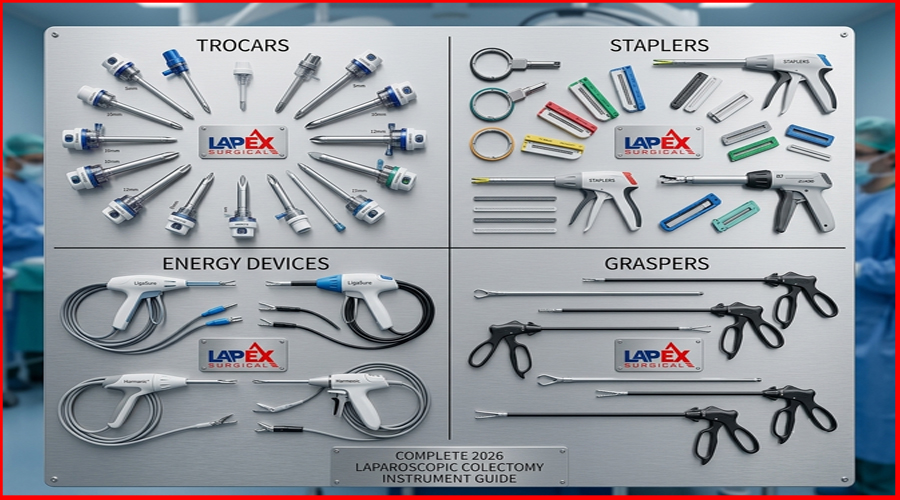
Laparoscopic colectomy is a minimally invasive way to remove part of the colon through small cuts instead of one big opening. Good surgery needs good tools. The main gear includes trocars for access, a camera system to see inside, graspers to hold tissue, energy devices to cut and seal blood vessels, and staplers to join the bowel back together. Picking the right instrument set lowers blood loss, cuts down infection risk, and helps patients go home faster. This guide walks through every tool a surgical team needs, compares options, and shows what’s changing in 2026.
What Is Laparoscopic Colectomy?
Laparoscopic colectomy is a surgery to remove a sick or damaged part of the colon (large intestine). Instead of cutting the belly open, the surgeon makes a few small cuts, usually less than an inch each. A tiny camera and long, thin tools go through these cuts.
The surgeon watches a video screen instead of looking straight into the body. This method causes less pain, smaller scars, and a faster recovery than open surgery.
Doctors use this technique for cancer, diverticulitis, inflammatory bowel disease, and other bowel problems. It has become the standard choice in many hospitals because outcomes are just as good as open surgery, sometimes better.
Indications for Laparoscopic Bowel Resection
Not every patient needs this surgery, but many common bowel problems call for it. Below are the top reasons doctors choose laparoscopic bowel resection.
- Colon cancer: removing tumors along with nearby lymph nodes
- Diverticulitis: removing the diseased segment after repeated flare-ups
- Crohn’s disease and ulcerative colitis: removing damaged sections of bowel
- Bowel obstruction: clearing blockages that don’t respond to other treatment
- Volvulus: untwisting and removing a twisted section of colon
- Polyps too large for colonoscopy removal
Surgeons avoid this method in patients with severe scarring from past surgeries, unstable vital signs, or very advanced cancer that has spread widely. In these cases, open surgery may be safer.
Essential Instrument Set for Laparoscopic Colectomy
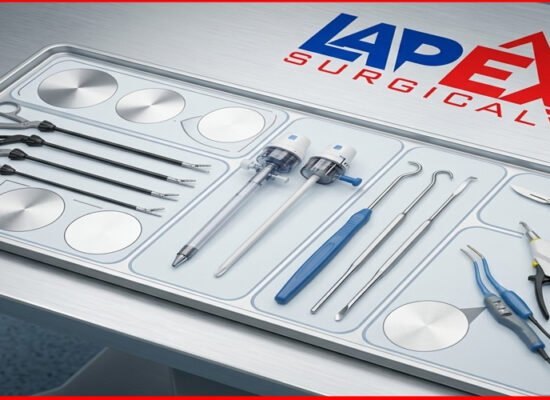
A full laparoscopic colectomy tray needs several tool groups working together. Think of it like a toolbox: each tool does one job, but the surgery only works when they’re all present and in good shape.
| Instrument Category | Main Purpose |
|---|---|
| Access instruments | Create entry points into the abdomen |
| Visualization equipment | Let the surgeon see inside the belly |
| Tissue handling tools | Grip, move, and separate tissue |
| Energy devices | Cut tissue and seal blood vessels |
| Staplers | Cut and join bowel segments |
| Suction-irrigation tools | Clear blood, fluid, and smoke |
| Specimen retrieval tools | Remove the diseased tissue safely |
Hospitals and clinics that buy this equipment need instruments that are sharp, reliable, and built to last through many sterilization cycles. This is where trusted manufacturers matter. Lapex Surgical, a manufacturer of surgical, electrosurgical, plastic surgery, and laparoscopic instruments based in Sialkot, supplies many of these tool categories to hospitals and distributors worldwide.
Access Instruments (Veress Needle, Trocars & Cannulas)
Before anything else can happen, the surgeon needs a way into the belly. That’s the job of access instruments.
Veress needle: A thin, spring-loaded needle used to inflate the belly with carbon dioxide gas before inserting other tools. The gas creates room to work and see clearly.
Trocars: Sharp-tipped tubes that puncture the belly wall and stay in place as a doorway for other instruments. Most laparoscopic colectomies use four to five trocars of different sizes, usually 5mm to 12mm.
Cannulas: Hollow sleeves that sit inside the trocar hole after the sharp tip is removed. They keep the opening steady so tools can pass in and out without hurting the skin edges.
Surgeons choose between disposable and reusable trocars based on cost, sterilization needs, and surgeon preference. Reusable metal trocars, like those made by Lapex Surgical, are popular in hospitals looking to cut long-term supply costs while keeping consistent quality.
Visualization Equipment (4K Camera, 30° Laparoscope, Light Source, CO₂ Insufflator)
Since the surgeon can’t look directly inside the belly, visualization tools are the eyes of the operation.
- 4K camera system: Captures sharp, detailed video so the surgeon can spot small blood vessels and tissue planes clearly.
- 30° laparoscope: An angled scope that lets the surgeon look around corners inside the belly, not just straight ahead.
- Light source: A bright LED or xenon light connected by a cable to the scope, lighting up the dark inside of the abdomen.
- CO₂ insufflator: A machine that pumps carbon dioxide gas into the belly at a steady pressure, keeping the working space open.
A blurry picture or dim light slows surgery down and raises risk. Hospitals should test camera clarity and color accuracy before buying new visualization systems, since even small quality gaps can affect surgical precision.
Tissue Handling Instruments (Atraumatic Bowel Graspers, Maryland Dissectors, Scissors)
Handling the bowel gently matters. Rough handling can tear the bowel wall or bruise tissue, causing problems later.
Atraumatic bowel graspers have soft, padded jaws that grip bowel tissue without cutting or crushing it. Surgeons use these to lift, move, and hold the bowel steady during dissection.
Maryland dissectors have fine, curved tips used to separate tissue layers and isolate blood vessels before they’re cut or sealed.
Laparoscopic scissors cut tissue, sutures, or adhesions. Some scissors connect to electrocautery for combined cutting and sealing in one tool.
Quick Comparison
| Tool | Jaw Type | Best Use |
|---|---|---|
| Atraumatic grasper | Padded, wide | Holding bowel without damage |
| Maryland dissector | Fine, curved | Separating tissue and vessels |
| Laparoscopic scissors | Sharp blade | Cutting tissue, sutures, adhesions |
Advanced Energy Devices (Bipolar Vessel Sealers vs Ultrasonic Shears)
Cutting tissue and stopping bleeding used to take two separate steps. Energy devices now do both at once, which saves time and lowers blood loss.
Bipolar vessel sealing devices send electrical current through tissue caught between two jaws. The heat seals blood vessels shut before the blade cuts through. These devices work well on medium and large vessels, up to 7mm in some models.
Ultrasonic shears use fast vibration, not electricity, to cut and seal at the same time. They produce less smoke and less heat spread to nearby tissue, which some surgeons prefer near delicate structures.
Bipolar vs Ultrasonic: Side-by-Side
| Feature | Bipolar Sealer | Ultrasonic Shears |
|---|---|---|
| Energy type | Electrical current | Mechanical vibration |
| Smoke production | Moderate | Low |
| Heat spread | Slightly higher | Lower |
| Max vessel size | Up to 7mm | Up to 5mm |
| Speed | Fast | Moderate |
Neither device is universally “better.” Surgeons pick based on training, the specific step of surgery, and hospital budget. Many operating rooms stock both.
Endoscopic Linear Staplers & Anastomosis Tools
Once the diseased bowel section is freed, it needs to be cut out, and the healthy ends joined back together. This step, called anastomosis, relies heavily on staplers.
Endoscopic linear staplers fire multiple rows of tiny titanium staples while cutting tissue between them. This creates a sealed, bloodless cut in one motion. Surgeons load different cartridge sizes depending on tissue thickness.
Circular staplers join two ends of bowel in a ring shape, often used for lower colon and rectal connections.
Anastomosis instruments may also include hand-suturing tools as backup, since some surgeons reinforce staple lines with sutures for extra safety.
Stapler malfunction is a leading cause of anastomotic leaks, one of the most feared complications in colon surgery. This makes stapler quality and correct cartridge selection critical, not optional.
Suction-Irrigation and Specimen Retrieval Systems
Blood, fluid, and smoke build up during surgery and block the surgeon’s view. Suction-irrigation devices solve this problem.
Suction-irrigation wands flush saline into the belly to clean the area, then suck out fluid, blood, and debris. Many models switch between suction and irrigation with a simple button.
Specimen retrieval bags are tough, sealed pouches used to pull the removed bowel section out through a small incision without spilling cancer cells or infected material into the belly. This step matters a lot in cancer surgery, where spillage could spread disease.
Right vs Left Colectomy Instrument Differences
Not every colectomy uses the same setup. The side of the colon being removed changes instrument needs.
Right hemicolectomy (removing the right side of the colon) often needs longer reach for vessel dissection near the superior mesenteric vessels. Surgeons commonly use articulating graspers here because the anatomy is tricky and blood vessels sit close together.
Left/sigmoid colectomy works deeper in the pelvis, so longer instruments and angled scopes help reach that space. Circular staplers are used more often here for low rectal connections.
Comparison Table
| Factor | Right Colectomy | Left/Sigmoid Colectomy |
|---|---|---|
| Main challenge | Vessel-dense dissection | Deep pelvic reach |
| Common stapler type | Linear | Circular + linear |
| Grasper style | Articulating preferred | Standard often sufficient |
| Scope angle | 30° | 30° or 45° |
Disposable vs Reusable Laparoscopic Instruments
Hospitals face a real choice here, and it affects both budget and sterilization workload.
Disposable instruments arrive sterile, get used once, then thrown away. They save time on cleaning but cost more per surgery and add to medical waste.
Reusable instruments cost more upfront but save money over hundreds of surgeries. They need proper cleaning, inspection, and sterilization between each use.
Which Should Hospitals Choose?
- High-volume centers often save more with reusable tools long-term
- Low-volume or rural clinics may prefer disposables to skip sterilization equipment costs
- Many centers use a hybrid model: reusable graspers and scissors, disposable staplers and energy device tips
Manufacturers like Lapex Surgical produce reusable laparoscopic instrument sets designed for repeated sterilization cycles without losing sharpness or grip strength, which helps hospitals control long-term costs.
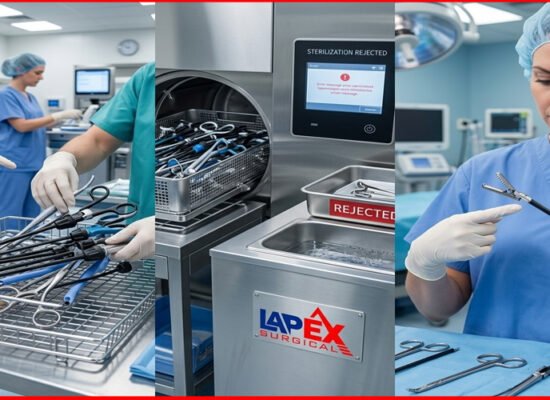
Sterilization & Maintenance Best Practices
Dirty or damaged instruments put patients at risk. Every hospital needs a solid maintenance routine.
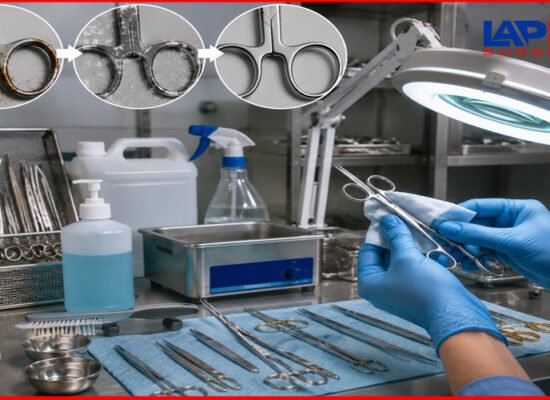
- Pre-clean immediately after surgery to stop blood and tissue from drying onto instruments
- Disassemble multi-part tools fully before cleaning, since hidden joints trap debris
- Use enzymatic cleaners to break down organic material before sterilization
- Inspect each instrument under good light for cracks, dull edges, or loose joints
- Autoclave using validated cycles matching the manufacturer’s instructions
- Test function before storage, checking that jaws close fully and joints move smoothly
- Track usage with sterilization logs, especially for delicate scopes and cameras
Skipping steps here doesn’t just shorten instrument life. It raises infection risk for patients.
Latest 2026 Trends (AI-Assisted Visualization, Articulating Instruments, Robotic Compatibility, Advanced Vessel Sealing)
Laparoscopic instruments keep evolving, and 2026 is bringing real changes to operating rooms.
Robotic-assisted colectomy is growing fast. Recent projections suggest robotic colectomy procedures may now match or exceed traditional laparoscopic volumes in some U.S. hospital systems, a sharp shift from just a few years ago.
Articulating hand instruments are closing the gap with robotics. Tools with wristed, multi-joint tips now let surgeons move almost like a robotic arm, without needing a full robotic console. Right hemicolectomy surgery, which involves tricky vessel work, has benefited especially from these designs.
AI-assisted visualization is starting to appear in camera systems, helping highlight blood vessels, tissue planes, or potential bleeding risks in real time on the video screen.
Advanced vessel sealing devices now handle larger vessels with less thermal spread, reducing risk to nearby bowel tissue.
Hybrid “smart” manual tools are entering the market too, combining traditional hand control with motorized or articulating tips, giving surgeons robotic-like dexterity at a lower cost than a full robotic system.
These trends don’t mean laparoscopy is disappearing. Cost, training availability, and hospital resources mean traditional laparoscopic colectomy will stay common for years, especially outside major surgical centers.
How to Choose a Reliable Laparoscopic Instrument Manufacturer
Picking a supplier isn’t just about price. Hospitals and procurement managers should weigh several factors.
- Material quality: Surgical-grade stainless steel resists corrosion and holds sharp edges longer
- Sterilization compatibility: Instruments must survive repeated autoclave cycles without warping
- Certifications: Look for ISO 13485 and relevant regulatory approvals (FDA, CE)
- Track record: Established manufacturers with years of surgical instrument production tend to offer more consistent quality control
- After-sales support: Repair services, replacement parts, and training support matter for long-term use
- Customization options: Some hospitals need specific handle designs or jaw configurations for their surgical teams
Lapex Surgical, operating out of Sialkot’s well-known surgical instrument manufacturing hub, produces a wide catalog covering general surgical, electrosurgical, plastic surgery, and laparoscopic instrument categories, making it a common sourcing option for hospitals and distributors comparing manufacturers for full operating room setups.
Frequently Asked Questions (FAQ)
Q: How long does a laparoscopic colectomy take?
Most laparoscopic colectomies take two to four hours, depending on the complexity of the case and how much bowel needs removal.
Q: Is laparoscopic colectomy safer than open surgery?
Studies show similar cancer outcomes between the two, but laparoscopic surgery generally causes less pain, smaller scars, fewer wound infections, and faster recovery.
Q: What’s the difference between a linear and circular stapler?
Linear staplers cut and seal tissue in a straight line, often used to remove bowel sections. Circular staplers join two bowel ends in a ring shape, common in lower colon connections.
Q: Can all patients have laparoscopic bowel resection?
No. Patients with severe scarring from past surgeries, unstable health conditions, or very advanced disease may need open surgery instead.
Q: Why do hospitals mix disposable and reusable instruments?
Mixing lets hospitals balance upfront cost, sterilization workload, and surgery volume, using reusables for high-use tools and disposables for single-use items like stapler cartridges.
Q: What is an anastomotic leak, and how do instruments prevent it?
It’s a break in the joined bowel connection, a serious complication. Quality staplers, correct cartridge sizing, and careful tissue handling all reduce leak risk.
Q: Are robotic systems replacing laparoscopic instruments completely?
Not yet. Robotic use is growing quickly in some hospital systems, but traditional laparoscopic tools remain widely used due to lower cost and broader training availability.
👉 Ready to upgrade your surgical inventory? For more information, contact the Lapex Surgical support team.