Table of Contents
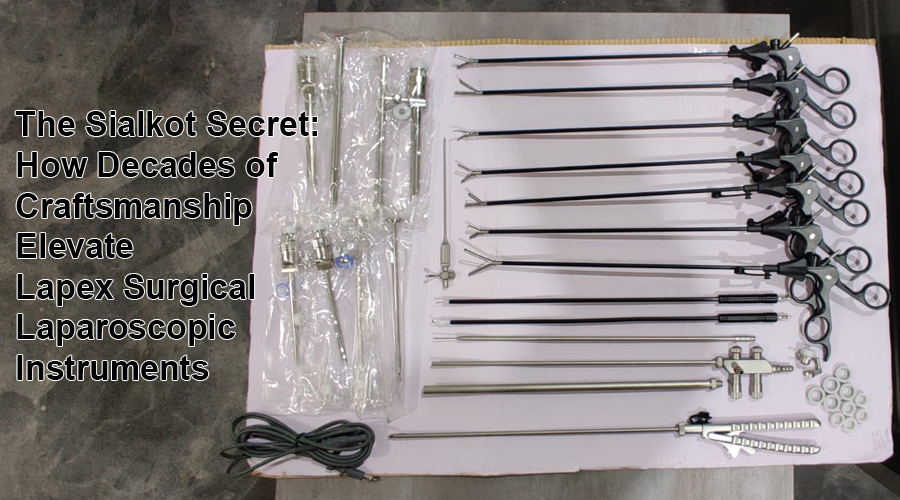
ToggleThe Sialkot Secret: How Decades of Craftsmanship Elevate Lapex Surgical Laparoscopic Instruments
In the annals of global manufacturing, certain places become synonymous with specific products – Silicon Valley with technology, Switzerland with watches, and for discerning medical professionals worldwide, Sialkot, Pakistan, with surgical instruments. This city, nestled in the heart of Punjab, holds a secret – a legacy of precision craftsmanship passed down through generations, transforming raw metal into the most intricate and vital tools used in operating rooms around the globe. At Lapex Surgical, we are not just a manufacturer; we are inheritors and innovators of this profound tradition, leveraging this unique heritage to elevate every laparoscopic instrument that bears our name.
In an era increasingly dominated by automation and mass production, the “Sialkot Secret” lies in the harmonious blend of human artistry and cutting-edge technology. It’s a commitment to detail and tactile perfection that goes “beyond the machine.” For surgeons performing minimally invasive procedures, where the margin for error is razor-thin and every millimeter matters, the quality of their instruments is paramount. Lapex Surgical understands this profound responsibility. This article delves into the unparalleled legacy of Sialkot, exploring how our decades of craftsmanship, combined with modern precision, translate into the superior balance, tactile feedback, and unmatched durability that define Lapex Surgical laparoscopic instruments. This unique fusion truly sets our products apart and empowers healthcare professionals worldwide.
The Enduring Legacy of Sialkot: A Global Hub of Surgical Excellence
The story of surgical instrument manufacturing in Sialkot is not one of recent industrialization but of organic growth spanning over a century. What began as small artisan workshops catering to local needs gradually evolved into a global powerhouse, supplying an estimated 20% of the world’s surgical instruments. Several key factors fueled this remarkable transformation:
Generational Knowledge Transfer: Unlike many industries where skills are learned in formal institutions, the art of crafting surgical instruments in Sialkot is often a family trade. Fathers pass down techniques to sons and daughters, grandfathers to grandchildren. This ensures that a deep, intuitive understanding of metallurgy, forging, grinding, and polishing, developed over decades, is continually preserved and refined.
Specialized Workforce: Sialkot boasts an unparalleled concentration of highly skilled artisans, engineers, and metallurgists specifically trained in medical device manufacturing. This specialized workforce forms a unique ecosystem that supports constant innovation and quality improvement.
Adaptability and Resilience: The industry has weathered numerous global economic shifts, adapting its practices and embracing new technologies while holding firm to its core values of precision and quality.
Material Expertise: Generations of working with various steel grades have fostered an innate understanding of how different alloys behave under heat, pressure, and various finishing techniques, crucial for creating instruments with specific performance characteristics.
For Lapex Surgical, being part of this legacy is more than just a geographical fact; it is the very foundation of our identity. It means access to unparalleled talent, a deep well of collective experience, and a cultural appreciation for the meticulous work required to produce life-saving tools.
Artisanal Expertise Meets Modern Precision: The Lapex Surgical Synthesis
While the spirit of traditional craftsmanship is alive, Lapex Surgical is far from a relic of the past. Our “secret” truly lies in our unique ability to synthesize time-honored artisanal expertise with today’s most advanced manufacturing technologies. This synergistic approach ensures unparalleled accuracy, efficiency, and consistency, aspects that purely manual or automated methods cannot achieve alone.
The Fusion in Practice:
Precision Forging & CNC Machining:
Traditional Forging (Art): The initial shaping of raw surgical-grade stainless steel often begins with skilled forging. Artisans use heat and hammers to manipulate the metal, aligning grain structures and increasing density, which enhances the material’s strength and durability. This foundational step is an art form, influencing the instrument’s inherent resilience.
CNC Machining (Science): Once the basic form is established, Computer Numerical Control (CNC) machines take over. These highly accurate machines cut, drill, and mill the steel with incredible precision, creating intricate components like joint mechanisms, jaw patterns, and internal lumens to tolerances often measured in micrometers. This ensures a perfect fit, smooth articulation, and consistent reproducibility.
The Lapex Difference: This combination ensures instruments are robust at their core (forged) while possessing microscopic precision in their working ends (CNC machined).
Expert Heat Treatment & Advanced Tempering:
Controlled Environment (Science): Heat treatment, or tempering, is crucial for imparting the desired hardness, flexibility, and fatigue resistance to the steel. Lapex Surgical utilizes advanced, precisely controlled furnaces and quenching processes. Digital controls ensure exact temperatures and durations, vital for transforming the steel’s microstructure.
Skilled Monitoring (Art): Even with automation, experienced metallurgists and technicians meticulously monitor the process, ensuring uniformity and validating the results. Their discerning eye can detect subtle inconsistencies that machines might miss, ensuring the material achieves optimal properties for specific instrument functions (e.g., a cutting jaw needs to be harder than a grasping shaft).
Meticulous Grinding, Polishing, and Surface Finishing:
Automated Consistency (Science): Large-scale grinding and initial polishing are often done using automated machines to ensure consistency across batches, removing major imperfections and preparing the surface.
Hand-Finishing Perfection (Art): This is where the Sialkot secret truly shines. Highly skilled artisans then take over for the final, critical stages of grinding and polishing. They painstakingly hand-polish every surface, remove microscopic burrs, and ensure a satin or mirror finish that is not only aesthetically pleasing but crucial for:
Corrosion Resistance: A perfectly smooth, polished surface eliminates microscopic crevices where corrosive agents or bioburden can accumulate.
Ease of Cleaning & Sterilization: Smoother surfaces mean fewer places for contaminants to hide, facilitating thorough cleaning and reprocessing, vital for infection control.
Reduced Tissue Trauma: A flawlessly smooth instrument surface is less likely to damage delicate tissues during manipulation.
The Lapex Difference: This human touch ensures an unparalleled level of surface perfection and attention to detail that sets our instruments apart in terms of durability, hygiene, and ergonomic feel.
Laser Welding & Assembly by Hand:
Laser Precision (Science): For joining complex components, Lapex Surgical employs state-of-the-art laser welding. This highly precise technique creates strong, clean, and minimally invasive welds, ensuring the structural integrity of the instrument without distorting delicate features.
Artisanal Assembly & Tuning (Art): Despite advanced welding, the final assembly of multi-part laparoscopic instruments (e.g., graspers with complex joint mechanisms, scissors with specific cutting actions) is often done by hand. Skilled technicians meticulously assemble parts, ensure smooth articulation, verify perfect jaw alignment, and perform final tuning, adjusting tension and movement until the instrument feels just right. This tactile assessment, based on years of experience, guarantees optimal functional performance.
Table: The Lapex Surgical Synthesis – Art Meets Science
Manufacturing Stage | Artisanal Expertise (Art) | Modern Precision (Science) | Outcome for Lapex Surgical Instruments |
Material Formation | Skilled forging, grain alignment | CNC machining, precise shaping | Inherently strong, consistently accurate base structures |
Hardening & Tempering | Experienced in monitoring for subtle consistency | Controlled furnaces, exact temperature regulation | Optimal hardness, flexibility, and fatigue resistance for specific functions |
Surface Finishing | Hand-polishing, microscopic burr removal | Automated grinding, initial polishing | Superior corrosion resistance, easy cleaning, reduced tissue trauma |
Assembly & Joining | Meticulous hand-assembly, tactile tuning, alignment | Laser welding, precise component integration | Flawless articulation, perfect jaw alignment, enhanced structural integrity |
Overall Quality Control | Experienced eyes for minute imperfections | Automated checks, calibrated measurement tools | Uncompromising quality that combines human judgment with scientific data |
The “Human Touch” in Every Instrument: Beyond Automation
While automation brings consistency, the true “secret sauce” of Lapex Surgical and the Sialkot tradition lies in the irreplaceable “human touch.” Our skilled technicians are not merely machine operators; they are craftsmen and women who intimately understand the nuances of surgical instrument production.
How the Human Touch Elevates Quality:
Meticulous Manual Checks: Even after automated dimensional checks, instruments undergo painstaking manual inspections. A trained eye can detect minute surface imperfections, micro-cracks, or subtle variations in finish that automated vision systems might overlook. This vigilance is crucial, as even tiny flaws can compromise sterility or lead to early instrument failure.
Tactile and Auditory Assessment: For moving parts like joints and locking mechanisms, human hands and ears are invaluable. Technicians will manipulate the instrument, feeling for smooth articulation, optimal spring tension, and listening for any grinding or sticky sounds. This tactile feedback ensures the instrument feels intuitive and responsive in a surgeon’s hand.
Fine-Tuning for Optimal Performance: The final tuning of a scissor’s cutting action or a grasper’s bite is often an art. A skilled artisan can adjust the pivot, sharpen the edges, or refine the jaw closure to achieve perfect cutting efficiency or grasping security, ensuring consistent performance from the first cut to the last.
Problem Solving and Adaptability: Human expertise allows for on-the-spot problem-solving and adaptation. If a specific batch of material reacts slightly differently during heat treatment, a seasoned technician can make real-time, informed adjustments based on their deep understanding, something a rigid automated system might struggle with.
Artistic Precision in Aesthetics: While functionality is primary, the aesthetic perfection of a surgical instrument speaks to its underlying quality. The gleaming, flawless finish, the ergonomic contours – these are often the result of dedicated hand-polishing and shaping that transform a functional tool into a piece of surgical art.
This human oversight and skilled intervention at critical junctures ensure that every Lapex Surgical instrument surpasses mere mechanical compliance, embodying a level of refined quality that directly impacts surgeon comfort and confidence.
Impact on Instrument Performance: Why Our Approach Matters
The blend of Sialkot craftsmanship and modern precision is not just an interesting story; it directly translates into tangible performance benefits for surgeons and improved outcomes for patients.
Superior Balance and Feel: A well-balanced instrument reduces surgeon fatigue during long procedures. Our artisanal approach ensures that weight distribution is optimal, and ergonomic considerations are paramount, making the instrument feel like a natural extension of the surgeon’s hand, similar to the benefits highlighted by Snowden-Pencer’s ergonomic handles.
Exceptional Tactile Feedback: In laparoscopic surgery, direct tactile feedback is diminished. Our meticulously crafted instruments compensate for this, providing clear haptic feedback through the handle, allowing surgeons to “feel” tissue consistency, suture tension, and the precise moment of cutting or grasping, preventing unintended tissue damage.
Unmatched Durability and Longevity: The combination of superior surgical-grade materials, precise forging, advanced tempering, and impeccable finishing ensures that Lapex Surgical instruments withstand repeated sterilization cycles, rigorous use, and the harsh OR environment. This translates to a longer lifespan, fewer replacements, and significant cost savings for healthcare institutions over time, directly competing with the long-term value proposition of reusable instruments.
Consistent and Reliable Performance: Every Lapex Surgical instrument, whether a laparoscopic scissor, grasper, or needle holder, performs consistently from one use to the next. The meticulous quality control and human touch eliminate variations, allowing surgeons to rely implicitly on their tools for every critical maneuver. This consistency is vital for predictable surgical outcomes.
Enhanced Patient Safety: Ultimately, superior instrument quality translates directly to enhanced patient safety. Instruments that are perfectly sterile, free from burrs or corrosion, possess precise cutting and grasping capabilities, and maintain their integrity throughout a procedure reduce the risk of infection, tissue trauma, and operative complications.
Our Uncompromising Standards: The Framework of Craftsmanship (ISO & CE Certified)
The “Sialkot Secret” of craftsmanship is not a wild, unregulated process. It operates within a stringent framework of international quality standards. At Lapex Surgical, our dedication to this legacy is underscored by our adherence to and certification under:
ISO 13485:2016 (Medical Devices – Quality Management Systems): This certification is the global benchmark for medical device manufacturers. It mandates a comprehensive Quality Management System (QMS) that governs every aspect of our operations, from design and development to production, testing, distribution, and post-market surveillance. It ensures that our artisanal processes are systematically controlled, documented, and consistently applied.
CE Marking (European Conformity) as per MDR (EU) 2017/745: This vital certification signifies that our laparoscopic instruments comply with the rigorous health, safety, and environmental protection requirements stipulated by the European Union’s Medical Device Regulation. It is a legal passport to the European market and is recognized globally as a mark of safety and performance.
These certifications provide the structural integrity for our craftsmanship. They mean that while our instruments benefit from the artistic skill of our technicians, every step is validated, every material is certified, and every process is subject to the highest levels of scrutiny. They are the guarantee that our “human touch” is meticulously controlled and our innovative spirit is responsibly managed.
Lapex Surgical’s Quality Pillars Beyond Craftsmanship:
Validated Sterilization: Our instruments are designed and validated to withstand multiple sterilization cycles without degradation, ensuring consistent sterility.
Biocompatibility Assurance: All materials are rigorously tested to ensure they are safe for human contact and do not cause adverse reactions.
Rigorous Functional Testing: Each instrument undergoes specific tests for articulation, grasping strength, cutting sharpness, and insulation integrity (for electrosurgical tools).
Traceability Systems: Every instrument has a unique identifier for complete historical tracking from raw material to final shipment, enabling swift action if any quality issue arises.
Continuous Improvement: Our QMS fosters a culture of ongoing learning, feedback integration from surgeons, and process refinement to constantly elevate our standards.
The Future of Surgical Instruments: Rooted in Tradition, Forged for Innovation
The landscape of surgical instruments is constantly evolving, with new technologies like robotics, AI, and advanced imaging shaping the OR of tomorrow. At Lapex Surgical, our Sialkot secret positions us uniquely for this future. We embrace these innovations, understanding that even the most sophisticated robotic system relies on precisely manufactured instruments. Our deep-seated understanding of materials, mechanics, and surgical needs, honed over generations, provides an unparalleled foundation for developing the next wave of smart, connected, and ever more precise tools.
We are not just producing instruments; we are contributing to a legacy of medical advancement. The meticulous care, the skilled hands, and the uncompromising standards that characterize the Sialkot secret are embedded in every Lapex Surgical laparoscopic instrument. This dedication ensures that surgeons worldwide can operate with the utmost confidence, knowing their tools are an extension of unparalleled craftsmanship, precision, and a profound commitment to patient well-being.
When a surgeon chooses Lapex Surgical, they are choosing more than just an instrument; they are choosing decades of heritage, a commitment to modern excellence, and a partnership in delivering the safest, most effective minimally invasive care possible. The Sialkot secret isn’t just about how we make instruments; it’s about the superior surgical outcomes they help achieve.
👉 For more information, feel free to contact the Lapex Surgical support team.
Frequently Asked Questions (FAQ)
Q1: What exactly is "Sialkot craftsmanship" in the context of surgical instruments?
A1: Sialkot craftsmanship refers to the unique, multi-generational tradition of hand-making surgical instruments that has flourished in Sialkot, Pakistan, for over a century. It involves highly skilled artisans using traditional techniques (like hand-forging, grinding, and polishing) alongside modern machinery (like CNC machining, laser welding) to create instruments with exceptional precision, balance, and finish that often surpass what purely automated processes can achieve.
Q2: How does Lapex Surgical blend traditional craftsmanship with modern technology?
A2: Lapex Surgical integrates both. For example, initial shaping might involve traditional forging for material strength, followed by CNC machining for microscopic precision. Final polishing and assembly often involve meticulous hand-finishing by skilled technicians who use their tactile sense and experienced eye to perfect the instrument’s balance, articulation, and finish, ensuring a level of quality automation alone cannot replicate.
Q3: How does the "human touch" impact the performance of laparoscopic instruments?
A3: The human touch ensures superior tactile feedback, allowing surgeons to “feel” tissue resistance more accurately through the instrument. It guarantees perfect balance, smooth articulation, and precise jaw alignment that contributes to reducing surgeon fatigue and enhancing control. This meticulous attention to detail at every stage results in instruments that are not only functionally precise but also intuitively responsive in the surgeon’s hand.
Q4: Does Lapex Surgical's reliance on craftsmanship affect the consistency of its instruments?
A4: No, quite the opposite. While craftsmanship implies artistry, at Lapex Surgical, it is integrated within a rigorous ISO 13485-certified Quality Management System. This means every artisanal step is controlled, documented, and subject to strict quality checks and measurements, ensuring that the human touch consistently enhances quality rather than introducing variation.
Q5: What are the main advantages of instruments manufactured with this blend of art and science?
A5: The key advantages include superior balance and ergonomic feel, exceptional tactile feedback, unmatched durability and longevity even after repeated sterilization, consistent and reliable performance across all instruments, and ultimately, enhanced patient safety due to the instruments’ precision and integrity.
Q6: How does Lapex Surgical maintain its ISO and CE certifications while upholding traditional methods?
A6: Our ISO 13485 Quality Management System provides the overarching framework. This system mandates strict control over all processes, including traditionally “hand-crafted” ones. It requires documentation, traceability, rigorous testing, and continuous improvement, ensuring that all artisanal techniques are performed to documented, verifiable standards, thus meeting and exceeding the requirements for CE marking and other global regulations.