Table of Contents
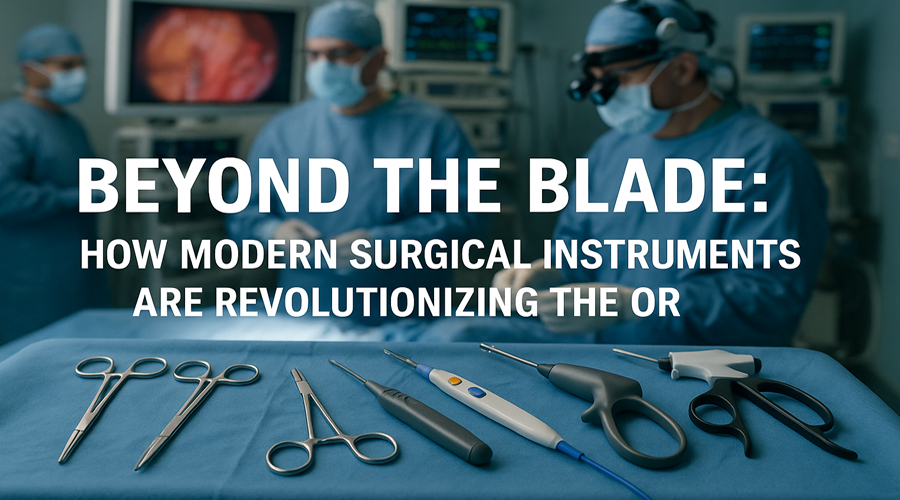
ToggleBeyond the Blade: How Modern Surgical Instruments Are Revolutionizing the OR
Today’s operating room (OR) is a vastly different landscape from even a decade ago. While the fundamental principles of surgery remain constant, the tools and technologies employed have undergone a seismic shift, propelling us “beyond the blade” into an era of unprecedented precision, minimal invasiveness, and enhanced patient outcomes. This revolution is powered by modern surgical instruments that are not merely sharper or more durable, but inherently smarter, more connected, and capable of tasks previously confined to science fiction.
At Lapex Surgical, rooted in Sialkot’s esteemed tradition of crafting medical devices, we are not just witnessing this transformation; we are actively contributing to it. Our decades of expertise in precision manufacturing are now directed towards understanding and integrating the cutting-edge innovations revolutionizing the OR. This article will explore the pivotal advancements in surgical instruments that are reshaping surgical practice, from the integration of artificial intelligence and robotics to the emergence of smart materials and personalized tools, and how these innovations are setting new standards for patient care globally.
The Evolution of Surgical Instruments: From Handheld to High-Tech
For centuries, surgical instruments were primarily extensions of the surgeon’s hand, relying on brute force and manual dexterity. Scalpels, forceps, clamps – while refined over time – fundamentally remained simple mechanical devices. The 20th century brought innovations like electrosurgery and laparoscopic tools, enabling less invasive procedures. However, the true revolution began with the digital age, merging mechanics with computing power, data analytics, and real-time feedback.
Key Drivers of This Evolution:
Minimally Invasive Surgery (MIS): The drive for smaller incisions, reduced pain, faster recovery, and fewer complications spurred the development of slender, articulated instruments, high-definition cameras, and remote manipulation capabilities.
Technological Convergence: The integration of disparate technologies – robotics, artificial intelligence (AI), advanced imaging, sensor technology, and even 3D printing – into the surgical workflow.
Data-Driven Decision Making: The ability to collect and analyze real-time physiological data, anatomical imaging, and surgical metrics to inform intraoperative decisions.
Surgeon Ergonomics and Training: A focus on reducing surgeon fatigue, enhancing precision, and providing immersive training environments.
This evolution is fundamentally changing the relationship between the surgeon, the patient, and the instruments, moving towards a more symbiotic and intelligent surgical environment.
Robotic Surgery: The Era of Enhanced Dexterity and Control
Perhaps the most iconic representation of modern surgical instruments revolutionizing the OR is the rise of robotic surgery. Systems like the da Vinci Surgical System have become synonymous with precision and control in complex procedures.
How Robotic Systems Work:
Robotic surgical systems are not autonomous robots operating independently. Instead, they are sophisticated platforms that enhance the surgeon’s capabilities. The surgeon sits at a console, viewing a high-definition, magnified 3D image of the surgical field. Their hand and foot movements are translated by the robotic system into precise movements of miniaturized instruments located inside the patient’s body.
Key Advancements and Benefits:
Enhanced Dexterity and Range of Motion: Robotic instruments feature “wristed” articulation, allowing for a far greater range of motion (seven degrees of freedom) than the human wrist, enabling intricate maneuvers in confined spaces. This is critical for delicate dissection and suturing.
Tremor Filtration: The robotic system filters out natural human tremors, providing incredibly steady and precise movements.
Magnified 3D Visualization: High-definition 3D cameras provide an immersive view of the operative field, offering depth perception that is superior to traditional 2D laparoscopic monitors.
Reduced Surgeon Fatigue: Surgeons operate from a comfortable, ergonomic console, significantly reducing physical strain during lengthy procedures.
Telesurgery Potential: With advancements in 5G technology, the future holds the promise of telesurgery, where a surgeon could operate on a patient remotely, transcending geographical barriers.
Table: Comparison of Traditional Laparoscopy vs. Robotic-Assisted Surgery
Feature | Traditional Laparoscopy | Robotic-Assisted Surgery |
Visualization | 2D monitor, limited depth perception | High-definition 3D console, immersive depth perception |
Instrument Motion | Restricted, limited articulation | “Wristed” articulation, 7 degrees of freedom, tremor filtration |
Surgeon Position | Standing at the bedside can be physically demanding | Seated at an ergonomic console, reduced fatigue |
Control | Direct, manual manipulation of instruments | Remote control, precisely scaled movements |
Complexity Handled | Moderate to complex, depending on the surgeon’s skill | Highly complex, intricate dissections and sutures |
While the initial investment in robotic systems is substantial, the long-term benefits in patient outcomes, reduced recovery times, and expanded surgical capabilities are driving their increasing adoption globally.
The Intelligent OR: AI and Machine Learning Integration
Artificial Intelligence (AI) and Machine Learning (ML) are not just theoretical concepts; they are rapidly being integrated into surgical instruments and the broader OR ecosystem, ushering in an era of intelligent decision support.
AI’s Role in Modern Surgical Instruments:
Image Analysis and Segmentation: AI algorithms can analyze pre-operative CT, MRI, and ultrasound scans with unparalleled speed and accuracy, segmenting anatomical structures, identifying tumors, and mapping critical pathways (e.g., blood vessels, nerves). This provides surgeons with detailed, 3D patient-specific models for planning.
Real-time Intraoperative Guidance: During surgery, AI can process live video feeds from laparoscopic cameras. It can:
Identify Anatomical Structures: Automatically highlight organs, vessels, or specific tissue types.
Detect Bleeding or Anomalies: Provide early warnings of potential complications.
Track Instruments: Monitor the position and movement of instruments in the surgical field, providing alerts for “no-go zones” or potential collisions.
Surgical Step Recognition: AI can identify which phase of a procedure the surgeon is in and provide relevant contextual information or checklists, enhancing efficiency and safety.
Predictive Analytics: By analyzing vast datasets of past surgeries, AI can predict potential outcomes, identify high-risk patients, or suggest optimal surgical approaches based on patient-specific data.
Enhanced Robotic Autonomy (Assisted): While full autonomous surgery is still distant, AI is enabling greater levels of assistance for robotic systems, such as automated camera positioning for optimal visualization or self-adjusting instrument movements based on real-time tissue feedback.
Surgical Training and Performance Evaluation: AI can analyze surgical performance from recorded procedures, providing objective feedback to trainees and experienced surgeons on efficiency, precision, and adherence to best practices.
Benefits of AI Integration:
Increased Precision and Accuracy: AI augments human perception and decision-making.
Reduced Errors and Complications: Proactive warnings and intelligent guidance minimize risks.
Optimized Workflows: AI can streamline processes, reducing operational times.
Personalized Surgery: Data-driven insights allow for highly customized patient care.
Smart Surgical Instruments: Sensors and Real-time Feedback
Beyond robots and AI, individual surgical instruments are becoming “smart” through the integration of miniaturized sensors that provide real-time data to the surgeon.
Types of Smart Instruments and Their Benefits:
Force-Sensing Instruments: Equipped with haptic (touch) feedback technology, these instruments can measure the force applied to tissues. This is crucial in delicate areas, preventing excessive pressure that could cause damage, especially when working remotely through a robotic system where direct tactile feedback is diminished.
Temperature-Sensing Electrosurgical Devices: These electrosurgical units monitor tissue impedance and temperature in real-time, allowing for optimized energy delivery. This reduces the risk of thermal injury to surrounding tissues, enabling more precise cutting and coagulation.
Integrated Imaging Systems: Some modern instruments incorporate tiny cameras or fluorescence imaging capabilities (e.g., using Indocyanine Green for blood flow visualization). This provides real-time, localized imaging directly at the surgical site, enhancing visibility and decision-making.
Tissue Recognition Sensors: Instruments are being developed with sensors that can differentiate between various tissue types (e.g., healthy vs. cancerous tissue) based on electrical impedance or spectral analysis, allowing for more precise tumor resection.
RFID Tagging/Instrument Tracking: Smart instruments can be equipped with RFID tags, enabling precise tracking of every instrument within the OR. This enhances inventory management, ensures all instruments are accounted for after a procedure (preventing retained surgical items), and facilitates sterilization processes.
Benefits of Smart Instruments:
Real-time Data: Surgeons receive immediate, objective information about tissue interaction, energy delivery, and instrument position.
Enhanced Safety: Reduced risk of thermal injury, tissue damage, or retained foreign objects.
Improved Surgical Outcomes: Greater precision and more informed decisions lead to better patient results.
Workflow Efficiency: Automation of certain checks and data collection reduces manual tasks.
Visualization Reimagined: Augmented Reality (AR) and Virtual Reality (VR)
While cameras have been central to minimally invasive surgery, augmented reality (AR) and virtual reality (VR) are taking visualization to an entirely new dimension.
AR in the Operating Room:
AR overlays digital information onto the surgeon’s real-world view. This can be achieved through special headsets (like Microsoft HoloLens) or integrated into robotic consoles.
“X-ray Vision”: AR can project 3D anatomical models derived from pre-operative scans directly onto the patient’s body in real-time. Surgeons can “see through” skin and tissue to visualize underlying structures, tumors, or complex vasculature. This is particularly transformative in spine surgery, neurosurgery, and orthopedic procedures.
Navigation and Guidance: AR can display real-time surgical navigation pathways, highlighting optimal trajectories for instrument insertion or screw placement, enhancing precision and reducing the need for repeated intraoperative imaging.
Overlaying Patient Data: Vital signs, imaging data, or AI-driven insights can be overlaid directly into the surgeon’s field of view, minimizing distractions and improving information access.
VR for Training and Planning:
VR creates fully immersive, simulated environments. While less common for live surgery, its impact on training and pre-operative planning is profound.
Realistic Surgical Simulators: VR platforms allow trainees to practice complex procedures in a risk-free environment, developing muscle memory and decision-making skills. They can simulate bleeding, tissue response, and instrument interactions.
Pre-operative Rehearsal: Surgeons can convert patient-specific CT/MRI scans into 3D VR models and “rehearse” complex surgeries multiple times, identifying potential challenges and optimizing their approach before entering the actual OR. This is particularly valuable for unique or highly challenging cases.
Collaborative Planning: VR allows multiple surgeons to virtually explore a patient’s anatomy together, collaborating on surgical strategies.
Benefits of AR/VR:
Unprecedented Visualization: Provides depth, context, and layers of information previously unavailable.
Enhanced Precision and Safety: Reduces guesswork and errors.
Accelerated Learning Curve: Revolutionizes surgical education and skill acquisition.
Improved Pre-operative Planning: Allows for detailed rehearsal and strategy optimization.
Beyond Standardization: 3D Printing and Personalized Instruments
Traditionally, surgical instruments are mass-produced to standardized specifications. However, advancements in 3D printing (additive manufacturing) are opening doors to personalization and customization.
How 3D Printing is Changing Instruments:
Patient-Specific Guides and Jigs: 3D printing can create custom surgical guides based on a patient’s unique anatomy (e.g., for precise bone cuts in orthopedic surgery or tumor resection guides). These guides ensure accurate implant placement or resection margins.
Customized Instruments for Complex Cases: For rare anatomical variations or highly complex procedures, 3D printing allows for the rapid prototyping and production of specialized instruments tailored to a specific patient or surgical challenge. This can include unique retractors, specialized clamps, or instruments with specific curvatures.
Prototyping and Iteration: 3D printing drastically speeds up the design and prototyping phase of new instruments, allowing manufacturers like Lapex Surgical to quickly test and iterate on designs based on surgeon feedback.
Biodegradable Implants and Scaffolds: While not strictly “instruments,” 3D printing is also used to create patient-specific biodegradable implants and tissue scaffolds, seamlessly integrating with surgical procedures.
Benefits of 3D Printing in Surgical Instruments:
Enhanced Precision: Instruments or guides precisely match patient anatomy.
Improved Surgical Efficiency: Reduces intraoperative adjustments and improves predictability.
Broader Surgical Scope: Enables procedures that were previously too complex or risky with standard instrumentation.
Rapid Innovation: Accelerates the development and customization of new tools.
The Future is Connected: IoT and Data Integration in the OR
The modern OR is becoming an interconnected ecosystem, leveraging the Internet of Things (IoT) to collect, share, and analyze vast amounts of data in real-time.
IoT’s Role in Revolutionizing the OR:
Smart Operating Rooms: Hospitals are deploying integrated ORs where devices, instruments, and patient monitors are networked. This allows for seamless data flow, automated adjustments (e.g., lighting, ventilation), and real-time alerts.
Remote Monitoring and Diagnostics: IoT-enabled instruments can transmit data to a central system for performance monitoring, predictive maintenance, and quality assurance.
Automated Inventory Management: Instruments with embedded RFID or other tags can automatically track usage, reordering needs, and sterilization cycles, improving efficiency and reducing manual errors.
Enhanced Telemedicine: Connected instruments can facilitate remote consultation and even remote assistance during procedures, further expanding access to expert care.
Benefits of a Connected OR:
Holistic Data Insights: Comprehensive data collection for research, quality improvement, and personalized care pathways.
Streamlined Workflows: Automation and real-time information reduce manual tasks and improve efficiency.
Predictive Maintenance: Minimizes downtime for critical equipment.
Improved Patient Safety: Continuous monitoring and data analysis enhance overall safety protocols.
Lapex Surgical’s Role in the Revolution
As a manufacturer with a rich history of precision and a forward-looking vision, Lapex Surgical is uniquely positioned to contribute to this revolution in surgical instruments. Our commitment to ISO 13485 and CE certifications ensures that even as we embrace innovation, our foundational quality, safety, and reliability remain uncompromising.
We are actively:
Investing in R&D: Researching and developing next-generation laparoscopic and electrosurgical instruments that integrate smart features, enhanced ergonomics, and compatibility with emerging robotic and AI platforms.
Maintaining Uncompromising Quality: Ensuring that even the most advanced instruments are crafted from the finest surgical-grade materials, subjected to rigorous testing for durability, performance, and biocompatibility.
Collaborating with Surgeons: Gathering invaluable feedback from the surgical community to understand their evolving needs and design instruments that truly make a difference in the OR.
Upholding the Sialkot Legacy: Blending the time-honored artisanal skills for which Sialkot is famous with cutting-edge manufacturing techniques to produce instruments that are both innovative and impeccably crafted.
Providing Training Solutions: Offering portable simulators that help surgeons hone their skills on new techniques and instruments, bridging the gap between innovation and practical application.
The OR of the future, driven by these revolutionary instruments, promises not just technological marvels but tangible improvements in patient care – less invasive procedures, faster recoveries, and ultimately, better lives. Lapex Surgical is proud to be at the forefront of this exciting transformation, crafting the tools that will shape tomorrow’s surgery, beyond the blade.
👉 For more information, feel free to contact the Lapex Surgical support team.
Frequently Asked Questions (FAQ)
Q1: Will modern surgical instruments, especially AI and robotics, replace surgeons?
A1: No, the consensus among experts is that modern surgical instruments, including AI and robotics, are designed to augment human surgeons, not replace them. They enhance a surgeon’s capabilities, precision, and access to information, allowing for more complex and safer procedures. The critical decision-making, judgment, and adaptability of a human surgeon remain indispensable.
Q2: How do "smart surgical instruments" provide feedback to the surgeon?
A2: Smart instruments incorporate miniaturized sensors (e.g., force sensors, temperature sensors, impedance sensors) that collect real-time data from the surgical site. This data is then processed and presented to the surgeon through various means, such as visual displays on a monitor, auditory cues, or haptic (tactile) feedback transmitted back through the instrument’s handle or robotic console, allowing them to feel tissue resistance.
Q3: Is 3D printing of surgical instruments widespread today?
A3: While 3D printing of standard surgical instruments for mass production is still limited due to regulatory complexities and material validation challenges, its application for patient-specific surgical guides, customized implants, and rapid prototyping of new instrument designs is already widespread and rapidly growing. It allows for highly personalized and precise approaches in complex cases.
Q4: How do augmented reality (AR) systems enhance surgical procedures?
A4: AR systems overlay digital information onto the surgeon’s real-world view, typically via a headset or integrated monitor. This “x-ray vision” allows surgeons to see internal anatomy (from pre-operative scans), navigation pathways, and real-time patient data projected onto the surgical field, enhancing spatial awareness, precision, and reducing the need to look away from the patient.
Q5: What are the main challenges in adopting these modern surgical instruments?
A5: Key challenges include: * High Initial Costs: Advanced robotic systems and smart instruments represent significant investments for healthcare facilities. * Training Requirements: Surgeons and OR staff require specialized training to effectively utilize and maintain new technologies. * Integration Complexity: Ensuring seamless interoperability between different systems and instruments from various manufacturers. * Data Security and Privacy: Managing vast amounts of patient data generated by connected instruments securely. * Regulatory Hurdles: The rigorous approval processes for novel medical devices.
Q6: How is Lapex Surgical contributing to these advancements?
A6: Lapex Surgical is leveraging its decades of precision manufacturing expertise and adhering to global quality standards (ISO & CE) to develop next-generation laparoscopic and electrosurgical instruments. We are actively researching smart features, enhancing ergonomics, providing training simulators, and collaborating with surgeons to ensure our instruments meet the evolving demands of modern, technologically advanced surgical procedures.