Table of Contents
ToggleLaparoscopic Trocars Explained: Types, Safety, and Why Precision Matters
Laparoscopic surgery is a cornerstone of modern medicine, allowing doctors to perform procedures through small incisions. But how do they get their instruments inside the body in the first place? The answer lies with specialized tools called laparoscopic trocars. These are essential instruments that create the necessary entry points, or “ports,” for cameras and other surgical tools. Understanding laparoscopic trocars is key to understanding the start of any minimally invasive abdominal surgery. This article provides a detailed look, explaining the different types, discussing critical safety aspects, and highlighting why precision is vital when using them.
What is a Laparoscopic Trocar?
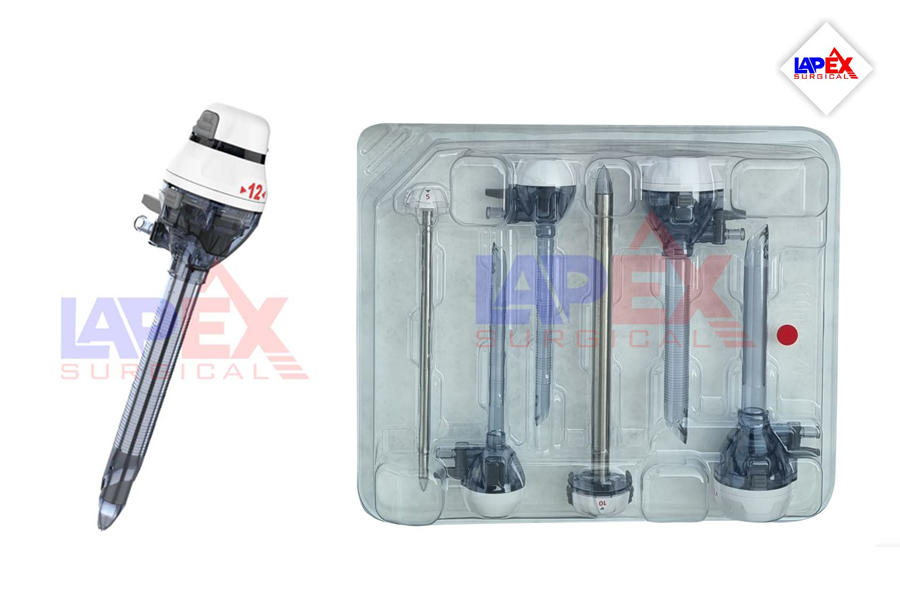
Simply put, a laparoscopic trocar is a medical device used to create a port through the body wall (like the abdomen) during laparoscopic surgery. It’s essentially made up of two main parts:
- The Obturator: This is the inner rod that has a tip designed to puncture or separate tissue.
- The Cannula: This is the hollow outer sleeve that remains in place after the obturator is removed. The cannula acts as a working channel or port through which the surgeon inserts the laparoscope (camera) and other laparoscopic instruments.
Multiple trocars of different sizes are typically used in a single laparoscopic procedure to create several surgical ports.
Types of Laparoscopic Trocars
Laparoscopic trocars are primarily categorized by the design of their tip (the obturator), which affects how they enter the body:
- Bladed Trocars: These have a sharp, knife-like blade at the tip. The blade cuts through the layers of tissue to create the opening for the cannula. These were among the earliest types used.
- Bladeless (Dilating) Trocars: Instead of cutting, these trocars have a rounded or conical tip that is designed to separate the tissue fibers as it’s inserted, rather than cutting them. The idea is that separating tissues might reduce the risk of injury to vessels or nerves compared to cutting.
- Optical Trocars: These have a clear tip on the obturator and are designed to be inserted with the laparoscope (camera) inside the obturator. This allows the surgeon to see the layers of tissue and structures (like blood vessels) as the trocar is being advanced through the abdominal wall. This visual guidance is a key safety feature for some surgeons.
The choice of trocar type depends on the surgeon’s preference, training, and the specific requirements of the procedure and patient.
Sizes of Trocars
Laparoscopic trocars come in various diameters (sizes), typically measured in millimeters (mm). Common sizes include 5mm, 10mm, 12mm, and 15mm.
- Smaller sizes (like 5mm) are used for inserting thinner instruments like graspers or scissors.
- Larger sizes (like 10mm, 12mm, 15mm) are needed for the laparoscope (camera) and instruments that are thicker, such as stapling devices or specimen retrieval bags.
The surgeon selects the appropriate size based on the tools required for the specific laparoscopic procedure.
Safety in Trocar Placement
Inserting laparoscopic trocars is often considered one of the most critical steps in laparoscopic surgery. While generally safe when performed by skilled surgeons, there is a risk of injury because the surgeon is entering the body cavity “blindly” or with limited visibility initially, through multiple layers of tissue where major blood vessels, bowel, bladder, and nerves are located.
Risks can include:
- Injury to major blood vessels, potentially causing severe bleeding.
- Puncture of the bowel or bladder.
- Nerve injury.
- Injury to organs just beneath the entry point.
Surgeons employ several techniques to maximize trocar safety:
- Controlled Insertion: Using careful, deliberate force rather than uncontrolled thrusts.
- Awareness of Anatomy: Knowing the location of organs and vessels beneath the planned entry site.
- Using Specific Entry Techniques: Such as the Veress needle technique (inserting a small needle first to create space) or direct trocar insertion techniques.
- Visual Guidance: Using optical trocars that allow visualization during entry, or placing the first trocar while looking inside with a scope placed through a different, safer access point (like the navel).
Rigorous training and experience are paramount for surgeons to ensure safe trocar placement.
Why Precision Matters for Trocars
The term “precision” applies to both the design of the laparoscopic trocars themselves and the surgical technique used for their placement. Why does this precision matter so much?
- Precision in Design: A well-manufactured trocar, whether bladed or bladeless, is designed to perform its function predictably. A sharp, well-aligned bladed trocar cuts cleanly. A well-designed bladeless trocar separates tissue effectively without excessive force. Precise manufacturing ensures the obturator fits smoothly within the cannula and that safety mechanisms (like shields on bladed trocars) work correctly. This inherent precision in the tool supports the surgeon’s ability to insert it safely.
- Precision in Placement: This refers to the surgeon’s skill. Accurate placement means choosing the correct entry point, controlling the angle and force of insertion, and stopping advancement precisely once inside the abdominal cavity. This precise technique, guided by anatomical knowledge and potentially visual feedback (with optical trocars), is what minimizes the risk of hitting unintended structures.
The combination of a precisely manufactured instrument and the surgeon’s precise technique during trocar placement is essential for minimizing trauma, reducing the risk of complications, and ensuring a smooth start to the laparoscopic procedure. Precision in this critical first step sets the stage for a safe and successful surgery.
Laparoscopic trocars are fundamental surgical instruments that serve as the essential gateway to minimally invasive surgery. Understanding the different trocar types – bladed, bladeless, and optical – helps appreciate their varying mechanisms of entry. However, the most critical aspects are prioritizing trocar safety through careful technique and recognizing the absolute necessity of precision. Precision, both in the design of the laparoscopic trocars explained and in the surgeon’s skill during placement, is what ensures safe access, minimizes patient risk, and allows the benefits of laparoscopic surgery to be fully realized.
For more information, feel free to contact the Lapex Surgical support team.