
Table of Contents
ToggleThe Gateway to Minimally Invasive Surgery: Mastering Trocars and Ports
Minimally invasive surgery (MIS) has revolutionized the medical field, offering patients smaller incisions, faster recovery times, and reduced scarring. At the heart of this transformative approach lies the crucial step of gaining access to the surgical site. This is where the unsung heroes of laparoscopy come into play: trocars and laparoscopic ports. These seemingly simple instruments are the gateway through which surgeons navigate the intricate landscape within the human body. Choosing the right ones is not just a matter of convenience; it’s fundamental to the safety and success of the entire procedure.
Understanding the Gatekeepers: Trocars and Ports Defined
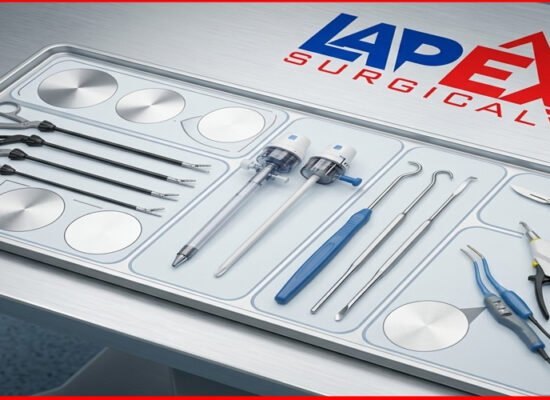
Imagine trying to build a ship in a bottle. You need specialized tools to reach inside and manipulate the contents. In laparoscopy, trocars are the sharp, pointed instruments that puncture the abdominal wall and initially create an entry point. Once the trocar is removed, a hollow cylindrical sheath, known as a port, remains in place. This port acts as a working channel, allowing surgeons to insert various laparoscopic instruments like cameras, graspers, and scissors to perform the surgery.
A World of Options: Exploring Different Types
Just as a carpenter has various types of drills for different tasks, surgeons have a range of trocars and ports to choose from. Here’s a glimpse into the options available:
Trocars: The Initial Entry Tools
- Bladed Trocars: These traditional trocars feature a sharp blade at the tip, facilitating a clean and controlled incision. However, they carry a slightly higher risk of injury to underlying structures if not inserted carefully.
- Bladeless (Dilating) Trocars: Instead of cutting, these trocars separate tissue fibers as they are inserted, minimizing the risk of sharp injury. They often require more force for insertion but are considered safer in certain situations.
- Optical Trocars: Equipped with a camera or a clear window, these trocars allow the surgeon to visualize the layers of the abdominal wall during insertion, providing real-time feedback and enhancing safety.
Ports: The Working Channels
- Fixed Ports: These are the most common type, available in various lengths and diameters to accommodate different instruments. Once inserted, their position is fixed.
- Adjustable Ports: These ports allow the surgeon to adjust the length of the cannula that protrudes into the abdominal cavity, which can be useful in certain procedures or with varying patient anatomy.
- Ports with Insufflation Stopcocks: These ports have built-in valves that allow for the controlled introduction and maintenance of pneumoperitoneum (inflation of the abdomen with gas), which is essential for creating working space during laparoscopic surgery.
- Low-Profile Ports: Designed to minimize the height of the port above the skin, these can be beneficial in certain anatomical locations or to reduce interference with instruments.
Making the Right Choice: Factors Influencing Selection
Choosing the appropriate trocars and ports is a critical decision that impacts the safety and efficiency of the laparoscopic procedure. Several factors come into play:
- Type of Surgical Procedure: Different procedures require varying numbers and sizes of ports to accommodate the necessary instruments. For instance, a simple appendectomy might only need three small ports, while a complex bariatric surgery could require five or more.
- Patient Anatomy: Factors like the patient’s body mass index, previous surgeries, and the presence of adhesions can influence the choice of trocar type and insertion technique.
- Surgeon’s Experience and Preference: Surgeons often develop preferences based on their training and experience with different types of trocars and ports.
- Instrument Size: The diameter of the laparoscopic instruments that will be used dictates the required size of the ports.
- Number of Ports Required: The complexity of the surgery determines how many ports will be needed to allow for adequate visualization and manipulation of tissues.
- Safety Considerations: Minimizing the risk of injury to blood vessels, bowel, and other internal organs is paramount. This often guides the choice towards bladeless or optical trocars, especially for the initial entry.
Safe Passage: Insertion Techniques and Precautions
Proper insertion technique is just as crucial as selecting the right instruments. Surgeons employ various methods, including the Veress needle technique, direct trocar insertion, and the Hasson technique (open laparoscopy). Regardless of the method, meticulous attention to detail and a thorough understanding of the underlying anatomy are essential to prevent complications.
The Evolving Landscape: Advancements in Technology
The field of laparoscopic access is constantly evolving. Innovations include:
- Integrated Systems: Some ports now come with integrated features like smoke evacuation or specimen retrieval capabilities.
- Robotic Surgery Ports: Specialized ports are designed for use with robotic surgical systems, offering enhanced stability and maneuverability.
- Single-Incision Laparoscopic Surgery (SILS) Ports: These innovative ports allow multiple instruments to be inserted through a single small incision, further minimizing scarring.
The Foundation of Successful Laparoscopy
Trocars and laparoscopic ports may seem like simple tools, but they are the foundational elements that enable the remarkable capabilities of minimally invasive surgery. By carefully considering the various types available, understanding the factors that influence their selection, and adhering to safe insertion techniques, surgeons can ensure smooth and successful procedures, ultimately leading to better outcomes and faster recovery for their patients. Mastering the art of laparoscopic access is a testament to the continuous advancement and refinement of surgical techniques, paving the way for a future where even complex surgeries can be performed with minimal disruption to the human body.