
The Evolution of the Scalpel: A Journey Through General Surgery Instruments
The scalpel. It is arguably the most recognizable symbol of medicine—an icon of precision, healing, and knowledge. Yet, this simple instrument, designed to cut, is anything but simple in its history, its material science, or its profound impact on human health.
The story of general surgery is inextricably linked to the story of its tools. Every successful operation, every life saved, traces back to the quality, sharpness, and reliability of the instrument in the surgeon’s hand.
At Lapex Surgical, based in the manufacturing heartland of Sialkot, we don’t just produce surgical instruments; we carry forward a legacy. We fuse centuries of German-grade material science with modern, zero-tolerance precision to manufacture the tools—from the foundational General Surgery Instruments to the highly specialized Laparoscopic and Electrosurgical devices—that define modern medical intervention.
Join us on a sweeping historical journey, tracing the lineage of the scalpel and its companion instruments from the Stone Age to the dawn of robotic surgery.
Ancient Roots—The Dawn of Incision (Prehistory to 1500 AD)
Surgery began not in hospitals, but in necessity. Early attempts at trephination (drilling holes in the skull) and wound cleaning required sharp tools long before metalworking was invented. The first scalpel was simply the sharpest material available in nature.
1.1. Nature’s Blades: Obsidian and Flint
The earliest true cutting instruments used in proto-surgery were made of obsidian (volcanic glass) and expertly chipped flint.
Obsidian’s Edge: Obsidian, when fractured, can achieve a cutting edge thinner than a surgical steel blade, sometimes just 3 nanometers thick. Ancient cultures used these blades for ritualistic and rudimentary surgical procedures. Even today, specialized obsidian scalpels are sometimes used in delicate procedures due to their incredible sharpness, showcasing a legacy that spans millennia.
A Need for Control: While incredibly sharp, these materials were brittle and difficult to shape into handles, making controlled, deep incisions challenging.
1.2. The Bronze and Iron Ages: Durability and Shape
With the advent of metallurgy, instruments moved from being disposable natural fragments to reusable, shaped tools.
Egypt and Greece: Civilizations in ancient Egypt and Greece developed bronze knives for embalming and wound debridement. The Greeks called these tools macairion.
The Roman Revolution: The Romans were meticulous record-keepers and innovators in surgical instruments. They developed specialized tools, including probes, cauteries, and small knives that resemble modern scalpel handles and blades. The instruments were often made of iron or bronze.
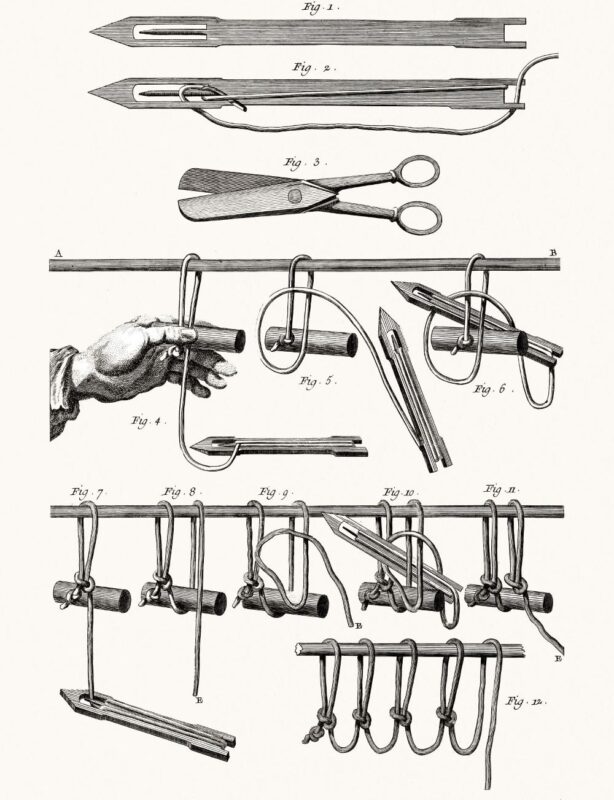
The key limitation of this era was rust and sterilization. Iron and bronze corroded quickly, and while instruments were washed, the concept of microbial infection and aseptic technique was completely unknown, leading to devastating post-operative mortality.
The Pre-Aseptic Era—Anatomical Enlightenment (1500–1867)
The Renaissance and the Enlightenment brought a profound shift: anatomical knowledge. Surgeons like Vesalius in the 16th century began systematically dissecting the human body, demanding tools that could navigate complex anatomy with precision.
2.1. The Surgeon-Barber and the Instrument Set
Before modern medicine, the profession was often combined—the “barber-surgeon.” Their instrument kits were often gruesome but reflected increasing specialization:
Amputation Knives: Long, heavy, and curved, designed to cut quickly through flesh and bone.
Saws and Trephines: For cutting bone.
The Fixed-Blade Scalpel: The cutting tool evolved into a single-piece instrument, where the blade and handle were forged together. This design, while robust, was difficult to maintain and sharpen uniformly.
2.2. The Struggle for Hemostasis (Stopping Bleeding)
Before the invention of the modern clamp, bleeding was a terrifying hurdle. Surgeons relied on two primary, brutal methods:
Cauterization: Burning the bleeding vessel with hot metal (painful and tissue-damaging).
Ligatures: Using silk or horsehair to tie off the vessel (often leading to severe infection).
The limitations weren’t the cutting ability, but the sealing ability, leading to excessive blood loss and high infection rates.
The Age of Asepsis and Material Science (1867–1950)
This is the most pivotal chapter in surgical history, where the fight against infection revolutionized instrument design, leading directly to the precision standards maintained by Lapex Surgical today.
3.1. Lister and the Dawn of Sterilization
In 1867, Joseph Lister introduced antiseptic surgery, using carbolic acid spray. While his methods evolved, the core concept—killing microorganisms—demanded instruments that could withstand extreme environments without degrading.
The Need for Durability: Instruments could no longer be made of soft, porous metals. They needed to endure harsh chemical disinfectants and the high heat and steam pressure of the autoclave.
3.2. Carbon Steel vs. Stainless Steel: The Material War
The shift in materials was the single greatest innovation in surgical instrument manufacturing.
The Rise of Carbon Steel (Late 19th Century)
Benefit: Achieved an incredibly sharp, fine edge (higher hardness).
Drawback: Prone to rapid rust and pitting when exposed to steam sterilization or chemical solutions.
The Triumph of Stainless Steel (Early 20th Century)
The introduction of high-chromium Stainless Steel (AISI 420 series, which Lapex Surgical uses for its German-grade quality) was a game-changer.
Feature | Carbon Steel (Older Tech) | Stainless Steel (Modern Standard) |
|---|---|---|
Primary Limitation | Highly susceptible to rust and corrosion. | Slightly less hardness (but superior edge retention with modern processes). |
Sterilization Endurance | Poor; rust degrades function and sterilization integrity. | Excellent; can withstand repeated, aggressive steam cycles. |
Lapex Manufacturing Focus | Used only for disposable, high-hardness blade tips. | Used for the vast majority of reusable instruments (handles, clamps, forceps). |
Lapex Insight: The Sialkot tradition, combined with our German-grade material sourcing, focuses on the meticulous passivation of stainless steel. Passivation is a chemical process that enhances the surface layer of chromium oxide, making the steel inert and highly resistant to rust, thus guaranteeing the longevity and reliability essential for modern sterilization protocols.
3.3. The Innovation of Interchangeable Blades
The invention of the detachable scalpel blade system was a major milestone.
The Bard-Parker System: Developed in the early 20th century, this system allowed a surgeon to use a standardized, reusable handle (e.g., #3 or #4) and quickly swap out single-use, sterile blades (e.g., #10, #11, #15).
Impact: This dramatically increased safety, ensured a consistently sharp cutting edge for every patient, and simplified sterilization (since only the handle was reused). The scalpel finally achieved its modern, ubiquitous form.
Key Innovations in General Surgery Tools (1880–1980)
With sterilization solved and quality materials established, general surgery rapidly expanded, demanding specialized instruments to handle every tissue type and surgical step.
4.1. The Revolution in Hemostasis: The Clamp
The clamp is the most fundamental instrument after the scalpel. It is the tool that controls bleeding and secures tissue.
The Halsted Mosquito Forceps: Named after William S. Halsted (a pivotal figure in American surgery), these small, fine-tipped clamps were designed for delicate control of small vessels, promoting meticulous and gentle surgery.
The Kocher and Crile Clamps: Larger, stronger clamps designed to grasp heavier tissues. The design innovation here lies in the ratchet lock (ensuring the clamp stays securely closed) and the serrations/teeth on the jaws (designed to minimize trauma while providing a secure grip).
4.2. Suturing and Needle Holders
The final step in many general surgeries is closing the wound. This requires dedicated instruments:
Needle Holders: (e.g., Mayo-Hegar, Castroviejo). These instruments are essentially clamps with specialized, hardened tungsten carbide inserts in the jaws. The inserts provide a secure, non-slip grip on the curved surgical needle, preventing rotation or damage while the surgeon passes it through tissue.
Lapex Specialization: Our Needle Holders are a testament to Sialkot precision. We guarantee the perfect alignment of the tungsten carbide tips and the flawless function of the ratchet mechanism, ensuring the needle is held firmly, reducing the risk of slippage which can prolong operating time and increase tissue injury.
4.3. Retraction and Exposure
Surgery is impossible without adequate visualization. Retractors are static or self-retaining instruments used to pull aside skin, muscle, and organs to expose the deep surgical site.
Self-Retaining Retractors (e.g., Balfour, Weitlaner): These free up the hands of assistants, making surgery more efficient. The engineering challenge is creating a mechanism that locks securely but can be released smoothly and quickly.
Hand-Held Retractors (e.g., Army-Navy, Deaver): Designed for specific depth and tissue contours.
The Age of Specialization—Beyond the Blade (1980–Present)
General surgery rapidly splintered into sub-specialties, each demanding a unique evolution of the classic instruments. This is the era where Lapex Surgical’s diverse manufacturing capability becomes central.
5.1. Electrosurgery and Energy-Based Devices
The greatest leap from the scalpel was the adoption of energy to cut and seal tissue simultaneously, dramatically improving hemostasis and surgical speed.
The Bovie (Monopolar): The early electrosurgical unit used a concentrated current through a pencil-like electrode (the Electrosurgical Spatula). This still requires a cutting surface, but the cut is achieved by high-frequency energy, not mechanical force.
Bipolar Energy (Sealing): This is the ultimate evolution in hemostasis, where current flows only between two tips (like a pair of specialized forceps). It allows for rapid, secure sealing of blood vessels without the risk of current traveling through the patient.
Lapex Electrosurgical Mastery: Our manufacturing expertise is focused on the insulation and conductivity of these instruments. A flaw in the insulation of an Electrosurgical Spatula can lead to dangerous stray energy burns. We guarantee that the insulating sheaths on our reusable and disposable instruments are flawless, a non-negotiable standard for safe energy delivery.
5.2. Minimally Invasive Surgery (MIS) and Laparoscopy
Laparoscopy fundamentally changed the shape of general surgery instruments.
Instrument Requirement | Laparoscopic Instrument Solution | Lapex Surgical Precision Point |
|---|---|---|
Need for Remote Control | Instruments must be long (30–45 cm) and slender. | Flawless transmission of rotation and force from handle to tip. |
Need for Access | The Trocar and Port System must be airtight. | Friction-minimized seals and cannulae made of the finest polymers and stainless steel. |
Need for Single-Use Sharpness | Disposable Scissors and Dissectors must be perfectly sharp every time. | Guaranteed German-grade cutting inserts and zero-tolerance pivots for a guaranteed First-Time Cut. |
Need for Visualization | The Laparoscope (rigid camera) is inserted through a port. | Specialized Suction/Irrigation devices with high-flow lumens to clear blood/smoke and maintain the visual field. |
The transition from a standard 15 cm scalpel to a 33 cm Laparoscopic Grasper is the ultimate testament to the evolution of surgical tools, demanding even tighter tolerances than open surgery instruments.
5.3. The Precision of Plastic Surgery Instruments
While distinct from general surgery, procedures like skin grafting, breast reconstruction, and cosmetic surgery require a parallel set of instruments built on the same foundation of precision.
Dermatomes: Tools for taking ultra-thin, uniform skin grafts. The quality of the blade and the setting mechanism is paramount, as the thickness must be controlled to the fraction of a millimeter.
Lapex Quality Assurance: Our line of Plastic Surgery Instruments exemplifies this precision. We apply the same Sialkot expertise and German-grade material science to ensure the delicate alignment and fine finish required for aesthetically critical procedures.
The Future of the Blade—Robotics and Smart Instruments
The current frontier of surgical technology is not replacing the scalpel, but remotely controlling it and enhancing its intelligence.
6.1. Robotic-Assisted Surgery
Robotic systems (like the da Vinci System) utilize miniaturized instruments with seven degrees of freedom, granting the surgeon unparalleled dexterity and tremor filtration.
The Surgeon’s New View: The surgeon operates from a console, viewing a high-definition 3D image, controlling the tiny wrist-like instruments through master controls.
The Instrument Challenge: The instruments used by the robots are themselves micro-versions of the classic clamps and scissors, but they must be manufactured to withstand thousands of cycles of complex articulation and sterilization. The precision required for these miniaturized components is the highest in the industry.
6.2. Smart Instruments and Data Integration
The next evolution will be instruments that can talk back to the surgeon:
Sensing Tissues: Future scalpels may incorporate sensors to differentiate between healthy and diseased tissue (e.g., using light spectroscopy or impedance) in real-time.
Controlled Energy Delivery: Electrosurgical devices will become smarter, automatically adjusting energy output based on the precise tissue density they are sealing.
Lapex’s Forward Vision: As the industry moves toward these integrated systems, Lapex Surgical is investing in materials and manufacturing processes that are compatible with advanced sensor technology, ensuring our instruments remain at the mechanical core of the most advanced surgical platforms.
Structured Insight: Tables and FAQs
7.1. Key Historical Milestones in Instrument Evolution
Era/Date | Instrument/Innovation | Inventor/Culture | Impact on General Surgery |
|---|---|---|---|
Ancient ( 3000 BC) | Obsidian/Flint Scalpel | Various Ancient Cultures | First reliable cutting edge; limited by brittleness. |
Roman Era (100 AD) | Specialized Probes and Knives | Roman Surgeons | First documentation of organized, specialized instrument sets. |
1867 | Antiseptic Surgery Principles | Joseph Lister | Mandated the need for durable, sterilizable instrument materials. |
1900 | Halsted Mosquito Forceps | William S. Halsted | Revolutionized Hemostasis, allowing for meticulous, gentle tissue handling. |
1915 | Detachable Scalpel Blade (Bard-Parker) | Bard-Parker | Standardized blade shapes and ensured a sterile, sharp edge for every procedure. |
1950 | Wide Adoption of Stainless Steel | Metallurgy Industry | Guaranteed instrument longevity and resistance to repeated autoclaving. |
1980 | Laparoscopic Instruments | Modern Pioneers | Shifted surgery from open access to minimally invasive, remote control. |
7.2. General Surgery Instrument Categorization
All Lapex General Surgery Instruments fall into four functional categories:
Cutting/Dissecting: The Scalpel (blade + handle), Metzenbaum Scissors (delicate tissue), Mayo Scissors (heavy tissue/sutures).
Grasping/Holding: Forceps (smooth tips for delicate tissue) and Clamps (locking ratchets for hemostasis).
Retracting/Exposing: Retractors (to hold tissue aside for visibility).
Suturing/Stapling: Needle Holders and specialized stapling devices.