Intelligent Energy in the OR: How Advanced Electrosurgical Instruments Improve Surgical Control and Patient Outcomes
Modern electrosurgical instruments give surgeons better control, safer cuts, and faster healing times. Smart generators sense tissue type and adjust power automatically. Advanced bipolar systems seal blood vessels with less heat spread. Hospitals that upgrade see fewer complications, shorter surgery times, and better use of OR resources. This guide compares today’s top electrosurgical technologies, so surgical teams and procurement officers can choose the right system for their OR.
What Is Electrosurgery, and Why Does It Matter?
Electrosurgery uses electrical current to cut tissue and stop bleeding at the same time. It has been a surgical staple for decades. But not all electrosurgical systems work the same way.
Older generators use fixed power settings. The surgeon guesses the right level, and mistakes can burn healthy tissue. Newer “smart” generators fix this problem. They read tissue resistance in real time and automatically adjust energy output.
This matters because:
- Less thermal damage means faster healing.
- Fewer errors mean fewer post-op complications.
- Consistent results mean shorter learning curves for new surgeons.
For ASC administrators and hospital buyers, this translates into lower readmission costs and better patient satisfaction scores.
Core Electrosurgical Technologies Compared
Below is a side-by-side look at the main types of electrosurgical energy platforms used in modern operating rooms.
| Technology | How It Works | Best For | Key Benefit |
|---|---|---|---|
| Monopolar Electrosurgery | Current flows from an active electrode through the patient to a grounding pad | General cutting and coagulation | Fast, low cost, widely available |
| Advanced Bipolar Vessel Sealing | Current passes only between two jaws of the instrument | Sealing vessels up to 7mm | Minimal thermal spread, no grounding pad needed |
| Tissue-Sensing Smart Generators | Microprocessors read tissue impedance and adjust power | Complex or delicate tissue | Consistent, predictable results |
| Ultrasonic Energy | Mechanical vibration cuts and seals through friction heat | Soft tissue dissection | Lower smoke, cooler tissue temps |
| Robotic-Assisted Electrosurgery Integration | Energy instruments controlled through robotic arms | Minimally invasive procedures | Precision beyond human hand tremor limits |
Each option has trade-offs. A busy general surgery unit may lean on monopolar tools for speed. A specialty surgical center doing complex vessel work may prefer advanced bipolar sealing for safety.
Smart Electrosurgical Generators: The Brains of the Operation
A smart generator is like a thermostat for surgery. It doesn’t just deliver power. It measures tissue resistance hundreds of times per second and adjusts output to match.
Why This Beats Older Systems
Old-style generators send a flat amount of energy no matter what tissue they touch. That’s risky. Fat, muscle, and blood vessels all react differently to heat.
Smart generators solve this by:
- Detecting tissue type through impedance feedback.
- Adjusting voltage and current automatically.
- Cutting power the instant a vessel seal is complete.
This reduces the guesswork that used to fall entirely on the surgeon’s experience.
Real-World Impact
Surgical teams using tissue-sensing generators report shorter procedure times because the system self-corrects instead of requiring manual power changes mid-surgery. This is especially useful during long laparoscopic cases where fatigue can affect judgment.
Advanced Bipolar Vessel Sealing: Precision Hemostasis
Hemostasis and coaptation are two words every surgeon knows well. Hemostasis means stopping bleeding. Coaptation means pressing vessel walls together so they fuse under heat.
Advanced bipolar systems do both at once, and they do it with less collateral damage than monopolar tools.
How It Works
The instrument jaws clamp the vessel. Current flows only between the two jaws, not through the whole body. This keeps the energy path short and controlled.
Key Advantages
- Lower thermal spread: heat stays close to the target, protecting nearby nerves and tissue.
- No grounding pad required: this removes a common source of skin burns.
- Reliable seals up to 7mm vessels: reduces the need for sutures or clips in many cases.
Thermal Spread Reduction Matters More Than People Think
Thermal spread is the sneaky risk in electrosurgery. Even a successful seal can damage tissue beyond the target zone if heat spreads too far. Advanced bipolar tools with feedback sensors cut off energy the instant the seal forms, limiting spread to just a few millimeters.
Minimally Invasive Electrosurgery: Small Incisions, Big Impact
Minimally invasive electrosurgery lets surgeons operate through tiny incisions using laparoscopic tools. This approach has grown fast because patients recover quicker and scarring is minimal.
Why Energy Platforms Had to Evolve
Small incisions mean small instruments. Surgeons need tools that fit through 5mm or 10mm ports but still deliver the same cutting and sealing power as open-surgery devices.
This is where companies like Lapex Surgical, a manufacturer of surgical, electrosurgical, plastic surgery, and laparoscopic instruments based in Sialkot, have focused their engineering efforts. Compact, ergonomic energy devices built for laparoscopic ports need the same precision as full-size open instruments, just in a smaller footprint.
Benefits for Surgical Teams
- Shorter hospital stays for patients.
- Less post-op pain and fewer wound infections.
- Faster return to daily activity.
Robotic-Assisted Electrosurgery Integration
Robotic platforms are changing how energy instruments are used. Instead of a surgeon’s hand holding the tool directly, a robotic arm translates the surgeon’s movements with more precision.
What This Adds
- Removes natural hand tremor from the equation.
- Allows finer, more controlled energy application.
- Improves access to hard-to-reach anatomy.
The Catch
Robotic systems cost more upfront. Hospitals must weigh long-term efficiency gains against initial capital investment. For high-volume surgical centers, the math often works out in favor of robotic integration within a few years.
Choosing the Right System: A Procurement Checklist
Surgical directors and procurement officers should ask these questions before buying:
- Does the generator offer real-time tissue sensing?
- Can the bipolar instruments seal vessels up to 7mm reliably?
- Is thermal spread data available from clinical studies?
- Does the system integrate with existing laparoscopic or robotic setups?
- What is the total cost of ownership, including disposables and maintenance?
- Does the manufacturer provide training and clinical support?
A good rule of thumb: don’t buy energy on price alone. Buy on total surgical outcomes.
Case Example: How Smart Energy Reduces OR Variability
Consider a mid-size ASC running six general surgery cases a day. With older monopolar-only setups, average bleeding control time per case was inconsistent, ranging widely between surgeons.
After switching to a smart generator paired with advanced bipolar sealing instruments:
- Bleeding control became more predictable across different surgeons.
- Turnover time between cases dropped because fewer manual adjustments were needed.
- Reported thermal injury incidents decreased.
This kind of consistency is exactly what procurement teams should look for when evaluating new platforms.
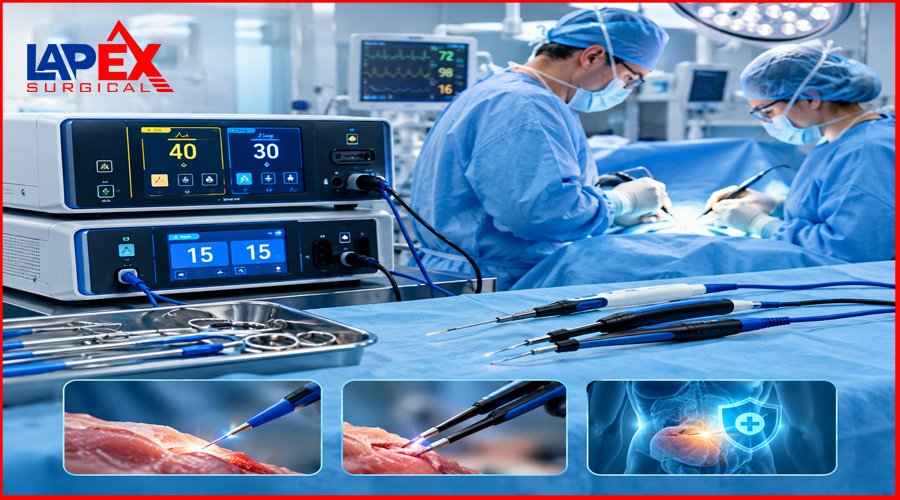
Intelligent Energy in the OR
A quick visual comparison of electrosurgical instruments, sealing technology, and how they improve surgical control.
5 Electrosurgical Technologies, Side by Side
Before You Buy: Quick Checklist
Why Manufacturer Quality Matters
Not all electrosurgical instruments are built the same. Instrument quality affects grip precision, jaw alignment, and how well the seal actually holds.
Lapex Surgical, known for producing surgical, electrosurgical, plastic surgery, and laparoscopic instruments, builds devices with attention to jaw calibration and ergonomic design. This kind of manufacturing precision directly affects surgical outcomes, since even small design flaws in an instrument can cause inconsistent sealing or added thermal spread.
When comparing vendors, ask for:
- ISO certification documentation.
- Clinical validation data.
- Sample units for in-house testing.
Frequently Asked Questions
Q: What’s the difference between monopolar and bipolar electrosurgery?
A: Monopolar sends current through the whole body to a grounding pad. Bipolar keeps current between two jaws only, which lowers the risk of unintended burns.
Q: How do smart generators reduce surgical risk?
A: They read tissue resistance in real time and adjust power automatically, reducing the chance of overheating or under-sealing tissue.
Q: Can advanced bipolar tools replace sutures?
A: For many vessels up to 7mm, yes. Bipolar sealing can eliminate the need for manual suturing or clips in several procedures.
Q: Is robotic-assisted electrosurgery worth the investment?
A: For high-volume surgical centers, the precision gains and reduced complication rates often justify the cost over time.
Q: How does thermal spread affect patient recovery?
A: Less thermal spread means less damage to healthy tissue near the surgical site, which usually means faster healing and less pain.
Final Thoughts: Upgrading for Better Outcomes
Electrosurgical technology has moved far beyond simple cut-and-cauterize tools. Smart generators, advanced bipolar sealing, and robotic integration all work together to give surgeons more control and patients better outcomes.
Hospitals and ASCs that invest in these systems typically see fewer complications, shorter procedures, and more predictable results across their surgical teams.
Upgrade your surgical suite with next-generation smart electrosurgical generators and advanced bipolar instruments. Schedule a clinical demonstration or request a custom hospital evaluation today.
👉 Ready to upgrade your surgical inventory? For more information, contact the Lapex Surgical support team now!