Table of Contents
ToggleLapex Surgical: Your Trusted Source for Certified Laparoscopic Instruments
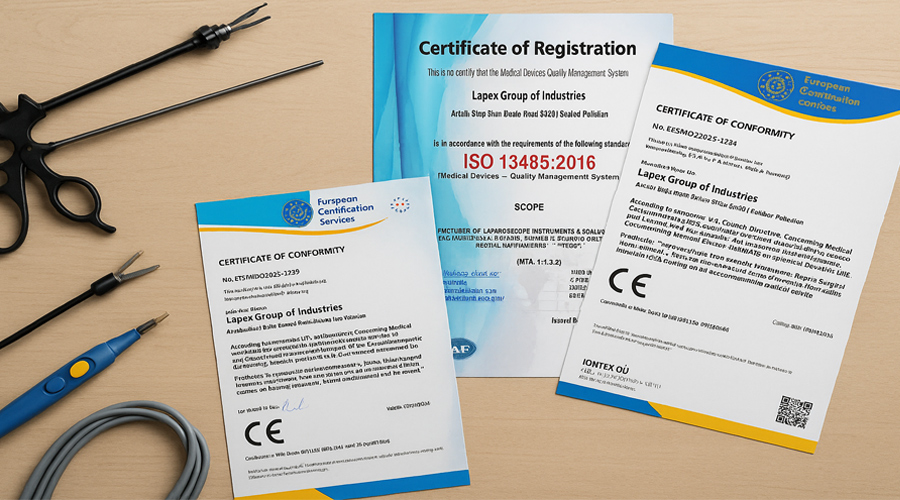
In the demanding world of modern surgery, where precision, safety, and efficiency are paramount, the quality of surgical instruments isn’t merely a preference – it’s a non-negotiable imperative. For surgeons performing intricate minimally invasive procedures, the tools they wield are an extension of their skill, directly impacting patient outcomes. At Lapex Surgical, we understand this profound responsibility, and it forms the bedrock of our operations. Our unwavering commitment to laparoscopic excellence is epitomized by our adherence to the most rigorous international quality standards, proudly evidenced by our ISO 13485 and CE certifications, making us a trusted source for certified laparoscopic instruments.
With a rich heritage deeply embedded in Sialkot’s globally renowned tradition of crafting medical devices, Lapex Surgical has cultivated decades of expertise. We’re more than just a manufacturer; we’re pioneers dedicated to designing, developing, and delivering innovative solutions that redefine what’s possible in the operating room. This article delves into the profound significance of our ISO and CE certifications, explaining how they translate into tangible benefits for healthcare professionals and, most importantly, for patients worldwide.
The Imperative of Quality in Laparoscopic Surgery
Laparoscopic surgery, a revolutionary approach to traditional open surgery, has transformed patient care. Utilizing small incisions and specialized instruments guided by a camera offers numerous advantages: reduced pain, smaller scars, faster recovery times, and decreased risk of complications. However, the very nature of minimally invasive procedures demands instruments of unparalleled precision and reliability.
Imagine a surgeon navigating complex anatomy on a monitor, relying solely on the tactile feedback and visual information transmitted through slender instruments. Any compromise in material quality, ergonomic design, or manufacturing precision can have severe consequences. This is why the journey from raw material to a surgeon’s hand is a meticulously controlled process at Lapex Surgical, guided by international quality management systems.
ISO 13485: The Global Benchmark for Medical Device Quality
The International Organization for Standardization (ISO) sets standards across various industries, ensuring consistency, safety, and quality. ISO 13485:2016 is the globally recognized standard specifically for Quality Management Systems (QMS) in the medical device industry. For Lapex Surgical, achieving and maintaining this certification is not just a regulatory hurdle; it’s a fundamental aspect of our identity and a testament to our dedication.
What ISO 13485 Entails for Lapex Surgical:
ISO 13485 provides a comprehensive framework that addresses every stage of a medical device’s lifecycle, from initial design and development to production, storage, distribution, installation, servicing, and eventual decommissioning. For Lapex Surgical, this translates into:
- Robust Quality Management System: We have established and implemented a stringent QMS that meticulously documents every process, procedure, and control. This ensures consistency and accountability at every step.
- Risk Management Approach: ISO 13485 emphasizes a risk-based product development and realization approach. This means we proactively identify, assess, and mitigate potential risks associated with our laparoscopic instruments, ensuring maximum safety and effectiveness.
- Process Validation: Critical manufacturing processes, such as sterilization, tempering, and surface finishing, are rigorously validated to ensure they consistently produce instruments that meet specifications.
- Supplier Control: We meticulously vet and monitor our suppliers of raw materials (e.g., surgical-grade stainless steel) to ensure they meet our exacting quality standards. This guarantees the integrity of our instruments from their very foundation.
- Traceability and Recall Systems: In the unlikely event of an issue, our QMS allows for complete traceability of every instrument, from its unique batch number back to its raw material origins. This enables swift and effective recall procedures if ever necessary.
- Compliance with Regulatory Requirements: ISO 13485 serves as a cornerstone for meeting various international regulatory requirements, including those for CE marking.
Table: Key Focus Areas of ISO 13485 at Lapex Surgical
| ISO 13485 Element | Lapex Surgical Implementation | Benefit |
|---|---|---|
| Design & Development | Meticulous planning, user feedback integration, rigorous testing. | Instruments meet precise surgical needs and are safe by design. |
| Production Control | Automated and manual checks, precision machining, and a controlled environment. | Consistent, high-quality manufacturing, minimizing defects. |
| Documentation Control | Comprehensive records for every instrument, process, and material. | Full transparency, easy auditing, and quick issue resolution. |
| Risk Management | Proactive identification and mitigation of potential hazards throughout the product lifecycle. | Enhanced patient safety and reduced the likelihood of adverse events. |
| Post-Market Surveillance | Continuous monitoring of instrument performance and user feedback collection. | Ongoing improvement and rapid response to any emerging issues. |
CE Marking: Your Assurance for the European Market and Beyond
For any medical device to be legally placed on the market within the European Union (EU) and numerous other countries that recognize EU regulations, it must bear the CE mark. This symbol, which stands for “Conformité Européenne” (European Conformity), signifies that the product meets the stringent safety, health, and environmental protection requirements outlined in the relevant European Medical Device Regulations (MDR).
The Journey to CE Marking for Lapex Surgical:
The process of obtaining CE marking under the Medical Device Regulation (EU) 2017/745 (MDR) is comprehensive and demanding. For Lapex Surgical, it involves:
- Device Classification: Determining the risk class of our laparoscopic instruments (e.g., Class I, IIa, IIb, or III). Most laparoscopic instruments fall into higher risk classes, requiring the involvement of a Notified Body.
- Implementation of a Robust QMS: Our ISO 13485-certified QMS is a prerequisite and directly supports our CE marking efforts.
- Technical Documentation: Compiling extensive technical documentation that demonstrates the safety, performance, and regulatory compliance of each instrument. This includes design specifications, risk analyses, manufacturing processes, clinical evaluation reports, and post-market surveillance plans.
- Notified Body Assessment: For higher-risk devices, an independent third-party organization (Notified Body) conducts a conformity assessment. This involves thorough audits of our QMS and a review of our technical documentation to ensure compliance with the MDR.
- EU Declaration of Conformity: Once compliance is confirmed, Lapex Surgical issues an EU Declaration of Conformity, formally declaring that our instruments meet all applicable EU regulations.
- Affixing the CE Mark: Only after all these steps are completed can we legally affix the CE mark to our laparoscopic instruments and their packaging.
Why CE Marking Matters to You (Surgeons & Healthcare Providers):
- Guaranteed Compliance: The CE mark assures you that Lapex Surgical instruments comply with the strict legal requirements for medical devices in Europe, one of the most regulated markets globally.
- Enhanced Patient Safety: The comprehensive safety and performance requirements of the MDR, validated by the CE mark, translate directly into safer instruments for your patients.
- Reliable Performance: CE certification confirms that our instruments have undergone rigorous testing to ensure they perform consistently and effectively in the operating room.
- Market Access & Trust: For distributors and healthcare institutions, purchasing CE-marked instruments provides confidence in their legality and quality, facilitating broader market access and building trust.
Crafting Surgical Excellence: The Lapex Surgical Process
Our certifications are not just stamps on a document; they are embedded in our daily operations. From our roots in Sialkot, a city synonymous with surgical instrument craftsmanship, we combine traditional artisanal skill with cutting-edge technology.
Our Expertise: Where Precision Meets Perfection!
- Carefully Selected Materials: We exclusively utilize durable, biocompatible, and medical-grade materials, primarily high-quality stainless steel (e.g., Grade 410 and 420 or equivalent with at least 12% chromium content for corrosion resistance), chosen for optimal performance and longevity.
- Advanced Techniques: Our manufacturing process incorporates precision machining, meticulous tempering, advanced surface finishing, and final tuning by skilled artisans. Every curve, every joint, and every tip is crafted to exact specifications. This includes passivation processes according to ASTM A967 for enhanced corrosion resistance.
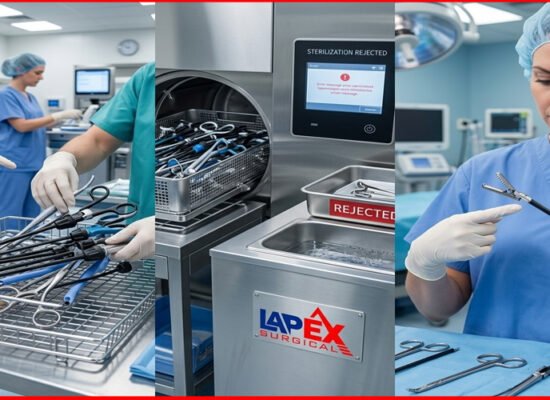
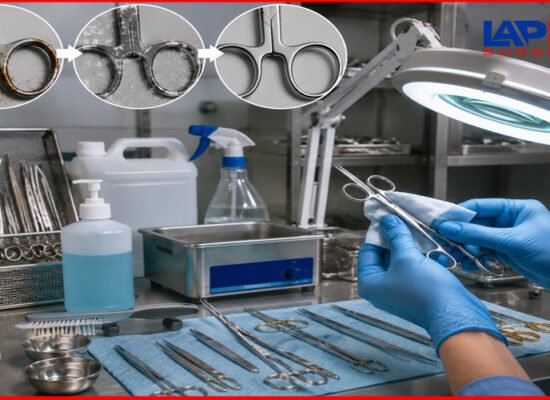
- Rigorous Testing: Each laparoscopic instrument undergoes a series of stringent quality control checks and physical/functional testing throughout its production lifecycle. This includes visual inspection for damage, corrosion, wear, and alignment, as well as functional testing to ensure smooth action, proper gripping, and secure locking where applicable.
- Dedicated Workforce: Our skilled workforce, many with decades of experience, are continuously trained on the latest manufacturing techniques and quality protocols, ensuring that human expertise complements technological advancements.
How Lapex Surgical Ensures Quality in Laparoscopic Instruments
- Material Certification: Sourcing surgical-grade stainless steel with documented chemical composition and mechanical properties.
- In-Process Inspections: Regular checks at every stage, from forging and grinding to polishing and assembly.
- Precision Measurement: Use of calibrated instruments to verify dimensions, angles, and tolerances.
- Corrosion Resistance Testing: Ensuring instruments withstand sterilization cycles and harsh operating environments.
- Functional Testing: Verifying articulation, grasping strength, cutting sharpness, insulation integrity (for electrosurgical), and locking mechanisms.
- Ergonomic Assessment: Designing instruments for optimal surgeon comfort and control, reducing fatigue during long procedures.
- Biocompatibility Testing: Ensuring materials are safe for human contact and do not cause adverse reactions.
- Sterilization Validation: Confirming that instruments can be effectively sterilized without degradation.
- Final Visual Inspection: A meticulous visual check for any imperfections before packaging.
- Batch Traceability: Unique identifiers on each instrument for complete historical tracking.
Benefits for Surgeons and Patients
The synergy of ISO 13485 and CE certification provides a robust guarantee of quality that directly translates into significant benefits:
For Surgeons:
- Uncompromising Precision: Certified instruments offer the exact maneuverability and tactile feedback required for delicate laparoscopic procedures, enhancing control and reducing the risk of unintended tissue damage.
- Enhanced Safety: Knowing that instruments meet stringent international safety standards instills confidence, reducing concerns about material integrity, insulation failure (for electrosurgical tools), or unexpected malfunctions.
- Reliability and Durability: High-quality materials and manufacturing processes mean instruments perform consistently over time, minimizing wear and tear and reducing the need for frequent replacements. This also translates to lower overall operating costs for healthcare facilities.
- Reduced Risk of Complications: Superior design and manufacturing reduce the likelihood of instrument-related complications, contributing to smoother surgeries and better patient outcomes.
- Global Recognition and Trust: Using instruments from a certified manufacturer like Lapex Surgical ensures that you are employing globally recognized and trusted tools.
For Patients:
- Increased Safety: The ultimate beneficiaries of stringent quality controls are patients. Certified instruments minimize the risks associated with surgical procedures, leading to safer surgeries.
- Improved Surgical Outcomes: Precision tools enable surgeons to perform with greater accuracy, potentially leading to reduced blood loss, less tissue trauma, and more effective treatment.
- Faster Recovery: Minimally invasive procedures performed with reliable instruments contribute to shorter hospital stays and quicker, less painful recovery periods.
- Reduced Post-Operative Complications: High-quality instruments help minimize infection risks and other complications, supporting a smoother post-operative course.
The Sialkot Legacy: A Foundation of Excellence
Our home, Sialkot, Pakistan, is globally recognized as a hub for surgical instrument manufacturing, a legacy spanning over a century. This rich tradition is built on generations of skilled artisans who have honed their craft in metalwork. Lapex Surgical proudly carries this torch, blending the inherited mastery of precision craftsmanship with modern technological advancements and rigorous quality assurance. Our roots in Sialkot underscore our deep-seated understanding of surgical instrument manufacturing and our commitment to upholding the highest standards of the industry.
Beyond Certification: A Culture of Continuous Improvement
While ISO 13485 and CE marking are crucial milestones, Lapex Surgical’s commitment to excellence extends beyond mere compliance. We foster a culture of continuous improvement, driven by feedback from surgeons, ongoing research and development, and a relentless pursuit of innovation. Our additional certifications, such as ISO 9001 (General Quality Management), ISO 14001 (Environmental Management), and ISO 45001 (Occupational Health and Safety), further underscore our holistic commitment to responsible and high-quality manufacturing. Furthermore, our EUDAMED Registration and GMP/FDA compliance initiatives demonstrate our proactive approach to global market demands.
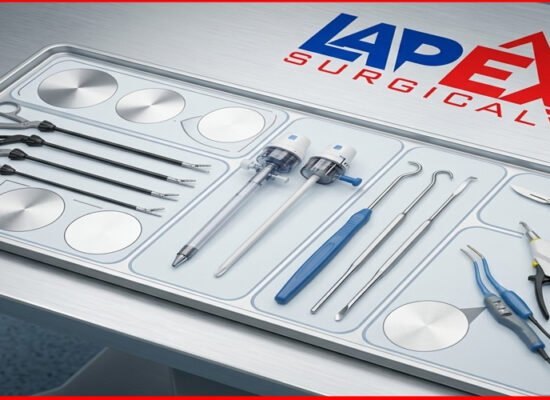
This dedication to quality ensures that every Lapex Surgical laparoscopic instrument, from bipolar and monopolar forceps to electrosurgical scissors, needle holders, trocars, and portable training simulators, is engineered for superior performance and ultimately empowers healthcare providers worldwide to achieve safer, smarter, and more accessible surgical care.
By prioritizing these certifications and embedding their principles into every facet of our operations, Lapex Surgical reinforces its position as a trusted partner in advancing surgical care. Our commitment to laparoscopic excellence is not just a promise; it’s a guarantee of quality you can rely on.
👉 For more information, feel free to contact the Lapex Surgical support team.
Frequently Asked Questions (FAQ)
Q1: What is the main difference between ISO 13485 and CE Marking?
A1: ISO 13485 is a standard for a Quality Management System (QMS) specifically for medical device manufacturers. It defines how a company should manage its quality processes. CE Marking, on the other hand, is a legal requirement for products sold in the European Economic Area (EEA) and signifies that a product meets the essential health and safety requirements of relevant EU directives/regulations (like the MDR). While distinct, an ISO 13485-certified QMS is often a prerequisite and strong foundation for achieving CE marking.
Q2: How does Lapex Surgical ensure the raw materials used are of the highest quality?
A2: We implement a rigorous supplier qualification program. This includes auditing suppliers, requiring material certifications (e.g., chemical analysis, mechanical properties), and conducting in-house material testing to verify composition and suitability for surgical instrument manufacturing. We primarily use high-quality surgical-grade stainless steel with specific chromium content for corrosion resistance.
Q3: Are Lapex Surgical instruments reusable or single-use?
A3: Lapex Surgical primarily manufactures high-quality reusable laparoscopic instruments designed for multiple sterilization cycles. Our manufacturing processes and material selections prioritize durability and longevity to ensure consistent performance after repeated use and sterilization, which is validated through our quality management system.
Q4: How does Lapex Surgical handle instrument repair and maintenance?
A4: While our instruments are built for durability, we understand the need for proper care. Our quality management system includes guidelines for post-market surveillance, which can extend to advising on proper cleaning, sterilization, and maintenance practices to prolong instrument life and performance. For specific repair inquiries, customers are encouraged to contact our support team.
Q5: What are the benefits of using a portable training simulator from Lapex Surgical?
A5: Our portable training simulators provide a realistic and safe environment for surgeons and trainees to refine their laparoscopic skills outside of the operating room. This includes improving hand-eye coordination, dexterity, and proficiency with various laparoscopic instruments, ultimately contributing to enhanced surgical performance and patient safety.
Q6: How does Lapex Surgical stay updated with evolving medical device regulations?
A6: We have a dedicated regulatory affairs team that continuously monitors changes in international medical device regulations, including updates to the EU MDR, FDA guidelines, and other global standards. Our quality management system is designed to be agile and adapt to these evolving requirements, ensuring ongoing compliance and market access.