
Table of Contents
ToggleHow Lapex Surgical Ensures Quality in Laparoscopic Instruments
In the intricate domain of minimally invasive surgery, the performance of laparoscopic instruments directly correlates with surgical success and patient safety. Surgeons rely on these specialized tools to be precise, durable, and flawlessly functional under immense pressure. At Lapex Surgical, we understand this profound responsibility. Our commitment to crafting surgical excellence is not just a motto; it’s a deeply ingrained philosophy that permeates every stage of our manufacturing process. With a legacy spanning decades in Sialkot, a city globally renowned for its artisanal mastery in medical devices, we combine traditional craftsmanship with cutting-edge technology and a rigorous, multi-faceted quality assurance system.
This article delves into the meticulous processes and unwavering standards that define Lapex Surgical’s approach to quality. From the initial selection of raw materials to the final packaging, every step is designed to ensure that our laparoscopic instruments meet and exceed international benchmarks for safety, performance, and reliability.
The Foundation of Excellence: Material Certification
The journey of a high-quality laparoscopic instrument begins long before it takes shape. It starts with the meticulous selection of raw materials. At Lapex Surgical, compromise on this front is not an option.
Our Commitment to Material Integrity:
- Sourcing Surgical-Grade Stainless Steel: We exclusively source premium surgical-grade stainless steel, primarily types like 410, 420, and 304, renowned for their strength, corrosion resistance, and biocompatibility. These specific alloys contain critical chromium content (typically 12-18%) to form a passive layer that resists rust and degradation, even after repeated sterilization.
- Documented Chemical Composition: Every batch of raw material arrives with comprehensive documentation detailing its precise chemical composition. This isn’t a mere formality; it’s a critical verification step. We cross-reference these documents against our strict specifications to ensure the steel contains the correct percentages of elements like chromium, nickel, molybdenum, and carbon. Deviations can impact hardness, flexibility, and corrosion resistance, all vital for instrument performance.
- Verification of Mechanical Properties: Beyond chemical makeup, we verify the mechanical properties of the steel. This includes tensile strength, yield strength, hardness (often measured in Rockwell or Vickers), and ductility. These properties determine how the instrument will withstand stress, bending, and torsion during manufacturing and, crucially, during surgical procedures. For instance, a laparoscopic grasper needs a specific hardness to hold tissue securely without deforming, while a shaft needs flexibility without brittleness.
- Supplier Qualification and Audits: Our long-standing relationships with reputable material suppliers are built on trust and consistent quality. We conduct regular audits of our suppliers to ensure their manufacturing processes and quality control systems align with our rigorous standards. This holistic approach to material sourcing is the bedrock upon which our instruments’ durability and reliability are built.
Why Material Quality Matters:
Using inferior materials can lead to instruments that are prone to corrosion, breakage, dulling, or even toxic leaching into the patient. By guaranteeing the highest quality raw materials, Lapex Surgical ensures the fundamental integrity, safety, and longevity of every laparoscopic instrument we produce.
Precision at Every Step: In-Process Inspections
Manufacturing laparoscopic instruments is a complex process involving numerous stages, each requiring exacting precision. Our quality assurance is not an end-of-line check; it’s an ongoing, integrated system of in-process inspections.
Our Multi-Stage Inspection Protocol:
- Forging and Machining: After the initial forging of blanks, our technicians conduct visual and dimensional checks to ensure proper shape and rough dimensions. Subsequent machining stages, which define the instrument’s intricate features, are accompanied by immediate inspections for burrs, surface finish, and adherence to initial design specifications.
- Grinding and Polishing: These stages are critical for the instrument’s final shape, smooth articulation, and corrosion resistance. Inspectors meticulously check for consistent grinding patterns, elimination of sharp edges (except for cutting surfaces), and a high-quality polished finish that facilitates cleaning and sterilization.
- Heat Treatment (Tempering): This crucial process imbues the steel with its desired hardness and flexibility. Post-tempering, instruments undergo hardness testing to confirm they’ve reached the optimal specifications for their intended function (e.g., a cutting instrument will have a higher hardness than a grasping instrument).
- Assembly and Alignment: For multi-component laparoscopic instruments, precise assembly is paramount. Inspectors verify smooth articulation of joints, correct alignment of jaws or tips, and proper functionality of locking mechanisms. Any misalignment can compromise a surgeon’s control and precision during surgery.
- Sub-Component Verification: Before final assembly, each sub-component (e.g., insulating sleeves, tips, handles) undergoes individual checks for defects, dimensional accuracy, and proper material properties.
These continuous checks ensure that any deviations are identified and corrected immediately, preventing defective components from proceeding further down the production line and minimizing waste while maximizing overall product quality.
The Science of Accuracy: Precision Measurement
In the microscopic world of surgical precision, “close enough” is never sufficient. Every dimension, every angle, and every tolerance must be exact. Lapex Surgical employs advanced metrology to ensure this unwavering accuracy.
Our Precision Measurement Techniques:
- Calibrated Instruments: We utilize a range of highly accurate and regularly calibrated measuring instruments. This includes:
- Digital Calipers and Micrometers: For precise external and internal diameter measurements, lengths, and thicknesses.
- Optical Comparators/Profile Projectors: To project magnified images of instrument profiles onto a screen for detailed dimensional analysis against design blueprints, revealing even minute deviations in shape or angle.
- Coordinate Measuring Machines (CMMs): For complex geometries, CMMs provide highly accurate 3D measurements by touching probes to points on the instrument’s surface, ensuring intricate parts fit together perfectly.
- Angle Gauges and Protractors: For verifying specific angles critical for instrument function, such as the angle of a cutting jaw or the curvature of a needle holder.
- Statistical Process Control (SPC): Beyond individual measurements, we employ SPC techniques to monitor manufacturing processes. This involves taking regular measurements of critical parameters and using statistical analysis to identify trends, potential process drifts, and ensure consistency over time.
By adhering to rigorous precision measurement protocols, Lapex Surgical guarantees that every instrument conforms to its precise design specifications, enabling flawless performance in the operating theatre.
Enduring the Environment: Corrosion Resistance Testing
Surgical instruments are subjected to some of the harshest environments imaginable: blood, bodily fluids, powerful cleaning agents, and repeated high-temperature sterilization cycles (autoclaving). Corrosion can compromise an instrument’s integrity, lead to pitting that harbors bacteria, and even cause instruments to seize up.
Our Corrosion Resistance Protocols:
- Passivation: After manufacturing, our stainless steel instruments undergo a critical process called passivation. This involves submerging the instruments in an acid solution (e.g., nitric acid or citric acid), which removes free iron from the surface and forms a thin, protective chromium oxide layer. This passive layer is what gives stainless steel its “stainless” quality and significantly enhances its resistance to corrosion. We follow standards like ASTM A967 for passivation.
- Salt Spray Testing (ASTM B117): Select batches of instruments are subjected to accelerated corrosion testing in a salt spray chamber. Here, a fine mist of salt water is continuously sprayed over the instruments for extended periods (e.g., 24, 48, or 96 hours). This harsh environment simulates years of corrosive exposure in a short timeframe, allowing us to evaluate the effectiveness of our passivation process and the inherent corrosion resistance of the material.
- Boil Testing: Instruments are sometimes subjected to repeated boiling cycles in distilled water, with visual inspections for signs of pitting, discoloration, or rust formation.
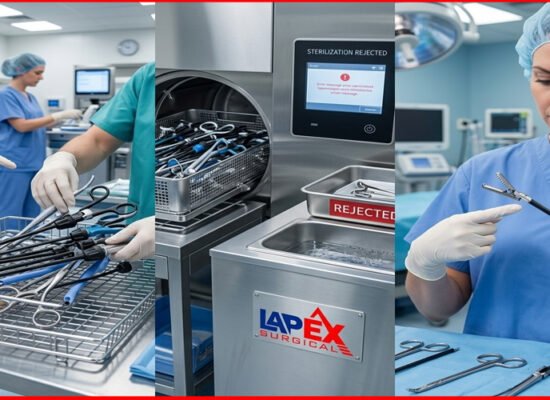
- Simulated Sterilization Cycles: We test instruments through multiple cycles of steam sterilization (autoclaving) to ensure they can withstand the heat, pressure, and moisture without corroding, dulling, or degrading. This directly mimics real-world usage in hospitals.
These rigorous tests ensure that Lapex Surgical instruments maintain their integrity, appearance, and functionality even after countless sterilization cycles and exposure to demanding surgical conditions.
Performance Under Pressure: Functional Testing
An instrument’s physical attributes are meaningless if it doesn’t perform its intended function flawlessly. Functional testing is where our instruments prove their mettle.
Key Functional Tests for Laparoscopic Instruments:
- Articulation (Joint Movement): For instruments with movable jaws or tips (e.g., graspers, scissors), we verify smooth, fluid movement without binding, stiffness, or excessive play. The joint should operate freely with appropriate resistance.
- Grasping Strength and Retention: Graspers and clamps are tested for their ability to securely hold tissue or sutures without slipping. This involves applying specific weights or forces and checking for retention.
- Cutting Sharpness and Efficiency: Laparoscopic scissors and dissectors are tested on standardized materials (e.g., tissue paper, thread) to ensure clean, precise cuts without tearing or fraying. The sharpness of electrosurgical tips is also assessed.
- Insulation Integrity (for Electrosurgical Instruments): For bipolar and monopolar instruments, the integrity of the insulation along the shaft is critical to prevent unintended burns to surrounding tissues. We perform high-voltage leakage tests to detect any breaks or pinholes in the insulation.
- Locking Mechanisms: Instruments with locking features (e.g., needle holders, some graspers) are tested to ensure the lock engages securely and releases smoothly, providing consistent tension and control.
- Tip Alignment and Closure: The jaws or tips of instruments must align perfectly when closed, ensuring proper grasping, cutting, or suturing action. Misalignment can lead to tissue damage or ineffective procedures.
- Flushing and Cleaning: For instruments with lumens or channels, we verify that they can be effectively flushed and cleaned to prevent bioburden accumulation, a critical factor for patient safety.
These hands-on tests simulate real-world surgical scenarios, guaranteeing that Lapex Surgical instruments provide the precise performance surgeons demand.
Designed for the User: Ergonomic Assessment
Beyond raw functionality, the ergonomic design of a laparoscopic instrument profoundly impacts surgeon comfort, control, and ultimately, surgical outcomes. Long procedures can lead to hand fatigue and reduced precision if instruments are poorly designed.
Our Approach to Ergonomics:
- Optimal Balance and Weight: Instruments are designed with an optimal balance point and appropriate weight distribution to reduce strain on the surgeon’s hand and wrist during prolonged use.
- Handle Design: Handles are shaped to fit comfortably in various hand sizes, offering a secure grip and minimizing pressure points. Materials are selected for their tactile feel and non-slip properties.
- Spring Tension and Lever Action: The resistance of springs and the leverage of handle mechanisms are calibrated to provide appropriate tactile feedback and minimize the force required to operate the instrument, reducing hand fatigue.
- Shaft Length and Diameter: These are optimized to provide adequate reach and maneuverability within the confined laparoscopic space without being overly cumbersome.
- User Feedback Integration: We actively solicit feedback from experienced surgeons and medical professionals during the design and prototype phases. This invaluable input directly influences ergonomic refinements, ensuring our instruments meet the practical needs of those who use them daily.
By prioritizing ergonomic assessment, Lapex Surgical crafts instruments that feel like a natural extension of the surgeon’s hand, enhancing control and reducing physical strain.
Prioritizing Patient Safety: Biocompatibility Testing
Any material that comes into contact with human tissue during surgery must be proven safe and non-toxic. This is the essence of biocompatibility.
Our Biocompatibility Assurance:
- ISO 10993 Compliance: We adhere to the international standard ISO 10993, “Biological evaluation of medical devices.” This standard outlines a series of tests to assess potential biological risks.
- Material Selection: Our initial material selection (surgical-grade stainless steel) is inherently biocompatible and widely proven safe for medical use.
- Cytotoxicity Testing: This test ensures that the materials do not cause harmful effects to cells.
- Sensitization Testing: This evaluates the potential for materials to cause allergic reactions.
- Irritation Testing: This assesses if the material causes localized irritation to tissue.
- Implantation Testing (where applicable): For instruments that might have prolonged contact with tissue, more extensive in vivo (animal) tests may be conducted to evaluate systemic toxicity and sub-chronic toxicity.
By ensuring strict biocompatibility, Lapex Surgical guarantees that our instruments pose no biological risk to patients during laparoscopic procedures.
Ready for Use: Sterilization Validation
Surgical instruments must be effectively sterilized before each use to prevent infection. Our quality process includes validating that our instruments can withstand and facilitate effective sterilization.
Our Sterilization Validation Process:
- Material Compatibility: We ensure that the materials and construction of our instruments are compatible with common hospital sterilization methods, particularly steam sterilization (autoclaving), which is the most prevalent. This means the instruments will not corrode, warp, or degrade after repeated high-temperature cycles.
- Design for Cleanability: Our instruments are designed to facilitate thorough cleaning before sterilization. This includes smooth surfaces, minimal crevices, and, for hollow instruments, proper lumen design to allow for effective flushing.
- Simulated Processing: Instruments are subjected to a specified number of sterilization cycles (e.g., 200-500 cycles) in laboratory settings to assess their long-term integrity and performance under real-world hospital reprocessing conditions.
- Residual Sterilant Testing (if applicable): If alternative sterilization methods are used or cleaning agents are involved, we verify that no harmful residues remain on the instruments.
- Verification of Sterilization Instructions: We provide clear, validated instructions for cleaning, disinfection, and sterilization to healthcare facilities, ensuring they can properly reprocess our instruments for safe reuse.
This rigorous validation process ensures that Lapex Surgical instruments can be consistently and effectively sterilized, upholding the highest standards of infection control.
The Final Seal of Approval: Final Visual Inspection
Even with all the preceding automated and in-process checks, a meticulous final visual inspection by highly trained human eyes remains a critical quality gate at Lapex Surgical.
What Our Inspectors Look For:
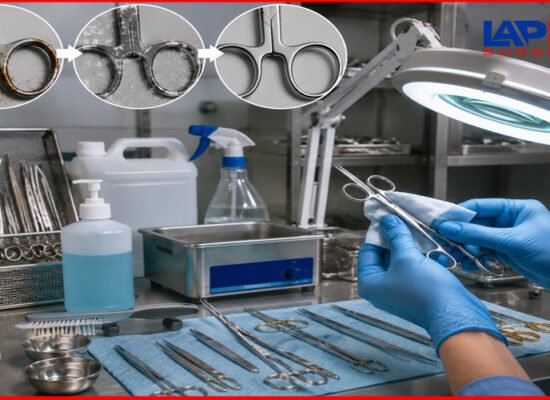
- Surface Finish: Absolute uniformity, absence of scratches, burrs, pits, or discoloration. The finish must be consistent across the entire instrument.
- Cleanliness: Ensuring the instrument is completely free from manufacturing residues, dust, or any foreign particles.
- Engravings/Markings: Verification that all necessary markings (e.g., part numbers, lot numbers, Lapex Surgical logo, CE mark) are clear, legible, and correctly placed.
- General Condition: A comprehensive check for any visible defects, dents, cracks, or signs of material stress.
- Articulation and Alignment: A final manual check for smooth movement, proper jaw/tip alignment, and secure locking mechanisms.
This comprehensive visual inspection serves as the ultimate assurance that only perfect instruments leave our facility, ready for the operating room.
Complete Control: Batch Traceability
In the highly regulated medical device industry, the ability to track every single instrument is paramount for quality control, safety, and regulatory compliance.
Our Traceability System:
- Unique Identifiers: Every Lapex Surgical instrument is marked with a unique batch number or serial number. This identifier acts as a digital fingerprint.
- Comprehensive Database: This batch number is linked to an extensive database containing detailed information about its entire manufacturing history, including:
- Date of manufacture
- Specific raw material lot numbers used
- Personnel involved in key manufacturing stages
- Results of all in-process and final quality control checks
- Sterilization validation data
- Destination and distribution records
- Rapid Recall Capability: In the extremely rare event of a quality alert or a recall, our robust traceability system allows us to rapidly identify affected instruments, pinpoint their location, and initiate swift, targeted actions. This minimizes potential risks and ensures patient safety.
- Regulatory Compliance: Full traceability is a fundamental requirement of ISO 13485 and the CE MDR, demonstrating our commitment to accountability and safety.
Batch traceability provides an unparalleled level of control and transparency, reinforcing Lapex Surgical’s dedication to quality assurance and responsible manufacturing.
The Sialkot Advantage: Where Expertise Meets Legacy
Our location in Sialkot, Pakistan, is not just a geographical detail; it’s a profound advantage. For over a century, Sialkot has been a global epicenter for the manufacturing of surgical instruments, fostering generations of skilled artisans. This rich heritage instills a deep understanding of metalwork, precision engineering, and the nuanced demands of surgical tooling. At Lapex Surgical, we harness this inherent expertise, blending it with modern technology, continuous training, and an unyielding commitment to international quality standards. This unique synergy allows us to produce laparoscopic instruments that are truly world-class.
Uncompromising Quality for Uncompromised Care
The precision and effectiveness of laparoscopic surgery hinge on the quality of the instruments used. At Lapex Surgical, our comprehensive quality assurance program is a testament to our unwavering commitment to surgical excellence. From the initial sourcing of certified raw materials to multi-stage in-process inspections, rigorous functional and corrosion testing, meticulous ergonomic design, and full batch traceability, every step is executed with precision and dedication. Our ISO 13485 and CE certifications are not just badges; they are tangible proof of a deeply embedded culture of quality that prioritizes surgeon control, patient safety, and superior surgical outcomes. When you choose Lapex Surgical, you choose instruments crafted with decades of expertise, proven reliability, and an uncompromising commitment to the highest global standards.
👉 For more information, feel free to contact the Lapex Surgical support team!
Frequently Asked Questions (FAQ)
Q1: What specific types of stainless steel does Lapex Surgical use for laparoscopic instruments?
A1: We primarily utilize high-quality surgical-grade stainless steel alloys such as 410, 420, and 304. These grades are chosen for their optimal balance of hardness, strength, corrosion resistance, and biocompatibility, specifically suited for the demands of surgical environments and repeated sterilization.
Q2: How often are your measuring instruments calibrated?
A2: All our precision measuring instruments are subjected to a rigorous calibration schedule in accordance with our ISO 13485-certified Quality Management System. This ensures that their accuracy is maintained over time, and they provide reliable measurements for all our manufacturing processes.
Q3: Can your laparoscopic instruments be sterilized using methods other than steam (autoclaving)?
A3: Our instruments are primarily validated for steam sterilization (autoclaving) due to its widespread use and effectiveness in hospitals. However, specific instrument designs might also be compatible with other validated methods. We provide detailed reprocessing instructions with our products; customers should always refer to these instructions and their facility’s protocols.
Q4: How does Lapex Surgical incorporate surgeon feedback into instrument design?
A4: Surgeon feedback is a cornerstone of our design and development process. We actively engage with surgical professionals through surveys, direct consultations, and practical assessments of prototypes. This feedback directly influences ergonomic improvements, functional enhancements, and the development of new instrument designs to meet evolving surgical needs.
Q5: What is the significance of the "passivation" process for stainless steel instruments?
A5: Passivation is a critical chemical process that removes free iron from the surface of stainless steel, allowing a stable, protective chromium oxide layer to form. This invisible layer significantly enhances the instrument’s corrosion resistance, protecting it from rust and degradation caused by blood, fluids, cleaning agents, and sterilization cycles. It’s essential for instrument longevity and patient safety.
Q6: What happens if a quality issue is identified with a Lapex Surgical instrument?
A6: In the rare event of a quality issue, our comprehensive batch traceability system allows us to immediately identify the affected production batch. We then follow our robust post-market surveillance and corrective/preventive action procedures, which include investigating the root cause, isolating any other potentially affected instruments, and communicating transparently with our customers and relevant regulatory bodies. Our priority is always patient safety and maintaining product integrity.