The Definitive Guide to Instrument Requirements for SILS (Single-Incision Laparoscopic Surgery)
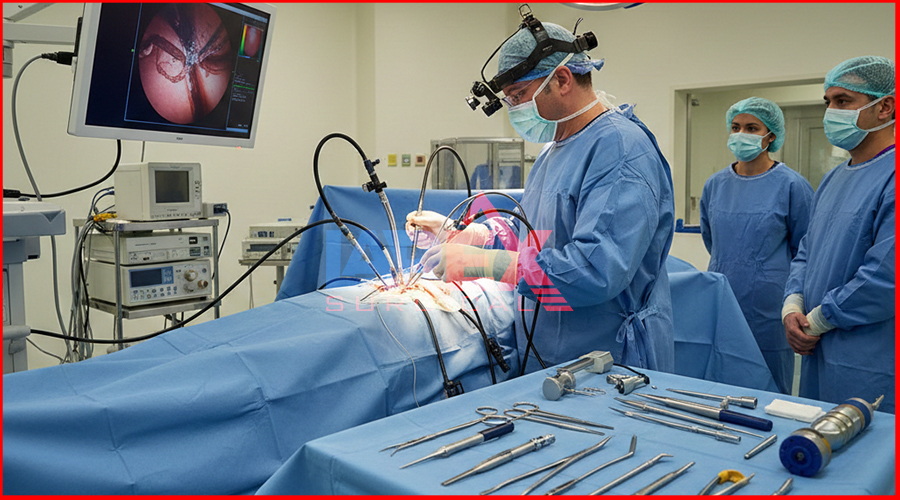
The evolution of minimally invasive surgery has reached a pinnacle with Single-Incision Laparoscopic Surgery (SILS). By reducing multiple ports to a single entry point—usually the umbilicus—surgeons can offer patients “scarless” results, reduced post-operative pain, and faster recovery times. However, for the manufacturer and the surgical team, SILS presents a unique set of mechanical challenges: the loss of triangulation and the “sword-fighting” effect of instruments.
At Lapex Surgical, we have spent decades in Sialkot refining the art of instrument forging. In this guide, we dive deep into the specific instrument requirements that make SILS possible, focusing on how specialized design overcomes the ergonomic hurdles of single-access surgery.
1. The SILS Challenge: Why Standard Instruments Aren’t Enough
In traditional laparoscopy, instruments enter the abdomen from different angles, creating a triangle that allows for clear visualization and manipulation. In SILS, all instruments are parallel.
The Three Main Obstacles:
- Instrument Crowding: Handpieces and shafts competing for the same limited space.
- Lack of Triangulation: Difficulties in creating the proper tension and counter-traction required for dissection.
- Visual Obstruction: The camera and instruments often occupy the same line of sight.
To solve these, Lapex Surgical designs instruments with specific curvatures, varying lengths, and articulating tips.
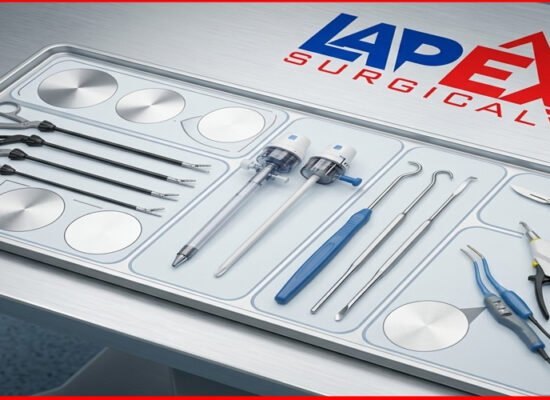
2. Core Instrument Categories for SILS
A. Articulating and Grasping Instruments
The most critical requirement for SILS is the ability of the instrument to “bend” once inside the abdomen.
- Fixed-Curved Instruments: These have a pre-set anatomical curve. When used in pairs (left-curve and right-curve), they restore triangulation.
- Articulating Grasping Forceps: These allow the surgeon to adjust the angle of the jaw via a dial on the handle.
- Lapex Innovation: Our SILS graspers feature a “Low-Profile Handle” design to reduce external clashing between the surgeon’s hands.
B. High-Definition Optical Systems
Because the camera port is crowded by working instruments, SILS requires:
- Extended Length Telescopes: Usually 45cm to 50cm to move the camera head away from the surgeon’s hands.
- 5mm 30-Degree Scopes: Smaller diameters are preferred to save space in the single-port device.
C. Access Ports (The Multichannel Cannula)
The “base” of SILS is the port. It must be flexible enough to allow multiple instruments to move independently while maintaining a tight pneumoperitoneum.
3. Technical Specifications Table
When procuring instruments for a SILS program, compare these specifications:
| Requirement | Conventional Laparoscopy | SILS Requirements (Lapex Standard) |
|---|---|---|
| Shaft Length | 33cm – 36cm | 36cm, 43cm, and 45cm (Mixed lengths prevent clashing) |
| Shaft Geometry | Straight | Articulating, Rotatable, or “S-Curved” |
| Handle Design | Standard Pistol/Inline | Low-profile, Compact, or Offset handles |
| Insulation | Standard | High-frequency resistant (Enhanced for crowding) |
| Jaw Action | Double Action | Specialized Single-Action with high-torque pivot |
4. The “Sword-Fighting” Solution: Strategic Lengths
At Lapex Surgical, we recommend the “Staggered Length” approach. By using one short-shaft instrument (36cm) and one long-shaft instrument (45cm), the bulky handles are positioned at different heights outside the body. This prevents the surgeon’s hands from bumping into each other, a common frustration in SILS.
5. Electrosurgical Requirements in SILS
Thermal safety is paramount in SILS because instruments are in proximity.
- Shielding: All SILS hooks and spatulas must have premium insulation to prevent “capacitive coupling.”
- Extended Tips: Longer ceramic tips help in reaching deep pelvic or cholecystectomy sites from a single umbilical entry.
- Active Electrode Monitoring (AEM): We recommend using SILS tools that are compatible with AEM systems to detect insulation failure instantly.
6. Sialkot Craftsmanship: Engineering the S-Curve
The “S-Curve” instrument is a hallmark of Lapex Surgical’s engineering. Unlike a standard straight shaft, the S-curve is bent in two places.
- The first bend moves the shaft away from the camera.
- The second bend brings the tip back to the target tissue.
Forging these curves requires the high-grade stainless steel (AISI 410/420) that Sialkot is famous for. If the steel is too brittle, the curve will snap; if too soft, it will lose its shape during retraction.
7. Frequently Asked Questions (FAQ)
Q1: Can I use my standard laparoscopic graspers for SILS?
A: Technically, yes, but it is extremely difficult. Without articulating or curved shafts, you lose triangulation, making the surgery much riskier and significantly increasing operative time.
Q2: Why are SILS instruments usually longer?
A: The extra length (43cm+) allows the surgeon to keep their hands further away from the umbilical port, providing a wider “workspace” and preventing the camera head from hitting the handles.
Q3: How do you clean articulating SILS instruments?
A: They require specialized care. Because of the internal cables or linkages that allow for articulation, they must be flushed with an enzymatic cleaner through a dedicated port on the handle. Lapex Surgical provides a cleaning brush kit with every articulating tool.
Q4: Are there reusable SILS instruments?
A: Yes. While many companies push disposables, Lapex Surgical manufactures high-quality reusable S-curve and articulating instruments that can withstand 500+ autoclave cycles, significantly reducing the cost-per-procedure.
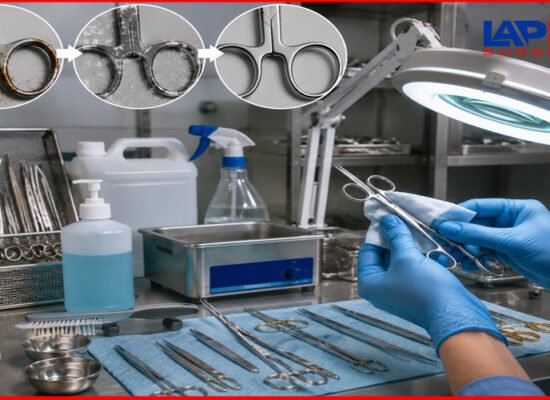
8. Maintenance and Sterilization of SILS Tools
Given the complexity of articulating joints, the “Sterile Processing Department” (SPD) must follow strict protocols:
- Pre-Cleaning: Use a neutral pH foam immediately after the case to prevent bioburden from drying in the articulation hinge.
- Inspection: Check the articulation cable for fraying. A snapped cable during surgery can be catastrophic.
- Lubrication: Use “instrument milk” after every ultrasonic bath to ensure the bending mechanism remains fluid.
9. Future Trends: From SILS to Robotics
The requirements for SILS are currently merging with robotic surgery. The “wristed” motion found in robotic platforms is what Lapex is now integrating into our manual SILS instruments, providing 7 degrees of freedom at a fraction of the cost of a robotic system.
10. Partnering with Lapex Surgical
Single-Incision Laparoscopic Surgery represents the future of patient-centric care. However, the success of a SILS program depends entirely on the quality of the instrumentation.
As a premier manufacturer in Sialkot, Lapex Surgical understands the nuances of surgical ergonomics. Our SILS-specific range—from staggered-length graspers to specialized articulating dissectors—is designed to turn the “impossible” single port into a seamless surgical experience.
Upgrade your surgical suite with the precision of Lapex Surgical. Contact us today for a catalog of our SILS and specialized laparoscopic instruments.